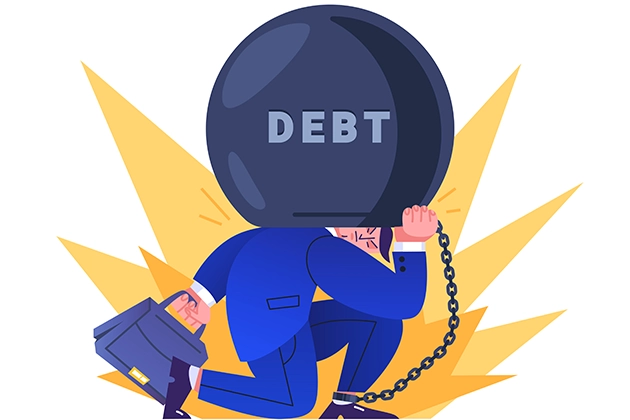
Debt doesn’t have to just be a stressful financial problem; it can actually be a strategic process. Many high achievers, entrepreneurs and professionals accumulate debt along the path to growth, investment or opportunity. The key difference isn’t whether you have debt, but whether you’re directing it or reacting to it. Strategic borrowing can support progress, while unmanaged debt quietly erodes flexibility and decision-making power.
Taking control means stepping back, assessing what you owe and making deliberate and planned choices surrounding repayment, leverage and overall risk. In essence, effective debt management is similar to managing a team. Those key methods are applied to your personal finances, and making the move from passive obligation to intentional control. This article will detail the key considerations for taking control of your debts.
The Hidden Weight of Multiple Loans
Managing one loan can be stressful enough. Managing multiple, however, can often cause more strain than the balances or interest payments themselves. Different payment dates throughout the month can create a confusing cycle of reminders, management, transfers and even missed payments. Then there are the debts with high interest rates, which make the minimum payment barely reduce the overall outstanding credit.
There is then the added pressure of the complexity of personal and business borrowing. Once these two start to overlap or become dependent on each other, financial boundaries start to blur and add unneeded stress. Multiple debts can also weaken your borrowing profile. For instance, poor personal credit ratings can adversely affect your eligibility for a business loan. When obligations are scattered across accounts, it may reduce perceived stability and limit your ability to secure better financing when you actually need it.
Beyond this, there are the other unseen costs. Not financial ones, but rather cognitive ones. Each balance, every reminder notification and every hour spent budgeting will have adverse reactions to your mental health and motivation to dig yourself out of debt.
Why Simplifying Can Be a Game-Changer
Debt complexity doesn’t just affect your bank balance; it also affects how you think and make decisions. When multiple balances, repayment schedules and interest rates compete for attention, they create decision fatigue. Each payment requires monitoring, prioritising and adjusting, adding unnecessary cognitive load to everyday life. Over time, this mental friction can distract from more important financial or professional decisions.
Simplification changes this dynamic and puts you back in control of your finances and budgeting plans. Like with anything from machinery to business management to personal finance planning, reducing the number of moving parts will free up your headspace and boost your mental clarity in your financial planning. Structure replaces reaction.
Better organisation allows for more effective decision-making and long-term focus. The same principle applies to personal finance. Debt consolidation, when used wisely, should not be seen as a sign of financial distress, but rather as a strategic simplification. By bringing multiple debts into a single, structured repayment plan, individuals regain oversight, achieve predictability and gain full control over their financial future.
Using Property to Make Debt Work for You
One of the most powerful and potentially beneficial ways of regaining control of debt is by leveraging secured debt, like buying property, against unsecured debts through a consolidation mortgage. Unlike unsecured borrowing, such as credit cards or personal loans, a mortgage often offers significantly lower interest rates, reducing the overall cost of repayment. By rolling multiple debts into a single mortgage, you simplify your finances into one predictable monthly payment, easing both financial and mental strain.
This approach has the potential to improve short-term cash flow, as lower interest and extended repayment terms reduce immediate pressure. Over time, consolidating debt into a mortgage provides longer-term stability, allowing you to plan ahead without the constant stress of spinning plates with multiple debtors.
For those considering this strategy, there are specialised options available that combine consolidation with professional guidance from the experts who can help with debt consolidation mortgages. It is crucial to get guidance on this process, and with careful planning, property can transform debt from a source of stress into a tool for financial control and growth.
Understanding the Numbers
Before making any major debt decisions, it is critical to get guidance on every possible outcome and every avenue this journey could take you down. Understanding how repayments, interest rates and loan terms interact with each other will help you anticipate outcomes and avoid surprises. Scenario modelling transforms guesswork into an informed strategy. This will let you see the short- and long-term impact of debt consolidation or any other repayment plans you try.
This is where due diligence becomes a key aspect to consider. By reviewing your finances with a fine-toothed comb, you will build your understanding and financial intelligence. This ensures that whatever choices you make will perfectly align with both your immediate needs and future goals.
To explore your options and even test out potential savings, tools like a debt consolidation calculator can provide a clear, comprehensive, data-driven picture of how consolidating multiple debts into one simple repayment plan could improve financial control and short-term cash flow.
When Consolidation Makes Sense
Debt consolidation via an increase in mortgage payments can be highly effective, but only under the right conditions. It works best for those who already have substantial equity in their property, carry several high-interest debts, maintain a stable income and have a clear long-term plan for their home. In these situations, consolidation can reduce interest expenses, streamline monthly payments and bring structure and predictability to finances.
That said, consolidation is not a magic solution for temporary money problems. If spending habits remain unchanged or debt continues to grow, combining loans into a single repayment can merely hide the underlying issues, potentially making them worse. True success, however, comes when consolidation is paired with disciplined budgeting, careful planning and an increased focus on ongoing financial responsibility. This will help turn debt into a manageable tool, rather than a hidden burden.
Taking Charge of Your Debt
Debt doesn’t need to be completely negative. Taking charge of your debt is an exercise in personal leadership, which can strengthen and inform your future decisions. By proactively managing and restructuring your outgoing financial obligations, you ensure that your accrued debt actually supports your goals rather than restricts them. Financial control is a mirror for self-discipline and strategic foresight. The earlier you act and the more thoughtful your decisions, the more flexibility and solutions you retain, reinforcing that true leadership begins with mastering your own resources.