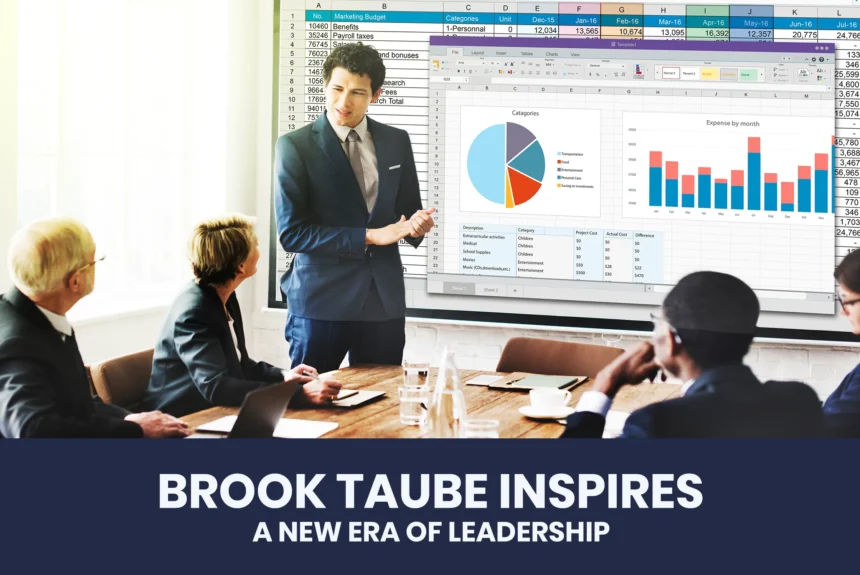
Leadership in the financial world demands far more than technical expertise or the ability to generate returns. It requires vision, resilience, adaptability, and the capacity to inspire teams through changing market conditions.
Few industries illustrate this better than investment management, where every decision can influence businesses, employees, and investors alike. The story of brook taube demonstrates how leadership principles can shape both organizations and long-term business outcomes.
Modern executives face unprecedented challenges. Digital transformation, regulatory shifts, artificial intelligence, cybersecurity threats, and changing investor expectations have redefined what successful leadership looks like. According to Deloitte’s Global Human Capital Trends research, organizations that prioritize adaptive leadership and employee engagement consistently outperform competitors in innovation and retention. Meanwhile, Gallup studies have shown that highly engaged teams can achieve productivity improvements exceeding 20 percent compared with disengaged workplaces.
These numbers highlight a simple reality: leadership matters as much as strategy.
Why Leadership Matters More Than Ever
Markets have become increasingly interconnected. Economic events in one region can rapidly affect businesses across continents. Leaders must therefore balance long-term planning with immediate decision-making while maintaining confidence among employees and stakeholders.
Strong leadership creates consistency during uncertainty. Employees look for transparency, investors seek confidence, and customers expect reliability. Organizations led by decisive executives often recover more quickly from setbacks because their teams understand priorities and trust the decision-making process.
Technology has also changed leadership expectations. Hybrid work environments require communication skills that extend beyond physical offices. Managers now need digital collaboration capabilities alongside emotional intelligence to keep distributed teams connected.
The Evolution of Financial Leadership
Traditional financial management focused heavily on transactions, balance sheets, and quarterly performance. Today’s executives must also consider sustainability, innovation, cybersecurity, regulatory compliance, and workforce development.
The role of leaders has expanded beyond supervising operations. They now serve as mentors, culture builders, and strategic visionaries who align organizational goals with rapidly changing economic conditions.
Successful financial organizations increasingly invest in leadership development programs because research from McKinsey indicates that companies with effective leadership pipelines outperform peers across profitability and employee satisfaction metrics.
Building Trust Through Transparency
Trust remains one of the most valuable assets any organization can possess.
Transparent communication reduces uncertainty during organizational changes and strengthens relationships between management and employees. Leaders who explain both successes and setbacks honestly create environments where accountability becomes part of company culture rather than a compliance exercise.
For example, during periods of market volatility, investment firms that regularly communicate portfolio strategies often experience stronger client retention than firms that remain silent. Clear messaging reduces speculation and builds confidence.
The same principle applies internally. Teams perform better when they understand organizational priorities and how their contributions support larger objectives.
Decision-Making Under Pressure
Every executive eventually encounters situations where perfect information is unavailable. Market corrections, supply chain disruptions, and geopolitical events require rapid yet thoughtful responses.
Effective leaders develop structured decision-making frameworks that balance data with experience. They gather expert opinions, evaluate risks, and prepare contingency plans before implementing significant initiatives.
A practical example comes from the banking sector during economic downturns. Institutions that diversified lending portfolios and strengthened liquidity reserves before crises often recovered faster than competitors relying on reactive measures.
Preparation frequently determines resilience.
Real Example: Microsoft’s Cultural Transformation
One widely cited example of leadership transformation is Microsoft’s evolution under Satya Nadella.
When Nadella became CEO, he emphasized collaboration, continuous learning, and empathy while shifting organizational culture away from internal competition. The result was renewed innovation across cloud computing, artificial intelligence, and productivity software.
The company’s market value increased dramatically over subsequent years while employee engagement improved through a culture focused on growth rather than hierarchy.
This demonstrates how leadership philosophy can directly influence business performance.
Real Example: Starbucks During Crisis
Another illustration comes from Starbucks, which has repeatedly invested in employee training and customer experience even during challenging economic periods.
Rather than focusing exclusively on cost reduction, leadership emphasized long-term brand loyalty through workforce investment. This strategy helped strengthen customer relationships while maintaining operational consistency.
The approach highlights how people-centered leadership can create sustainable competitive advantages.
Leadership Qualities That Drive Results
Successful executives often share several common characteristics:
- Strategic thinking with long-term perspective
- Consistent communication during uncertainty
- Accountability for both achievements and failures
- Commitment to continuous learning
- Ability to delegate authority effectively
- Emotional intelligence in managing diverse teams
- Adaptability to technological and economic change
These qualities create organizations capable of evolving alongside changing markets.
Statistics That Highlight Leadership Impact
Several research findings demonstrate the measurable value of effective leadership:
- Gallup reports that managers account for approximately 70 percent of the variance in employee engagement.
- Organizations with engaged employees experience significantly lower turnover rates and higher customer satisfaction scores.
- PwC surveys indicate that over 75 percent of CEOs believe workforce skills and leadership development remain top priorities for future competitiveness.
- Harvard Business Review analyses frequently show that companies investing in leadership training achieve stronger operational performance than those that neglect management development.
- LinkedIn Workplace Learning reports that opportunities for growth remain among the leading reasons employees stay with organizations.
These statistics reinforce the connection between leadership quality and organizational success.
Industry-Specific Use Cases
Investment Management
Portfolio managers rely on leadership to balance risk assessment with growth opportunities while maintaining investor confidence during volatile markets.
Healthcare
Hospital administrators coordinate multidisciplinary teams where leadership directly influences patient outcomes, operational efficiency, and staff retention.
Technology
Software companies depend on leaders who encourage experimentation while maintaining cybersecurity standards and product quality.
Manufacturing
Production facilities require leaders capable of optimizing supply chains, implementing automation, and ensuring workplace safety without disrupting operations.
Retail
Retail executives must align inventory management, customer service, and digital transformation strategies while motivating large frontline workforces.
Education
University administrators increasingly balance technological innovation, financial sustainability, and academic excellence through collaborative leadership models.
Innovation and Leadership
Innovation rarely occurs by accident.
Organizations that encourage experimentation often establish psychological safety, allowing employees to propose ideas without fear of failure. Leaders who reward curiosity rather than perfection frequently unlock breakthrough solutions.
Google’s famous policy allowing employees time for independent projects contributed to products that eventually became major business successes. Such initiatives reflect trust-based leadership rather than rigid control.
Developing Future Leaders
Succession planning has become a strategic necessity.
Companies that mentor emerging talent reduce disruption during executive transitions while preserving institutional knowledge. Leadership development programs increasingly include coaching, rotational assignments, and cross-functional collaboration.
The objective is not simply replacing executives but creating adaptable organizations prepared for evolving challenges.
Lessons From Entrepreneurial Leadership
Entrepreneurs often operate with limited resources yet demonstrate remarkable agility.
They validate ideas quickly, adjust strategies based on market feedback, and maintain close customer relationships. Larger corporations increasingly adopt similar startup principles through innovation labs and agile project management.
This entrepreneurial mindset encourages calculated experimentation without sacrificing accountability.
Balancing Performance With Culture
High-performing organizations recognize that culture influences productivity as much as financial incentives.
Employees who feel respected and included contribute more effectively, collaborate more willingly, and remain with organizations longer. Leadership therefore extends beyond targets and metrics into creating environments where individuals can perform at their best.
Culture also affects external reputation. Customers increasingly evaluate companies based on values, ethics, and employee treatment alongside products and services.
The Importance of Ethical Leadership
Corporate scandals have repeatedly shown that short-term gains achieved through unethical behavior create long-term damage.
Ethical leadership establishes standards for compliance, transparency, and accountability while reducing legal and reputational risks. Organizations with strong governance frameworks generally inspire greater investor confidence and customer trust.
Responsible leadership also supports sustainable growth rather than temporary performance spikes.
Continuous Learning as a Leadership Strategy
The rapid pace of technological change means today’s expertise may become outdated within years.
Successful executives regularly pursue education through executive programs, industry conferences, mentoring relationships, and practical experience. They encourage similar learning cultures throughout their organizations.
Artificial intelligence, automation, and data analytics will continue transforming decision-making processes, making adaptability one of leadership’s most valuable traits.
The Legacy of Long-Term Thinking
The most respected leaders are often remembered not for individual transactions but for institutions they helped strengthen.
Building durable organizations requires patience, investment in people, strategic discipline, and willingness to make unpopular decisions when necessary. Sustainable success emerges through consistent execution rather than isolated achievements.
The experiences associated with medley capital founder discussions often illustrate how leadership in investment environments requires balancing innovation, governance, and stakeholder expectations while navigating complex markets.
Similarly, conversations surrounding brook taube leadership frequently emphasize themes such as adaptability, communication, team empowerment, and long-term strategic thinking that resonate across industries far beyond finance.
Conclusion
Leadership continues to evolve alongside technology, globalization, and changing workforce expectations. Organizations that prioritize transparency, adaptability, ethical decision-making, and employee development consistently position themselves for long-term resilience.
Whether managing investment portfolios, leading healthcare systems, operating manufacturing facilities, or building technology companies, the underlying principles remain remarkably similar: trust, communication, accountability, and vision.
The future belongs to leaders who combine analytical expertise with human understanding, creating organizations capable of thriving amid uncertainty while empowering people to achieve shared goals.
Frequently Asked Questions
- Who is Brook Taube?
Brook Taube is an entrepreneur, investor, and business executive known for his work in investment management and financial services. He has been involved in building and leading organizations focused on capital markets and business growth.
- What leadership qualities is Brook Taube known for?
Brook Taube is often associated with strategic thinking, long-term planning, collaboration, adaptability, and a focus on building strong organizational cultures that can navigate changing market conditions.
- How can business leaders apply Brook Taube’s leadership principles?
Executives can adopt similar principles by encouraging transparent communication, empowering teams, making data-driven decisions, investing in employee development, and maintaining a long-term vision even during uncertainty.
- Why is leadership important in the financial industry?
Strong leadership helps financial organizations manage risk, build investor confidence, comply with regulations, and make informed decisions during periods of market volatility, ultimately supporting sustainable growth.
- What industries can benefit from these leadership lessons?
The principles discussed extend beyond finance and can be applied in technology, healthcare, manufacturing, retail, education, and other sectors where strategic decision-making and effective team management are essential.
The CEO Views is a U.S.-based business magazine that explores global industry trends, leadership, innovation, and emerging technologies. Backed by expert perspectives and in-depth research, it showcases visionary leaders, groundbreaking ideas, and forward-thinking strategies that drive business growth and long-term success.