

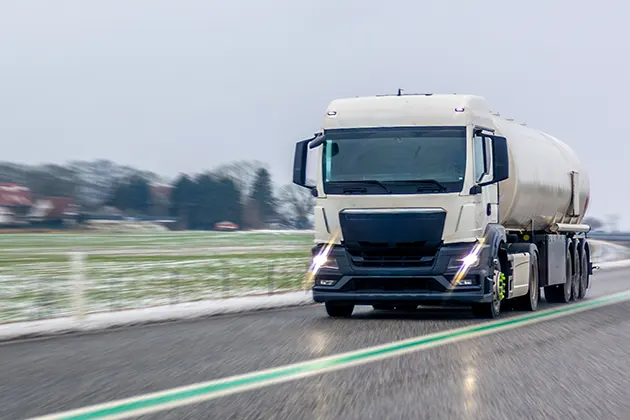
Driving on our nation’s highways means sharing the road with a variety of vehicles, from compact cars to massive 18-wheelers. These large commercial trucks are the lifeblood of our economy, transporting goods and resources across the country. However, their sheer size and weight present unique challenges and risks for other drivers. Understanding how to safely navigate alongside these giants is not just a matter of courtesy; it’s a critical aspect of road safety for everyone.
The statistics surrounding accidents involving large trucks are sobering. According to the National Safety Council, 5,472 people died in large-truck crashes in 2023. The Federal Motor Carrier Safety Administration (FMCSA) also tracks these incidents, providing detailed data on the causes and consequences of such accidents. These numbers underscore the importance of education and awareness for all drivers who share the road with large commercial vehicles.
This article will provide a comprehensive guide to understanding the risks associated with driving near 18-wheelers and offer practical safety measures to help you navigate these situations with confidence. By the end, you will have a clearer understanding of how to protect yourself and your passengers when driving alongside these giants of the road.
The Dangers of Driving Near Large Trucks
To safely share the road with 18-wheelers, it’s essential to first understand the specific dangers they present. Their size and operational characteristics create unique challenges that all drivers must be aware of.
Blind Spots: The “No-Zones”
One of the most significant dangers associated with large trucks is their extensive blind spots, often referred to as “No-Zones.” These are areas around the truck where the driver’s view is obstructed. The four main No-Zones are directly in front of the truck, directly behind it, and along each side. The blind spot on the right side of the truck is particularly large, extending across multiple lanes of traffic.
When a passenger car is in a No-Zone, the truck driver cannot see it. This dramatically increases the risk of a collision, especially during lane changes or turns. It is crucial for drivers of smaller vehicles to be aware of these blind spots and to avoid lingering in them. A good rule of thumb is that if you can’t see the truck driver’s face in their side mirror, they can’t see you.
Longer Stopping Distances
A fully loaded 18-wheeler can weigh up to 80,000 pounds, and all that weight takes a long time to stop. A large truck traveling at 65 mph on a clear, dry day needs almost the length of two football fields to come to a complete stop. This is significantly longer than the stopping distance of a passenger car.
This disparity in stopping distances means that cutting in front of a large truck and then suddenly braking can have catastrophic consequences. The truck driver may not have enough time to react and avoid a collision. It is vital to leave a generous following distance when driving in front of a large truck and to avoid any sudden or unpredictable maneuvers.
Wide Turns
Large trucks require a significant amount of space to make turns, especially right turns. They often need to swing wide to the left to negotiate a right-hand turn, which can be misleading to other drivers. A common mistake is for a passenger car to try to squeeze into the space between the truck and the curb, putting them directly in the path of the turning truck.
Always be aware of a truck’s turn signals and give them the space they need to complete their maneuver. Never try to pass a turning truck on the right. Patience and a clear understanding of a truck’s turning radius can prevent serious accidents.
Essential Safety Tips for Sharing the Road
Now that we’ve covered the primary dangers, let’s focus on the practical steps you can take to ensure your safety when driving near 18-wheelers.
Avoid Lingering in Blind Spots
As mentioned earlier, the No-Zones around a large truck are incredibly dangerous. Make a conscious effort to stay out of these areas. If you find yourself in a truck’s blind spot, either speed up to pass or slow down to drop back into a visible position. The less time you spend in a No-Zone, the safer you will be.
Maintain a Safe Following Distance
When driving behind a large truck, maintain a following distance of at least four seconds. This will give you a better view of the road ahead and provide you with enough time to react to any sudden stops or debris from the truck. It also makes you more visible to the truck driver in their mirrors.
Pass with Caution
When passing a large truck, do so on the left side, where the driver’s blind spot is smaller. Signal your intention to pass, and make sure you can see the entire front of the truck in your rearview mirror before pulling back into the lane. Never pass a truck on a downgrade, as they can pick up speed quickly.
Be Patient and Predictable
Truck drivers have a difficult job, and they appreciate courteous and predictable behavior from other drivers. Avoid aggressive driving, such as tailgating, weaving in and out of traffic, or cutting them off. Use your turn signals to communicate your intentions, and be patient when a truck is maneuvering. Your calm and predictable driving can make the road safer for everyone. As the state of Virginia has recently emphasized with new traffic safety laws, safe and predictable driving is a shared responsibility.
The Role of a Truck Accident Lawyer
Even with the best precautions, accidents can still happen. The aftermath of a collision with an 18-wheeler can be devastating, resulting in serious injuries, property damage, and emotional trauma. Navigating the legal complexities of such an incident can be overwhelming, especially when dealing with large trucking companies and their insurance providers.
In these situations, it is crucial to have an experienced truck accident lawyer on your side. A knowledgeable attorney can help you understand your rights, investigate the accident, and fight for the compensation you deserve. They can handle the legal burdens, allowing you to focus on your recovery. The governor’s office has also highlighted the importance of public safety and preparedness in the face of such incidents.
Conclusion
Sharing the road with 18-wheelers is a daily reality for most drivers. By understanding the unique challenges they present and by practicing defensive driving techniques, we can significantly reduce the risk of accidents. Remember to stay out of their blind spots, maintain a safe following distance, pass with caution, and be a patient and predictable driver. These simple measures can make a world of difference in ensuring that everyone reaches their destination safely.