
Simulation technology has quietly become one of the most important innovations driving modern industries. From helping pilots train safely to enabling businesses to test new systems before deployment, simulation tools are transforming how organizations operate.
The growing popularity of advanced platforms has also led many consumers to search for topics such as Microsoft flight requirements, highlighting how simulation is no longer limited to professionals.
Today, industries ranging from aviation and healthcare to manufacturing and online entertainment rely on simulated environments to improve performance, reduce costs, and minimize risk.
The concept behind simulation is simple but powerful: recreate real-world conditions digitally so users can learn, experiment, and optimize outcomes without facing real-world consequences.
What makes modern simulation particularly impactful is the combination of artificial intelligence, cloud computing, big data, and increasingly powerful hardware.
The Global Simulation Market Is Growing Rapidly
The simulation industry has evolved into a multibillion-dollar sector. According to market research firms, the global flight simulator market was worth more than $5.6 billion in 2024 and is projected to exceed $8 billion by 2033. Growth is being fueled by increasing demand for pilot training, rising air traffic, and the need for cost-effective learning solutions.
Beyond aviation, digital twin technology- a form of simulation that creates virtual replicas of physical assets- is expected to experience annual growth rates exceeding 30% in the coming years. Manufacturers, healthcare providers, logistics companies, and technology firms are investing heavily in simulation because it allows them to test ideas before making expensive real-world changes.
Microsoft Flight Simulator: A Real Example of Consumer Simulation
Perhaps no consumer product demonstrates the power of simulation better than Microsoft’s Flight Simulator franchise.
Originally launched in the 1980s, Microsoft Flight Simulator has evolved into one of the most realistic consumer simulations ever developed. The latest editions use satellite imagery, cloud streaming, artificial intelligence, and real-time weather systems to recreate the entire planet in extraordinary detail.
For aviation enthusiasts and student pilots, the simulator provides an opportunity to practice navigation, flight planning, and cockpit procedures. Many aspiring pilots use the platform as a supplemental training tool alongside formal flight instruction.
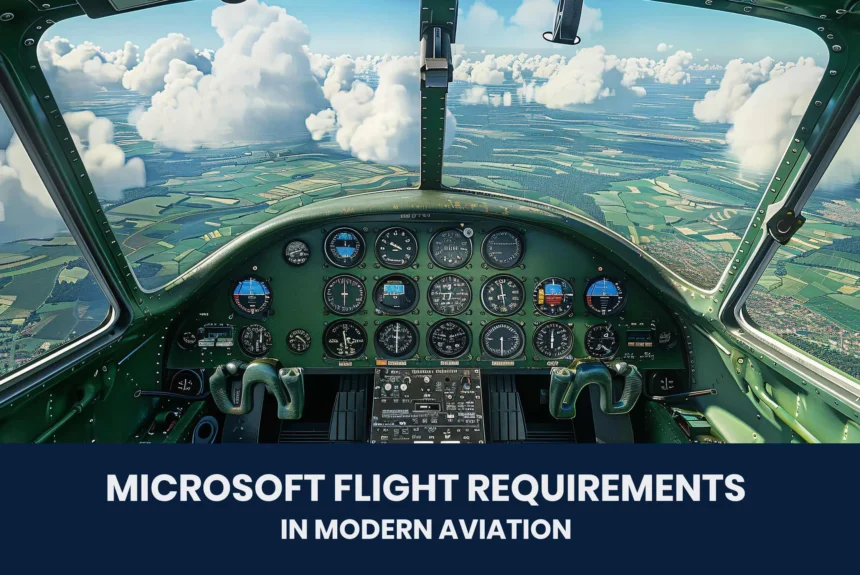
The popularity of the software has led many users to research Microsoft flight requirements before purchasing the simulator. Unlike traditional video games, Microsoft Flight Simulator requires substantial processing power because it must simultaneously manage aircraft systems, weather conditions, terrain rendering, navigation databases, and air traffic.
For example, a pilot flying from London to New York in the simulator experiences changing weather patterns, realistic airport operations, and accurate terrain data throughout the journey. This level of realism explains why the software has become popular not only among hobbyists but also among aviation students.
Why Flight Simulator Hardware Requirements Matter
Modern simulation platforms are among the most demanding software applications available to consumers.
As a result, many users spend significant time comparing flight simulator PC specs before building or upgrading a computer. A high-performance setup typically includes a modern multi-core processor, at least 32 GB of RAM, a dedicated graphics card such as an NVIDIA RTX series GPU, and high-speed SSD storage.
Unlike traditional games, flight simulators must process:
- Aircraft physics
- Real-time weather systems
- Navigation calculations
- Air traffic control interactions
- Terrain generation
- Cockpit instrumentation
- Streaming world data
For example, a content creator streaming Microsoft Flight Simulator on YouTube while running multiple displays may require considerably more computing power than a casual gamer playing action titles.
The demand for advanced hardware has created a thriving ecosystem of gaming PCs, flight yokes, rudder pedals, throttle quadrants, and virtual reality headsets designed specifically for simulation enthusiasts.
Boeing: Using Simulation to Train Pilots
While consumer simulation attracts headlines, professional aviation remains one of the industry’s most important sectors.
A prime example is Boeing. The aerospace giant works with airlines and training providers worldwide to develop advanced simulator programs for aircraft such as the Boeing 737, 777, and 787.
Before transporting passengers, pilots spend hundreds of hours practicing in sophisticated simulators that replicate real aircraft behavior. They train for situations such as:
- Engine failures during takeoff
- Severe turbulence
- Hydraulic malfunctions
- Electrical system failures
- Emergency landings
These scenarios would be too dangerous or expensive to recreate in actual aircraft. By allowing pilots to experience emergencies in a safe environment, simulation helps improve aviation safety while reducing training costs.
Airbus and Digital Twins
Simulation extends beyond pilot training into aircraft design and manufacturing. Airbus has become a leader in using digital twins—virtual replicas of physical assets and production systems.
Engineers create digital versions of aircraft components and manufacturing processes to identify inefficiencies before production begins. Instead of physically testing every change, teams can evaluate modifications in a virtual environment.
This approach reduces development costs, accelerates production timelines, and improves product quality.
For an industry where delays can cost millions of dollars, simulation provides a significant competitive advantage.
Siemens: Smart Factories Powered by Simulation
The manufacturing sector is another major beneficiary of simulation technology. At its electronics manufacturing facility in Amberg, Germany, Siemens uses digital twins and simulation systems to optimize production. Engineers can test process changes virtually before implementing them on the factory floor.
The facility has become one of the most cited examples of Industry 4.0, demonstrating how simulation can improve efficiency and reduce waste.
Rather than relying solely on trial and error, manufacturers can use virtual environments to predict outcomes and make informed decisions.
Mayo Clinic and Healthcare Simulation
Healthcare organizations are increasingly adopting simulation to improve patient outcomes.
The Mayo Clinic operates advanced simulation centers where physicians, nurses, and medical students practice procedures in realistic environments.
For example, emergency response teams can rehearse cardiac arrest scenarios repeatedly before encountering similar situations with actual patients.
Simulation-based training helps healthcare professionals:
- Improve decision-making
- Reduce errors
- Build confidence
- Enhance teamwork
Studies have consistently shown that simulation-based education improves clinical performance and patient safety.
As healthcare systems become more complex, simulation will play an even larger role in professional development.
NVIDIA and Autonomous Vehicle Testing
Artificial intelligence has dramatically expanded simulation’s capabilities.
Technology company NVIDIA has developed DRIVE Sim, a platform that allows autonomous vehicle developers to train self-driving systems in virtual environments.
Instead of driving millions of miles on public roads, engineers can expose AI systems to countless simulated scenarios, including:
- Heavy traffic
- Snowstorms
- Pedestrian crossings
- Road construction zones
- Unexpected obstacles
Simulation enables developers to test rare and dangerous situations that might take years to encounter naturally.
This approach reduces costs while accelerating innovation in autonomous transportation.
Simulation in Logistics and Supply Chains
Global supply chains have become increasingly dependent on simulation tools.
Major retailers and logistics providers use simulation software to model warehouse operations, transportation networks, and inventory systems.
For example, companies often simulate holiday shopping seasons months in advance to identify bottlenecks and prepare resources accordingly.
Benefits include:
- Faster deliveries
- Reduced operating costs
- Improved inventory accuracy
- Better customer experiences
In a world where supply chain disruptions can cost billions, simulation provides a valuable planning tool.
The Role of Simulation in Digital Entertainment
Simulation principles are also influencing online entertainment businesses.
Gaming companies, sports betting operators, and digital platforms increasingly use predictive analytics and virtual testing environments to improve user experiences.
For example, some UK casinos not on Gamstop utilize data modeling, customer behavior simulations, and predictive analytics to evaluate platform performance, payment processing systems, and promotional strategies before launching them to users.
Although the goals differ from aviation or healthcare, the underlying principle remains the same: test and optimize outcomes in a virtual environment before affecting real-world operations.
Challenges Facing the Industry
Despite its advantages, simulation technology faces several challenges.
- High Costs: Advanced simulations often require expensive hardware and software infrastructure.
- Data Quality: Simulation outcomes depend heavily on the quality of underlying data.
- Cybersecurity: As simulation platforms become increasingly connected, protecting sensitive information becomes more important.
- Skills Gaps: Organizations must train employees to interpret simulation results effectively.
Addressing these challenges will be critical as adoption continues to grow.
The Future of Simulation
The future of simulation is exceptionally promising.
Emerging trends include:
- AI-generated training scenarios
- Real-time digital twins
- Cloud-based simulation platforms
- Mixed reality learning environments
- Greater accessibility for smaller businesses
As computing power becomes more affordable and artificial intelligence becomes more sophisticated, simulation technologies will become increasingly integrated into everyday operations.
Conclusion
Simulation technology has moved far beyond its origins as a training tool. Today, it serves as a strategic asset for organizations seeking to improve efficiency, reduce risk, and accelerate innovation.
Real-world examples from Microsoft Flight Simulator, Boeing, Airbus, Siemens, Mayo Clinic, and NVIDIA demonstrate how simulation is delivering measurable value across industries.
Whether someone is researching Microsoft Flight Simulator hardware, a manufacturer is optimizing production through digital twins, or an autonomous vehicle company is training AI systems in virtual environments, simulation continues to redefine what is possible. As technology evolves, its influence will only expand, shaping the future of business, education, healthcare, transportation, and digital entertainment.
FAQs
- What are Microsoft flight requirements?
Microsoft flight requirements refer to the minimum and recommended hardware and software specifications needed to run Microsoft Flight Simulator smoothly. These requirements typically include a compatible operating system, sufficient RAM, a modern processor, and a dedicated graphics card. - Why is Microsoft Flight Simulator considered a realistic simulation platform?
Microsoft Flight Simulator uses satellite imagery, real-time weather data, artificial intelligence, and advanced aircraft modeling to recreate realistic flying conditions. This makes it one of the most immersive consumer flight simulators available. - What flight simulator PC specs are recommended for optimal performance?
For the best experience, users generally need a multi-core processor, at least 32 GB of RAM, a modern NVIDIA RTX or AMD Radeon graphics card, SSD storage, and a stable internet connection to support real-time data streaming. - How do airlines use simulation technology for pilot training?
Airlines use advanced flight simulators to train pilots for emergency situations, navigation procedures, and aircraft operations. Simulators allow pilots to practice complex scenarios safely without risking passengers or equipment. - What is a digital twin, and how is it used in industry?
A digital twin is a virtual replica of a physical object, process, or system. Companies such as Airbus and Siemens use digital twins to monitor performance, predict maintenance needs, and test operational changes before implementing them in the real world. - How is simulation technology helping healthcare organizations?
Healthcare providers use simulation tools to train doctors, nurses, and surgeons in realistic medical scenarios. These systems help improve clinical skills, reduce errors, and enhance patient safety without exposing patients to unnecessary risks. - What industries benefit most from simulation technology?
Simulation technology is widely used in aviation, manufacturing, healthcare, defense, logistics, automotive development, and digital entertainment. Organizations in these sectors use simulations to improve efficiency, reduce costs, increase safety, and accelerate innovation.
The CEO Views is a premier business magazine dedicated to equipping executives, entrepreneurs, and decision-makers with valuable insights into global market trends, leadership excellence, innovation, and emerging technologies. Through in-depth research, expert perspectives, and engaging storytelling, the publication showcases influential leaders, groundbreaking ideas, and strategic innovations that are redefining industries, driving business transformation, and supporting long-term sustainable growth.