

The electric vehicle industry is evolving rapidly, but building confidence in charging infrastructure remains one of its biggest challenges. As businesses and consumers increasingly adopt electric mobility, dependable charging networks have become just as important as expanding the number of charging stations. Reliability, transparency, and long-term performance are now defining the future of the industry.
Uptime EV Charger Inc. has built its business around these principles, focusing on creating charging infrastructure that customers can trust every day. Rather than chasing rapid expansion alone, the company emphasizes ethical engineering, proactive maintenance, and operational excellence to deliver consistent performance across its network.
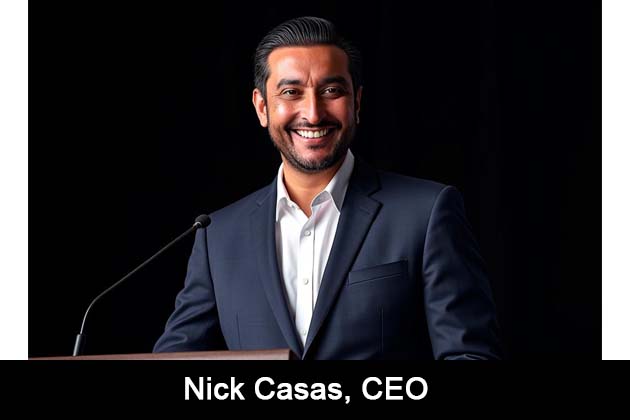
In this exclusive interview, Nick Casas, CEO of Uptime EV Charger Inc., discusses what inspired the company’s reliability-first philosophy, the challenges facing the EV charging industry, and why trust, accountability, and quality will ultimately determine the success of electric transportation.
Q. What first made you decide to take on reliability as the core problem in EV charging rather than expanding into the broader “growth at all costs” direction many others chose?
A. Early in my career, I realized the true barrier to EV adotion wasn’t charger count—it was driver trust. While the industry fixated on rapid expansion and deployment numbers, I saw a fundamental flaw. Drivers can’t rely on infrastructure that doesn’t work when they need it most.
That disconnect was my catalyst. I knew that by shifting the focus from vanity metrics to relentless reliability, we could build long-term confidence in EV infrastructure. That conviction became the foundation of Uptime EV Charger. We built this company to prioritize performance and accountability, proving that true market leadership comes from a charging network you can actually depend on.
If you are looking to scale your infrastructure or want to explore how our reliability- first approach integrates with your fleet, I can help:
- Compare our network metrics against industry averaes
- Provide case studies on our uptime and accountability standards
- Schedule a consultation with our infrastructure experts
Q. You’ve built Uptime EV Charger Inc. around a belief in ethical engineering—what does that look like in day-to-day decisions when pressure is high to cut corners or move faster?
A. As CEO, I view ethical engineering as our ultimate competitive advantage. It’s about making decisions that guarantee the best long-term outcomes for our customers, even when it’s the harder path today.
Every organization faces relentless pressure to move faster, cut corners, or hit aggressive deadlines. The true test of our leadership is holding the line when nobody is watching. For our company, this means uncompromising investments in proper commissioning, meticulous documentation, proven partners, and total transparency if issues arise.
I will always choose to explain a delay caused by doing things right over creating a future reliability problem by rushing. Ultimately, trust isn’t built on shortcuts; it’s forged through unwavering consistency.
Q. From your perspective, where has the EV charging industry most consistently failed end users, and how did that shape your approach to building this company?
A. Our industry’s biggest failure has been prioritizing instalation over operation. Historically, too many projects have been measured by chargers deployed rather than chargers performing. The result is an ecosystem where end users often encounter stations that are offline, poorly maintained, or difficult to service. That experience erodes confidence not only in our network, but in EV adoption itself.
At Uptime EV, we built our business around a single core belief: infrastructure is only as valuable as its availability.
That is why we focus heavily on maintenance, proactive monitoring, service responsiveness, and absolute accountability after installation.
Ultimately, our responsibility doesn’t end when a charger is energized—it begins there. If you would like to scale our maintenance-first infrastructure model, I can help by:
- Outlining our preventative maintenance schedules
- Explaining how our real-time diagnostic monitoring integrates with your fleet
- Providing a framework for your regional deployment goals
Q. You’ve been critical of overreliance on incentives in clean energy—what personal or professional experiences led you to that view?
A. Incentives should accelerate adoption, not prop up flawed models. Throughout my career, I’ve seen too many initiatives prioritized solely for the funding they attract, rather than their long-term viability, user experience, or operational needs. When subsidies become the business model, reliability and accountability suffer.
The ventures that truly scale and succeed are those designed to outlast the incentive phase. We must focus on building resilient operations that deliver undeniable value to our customers, ensuring our business remains robust and profitable long after the initial funding dries up.
Q. Running a vertically integrated operation is complex. What’s something about that model that outsiders tend to underestimate when they look at Uptime EV?
A. Many people see vertical integration as simply bringing more capabilities in- house. What they often underestimate is the level of coordination, discipline, and accountability required to make it successful.
When engineering, construction, commissioning, monitoring, maintenance, and service all exist under one roof, there is nowhere to hide problems and no opportunity to shift responsibility. Every team must work together with a shared commitment to outcomes.
While it creates additional complexity, it also allows us to identify issues faster, improve processes continuously, and maintain a higher level of quality control throughout the entire lifecycle of a charging asset.
Q. You often talk about transparency and education within your team. How do you personally make sure that message actually translates beyond leadership level into field operations?
A. Transparency isn’t just a policy I talk about—it’s how we operate every single day. I believe in setting crystal-clear expectations, sharing information without filters, and making sure everyone knows not just what they are building, but why it matters.
That’s why I dedicate so much of my time to connecting directly with teams across the company. I want every single person to see the direct line between their daily work and our overall reliability and customer success.
We actively empower our field teams to spot issues, challenge the status quo, and share the lessons they’ve learned on the front lines. When you truly understand our mission and feel real ownership of the outcomes, transparency stops being an HR initiative and simply becomes who we are.
Q. What has been the most difficult reliability issue you’ve had to solve so far, and what did it teach you about scaling infrastructure across different regions?
A. One of the most challenging aspects of reliability is that no two deployments are exactly alike. Different utilities, climates, equipment configurations, permittingenvironments, and communication networks all introduce unique variables.
Solving reliability at scale requires more than technical expertise—it requires adaptability and standardized processes that can perform under different conditions. The biggest lesson has been that success comes from designing systems andoperational procedures that anticipate variability rather than assuming uniformity. Infrastructure must be resilient enough to perform consistently regardless ofgeography or local conditions.
“My goal is for Uptime EV to help raise expectations across the entire industry. I want reliability to become the standard by which charging networks are measured, not an afterthought.”
-Nick Casas, CEO