The logistics industry has undergone a remarkable transformation over the past decade. Rising customer expectations, global supply chain disruptions, labor shortages, and increasing transportation costs have forced businesses to rethink how they move goods around the world.
Companies are no longer relying solely on traditional planning methods to improve efficiency. Instead, they are investing in advanced technologies that enable faster, smarter, and more accurate decision-making.
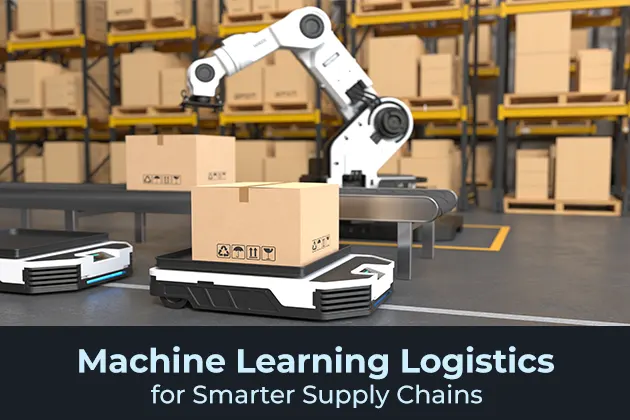
One of the most significant developments is machine learning logistics, where intelligent algorithms analyze vast amounts of operational data to improve delivery routes, warehouse operations, inventory management, and transportation planning. As global trade becomes increasingly complex, machine learning is helping logistics providers build more resilient, cost-effective, and customer-focused supply chains.
The Growing Importance of Artificial Intelligence in Logistics
Artificial intelligence has become one of the biggest drivers of innovation in logistics. Businesses generate enormous amounts of data every day—from shipment tracking information and warehouse inventory levels to weather forecasts, fuel prices, customer orders, and traffic conditions. Traditional planning systems struggle to process this information quickly enough to support real-time decision-making.
AI-powered systems analyze these data streams continuously, identifying patterns and recommending actions that improve efficiency while reducing operational risks. Unlike traditional software that follows predefined rules, AI systems learn from historical performance and become increasingly accurate over time.
According to a report by McKinsey & Company, organizations adopting AI technologies across supply chain operations can reduce logistics costs by up to 15%, improve inventory levels by as much as 35%, and increase service levels by more than 60%. These improvements translate directly into better customer satisfaction and stronger financial performance.
Why Logistics Needs Smarter Decision-Making
Modern logistics networks have become far more complex than they were just a few years ago. Businesses now manage global suppliers, multiple transportation partners, regional distribution centers, and rapidly changing customer demand.
Several factors contribute to this growing complexity:
- Fluctuating fuel prices
- Labor shortages
- Rising e-commerce demand
- Global trade regulations
- Weather disruptions
- Geopolitical uncertainty
- Increasing customer expectations for faster deliveries
Managing these variables manually is nearly impossible. Artificial intelligence enables companies to respond quickly by analyzing thousands of possible scenarios and recommending the most efficient course of action.
Route Optimization That Saves Time and Money
Transportation accounts for one of the largest operating expenses in logistics. AI-powered route optimization systems continuously evaluate traffic conditions, weather forecasts, road closures, delivery priorities, and vehicle capacity to determine the most efficient delivery routes.
Instead of relying on static schedules, these systems make adjustments throughout the day as conditions change.
Real Example: UPS
UPS developed its ORION (On-Road Integrated Optimization and Navigation) system to optimize delivery routes for its drivers. The system analyzes millions of delivery combinations every day, reducing unnecessary travel while improving fuel efficiency.
UPS estimates that even reducing one mile per driver each day saves millions of gallons of fuel annually and significantly lowers carbon emissions.
Warehouse Automation
Warehouses have become increasingly intelligent thanks to AI and robotics.
Modern warehouse systems can:
- Automatically assign storage locations
- Prioritize order fulfillment
- Optimize picking routes
- Predict maintenance requirements
- Coordinate autonomous robots
These capabilities improve productivity while reducing operational costs.
Real Example: Amazon
Amazon uses thousands of autonomous robots inside its fulfillment centers. The robots transport inventory shelves directly to warehouse employees, reducing walking time and accelerating order processing.
Combined with AI-powered inventory management, Amazon can fulfill millions of customer orders with exceptional speed and accuracy.
Smarter Inventory Management
Maintaining the right inventory balance is one of logistics’ biggest challenges. Excess inventory increases storage costs while insufficient inventory results in stock shortages and lost sales.
Artificial intelligence analyzes historical sales, seasonal demand, supplier performance, promotional campaigns, and market trends to recommend optimal inventory levels.
Retailers using AI often reduce both overstocking and stockouts simultaneously.
Improving Transportation Planning
Transportation planners traditionally rely on historical experience when assigning shipments to vehicles.
AI systems improve this process by considering:
- Vehicle capacity
- Driver availability
- Delivery windows
- Fuel consumption
- Customer priorities
- Road conditions
The result is more efficient fleet utilization and lower transportation expenses.
Enhancing Supplier Management
Supply chain performance depends heavily on supplier reliability. Artificial intelligence continuously monitors supplier performance indicators such as:
- Delivery accuracy
- Lead times
- Product quality
- Historical reliability
- Risk exposure
When suppliers begin showing signs of potential disruption, AI systems alert procurement teams before significant problems occur.
Building Resilient Global Supply Chains
Recent global events highlighted the vulnerability of international supply chains. Pandemics, geopolitical tensions, port congestion, and natural disasters have disrupted production and transportation worldwide.
Artificial intelligence helps organizations identify risks earlier and develop alternative sourcing and transportation strategies.
Companies can simulate multiple disruption scenarios before they occur, improving preparedness.
Transforming Procurement Decisions
Procurement teams increasingly use AI supply chain optimization to evaluate supplier performance, automate purchasing decisions, and identify opportunities for cost savings. Instead of relying solely on historical purchasing data, AI systems analyze market trends, commodity prices, supplier reliability, transportation costs, and inventory levels simultaneously.
This comprehensive analysis enables procurement professionals to make faster and more informed sourcing decisions while reducing operational risks.
Industry Use Case: Manufacturing
Automotive manufacturers depend on thousands of suppliers across multiple countries. AI-powered procurement platforms monitor supplier performance in real time and automatically recommend alternative vendors when disruptions occur.
This capability minimizes production delays while maintaining product quality.
Real Example: Siemens
Siemens has integrated AI into several manufacturing and supply chain operations to improve procurement planning, production scheduling, predictive maintenance, and supplier collaboration. These initiatives help reduce downtime while improving operational efficiency across global manufacturing facilities.
Predictive Maintenance for Logistics Equipment
Unexpected equipment failures create costly delays.
AI-powered predictive maintenance systems monitor:
- Conveyor belts
- Warehouse robots
- Delivery vehicles
- Refrigeration systems
- Industrial machinery
Sensors continuously collect operational data that AI analyzes to detect early warning signs of equipment failure.
Maintenance teams can repair equipment before breakdowns occur, reducing downtime and maintenance expenses.
Sustainability Through Intelligent Logistics
Sustainability has become a major priority for logistics providers.
Artificial intelligence contributes by:
- Reducing fuel consumption
- Optimizing delivery routes
- Improving warehouse energy efficiency
- Minimizing product waste
- Reducing unnecessary inventory
Many organizations now combine sustainability goals with AI-driven operational improvements.
Last-Mile Delivery Innovation
The final stage of delivery remains one of the most expensive components of logistics.
AI improves last-mile delivery by:
- Optimizing delivery sequences
- Predicting customer availability
- Reducing failed deliveries
- Adjusting routes in real time
Customers receive more accurate delivery estimates while logistics providers lower transportation costs.
Statistics Demonstrating AI’s Impact
Several industry reports highlight the growing influence of artificial intelligence in logistics:
- IDC predicts worldwide spending on AI technologies will continue growing rapidly as businesses automate operational processes.
- McKinsey estimates AI can reduce forecasting errors by up to 50% while lowering inventory costs significantly.
- Gartner reports that organizations using AI-enabled supply chain technologies consistently outperform competitors in operational efficiency.
- Deloitte research shows companies investing in AI improve decision-making speed while enhancing supply chain resilience.
These findings demonstrate why AI adoption continues accelerating across logistics operations worldwide.
Industry Applications Across Different Sectors
Retail
Retail companies use AI to optimize inventory, personalize customer experiences, and improve distribution efficiency.
Large retailers analyze customer purchasing behavior to position inventory closer to demand, reducing shipping times.
Healthcare
Hospitals rely on AI-powered logistics systems to ensure medical supplies, pharmaceuticals, and emergency equipment remain available while minimizing waste.
Temperature-sensitive medications also benefit from intelligent monitoring systems throughout transportation.
Food and Beverage
Food manufacturers use AI to monitor shelf life, optimize transportation routes, and minimize spoilage.
Predictive analytics help retailers replenish fresh products before shortages occur.
Manufacturing
Manufacturers integrate AI into production planning, warehouse management, transportation scheduling, and supplier collaboration to improve operational efficiency.
Predictive maintenance further reduces equipment downtime and production interruptions.
E-commerce
Online retailers depend heavily on AI for demand prediction, warehouse automation, delivery optimization, and customer communication.
As same-day and next-day delivery become more common, AI helps companies meet customer expectations without dramatically increasing operating costs.
Challenges Businesses Must Address
Although AI offers substantial benefits, implementation also presents challenges.
Organizations must address:
- Data quality issues
- Employee training
- Integration with legacy systems
- Cybersecurity concerns
- Ethical AI governance
- Ongoing model monitoring
Successful implementation requires collaboration between technology teams, logistics professionals, and business leaders.
The Future of Intelligent Logistics
Artificial intelligence will continue reshaping logistics over the coming decade.
Emerging technologies expected to influence logistics include:
- Autonomous delivery vehicles
- AI-powered drones
- Digital twins
- Edge computing
- Generative AI for logistics planning
- Intelligent warehouse robotics
These innovations will further improve operational efficiency while enabling greater flexibility across global supply chains.
Organizations investing today will likely gain significant competitive advantages as technology continues evolving.
Conclusion
The future of logistics depends on the ability to anticipate change rather than simply react to it. Intelligent technologies are helping businesses improve efficiency, reduce costs, strengthen resilience, and deliver better customer experiences across increasingly complex supply chains.
Among the most valuable capabilities is logistics demand forecasting, which enables organizations to predict customer demand more accurately, optimize inventory levels, allocate transportation resources efficiently, and prepare for market fluctuations before they occur.
As artificial intelligence continues advancing, companies that embrace predictive decision-making and data-driven logistics strategies will be better positioned to compete in the fast-changing global marketplace.
FAQs
- What is machine learning logistics?
Machine learning logistics refers to the use of machine learning algorithms to analyze logistics data, improve route planning, optimize inventory, predict delivery times, and automate operational decisions across the supply chain.
- How does AI improve supply chain optimization?
AI improves supply chain optimization by analyzing large volumes of data to enhance inventory management, optimize transportation routes, identify potential disruptions, automate procurement, and support faster, data-driven decision-making.
- Why is demand forecasting important in logistics?
Accurate demand forecasting helps businesses anticipate customer demand, reduce inventory costs, prevent stock shortages, improve production planning, and ensure products are available when customers need them.
- Which industries benefit the most from AI-powered logistics?
Industries such as retail, manufacturing, healthcare, e-commerce, food and beverage, automotive, and transportation benefit significantly from AI-powered logistics by improving efficiency, reducing costs, and enhancing customer service.
- What are some real-world examples of AI in logistics?
Companies like Amazon use AI-powered warehouse robots and inventory management systems, while UPS uses AI-driven route optimization to reduce fuel consumption, delivery times, and operational costs.
- What challenges do businesses face when adopting AI in logistics?
Common challenges include integrating AI with existing systems, maintaining high-quality data, ensuring cybersecurity, training employees, managing implementation costs, and addressing privacy and compliance requirements.
- What is the future of AI in logistics?
The future of AI in logistics includes autonomous delivery vehicles, predictive maintenance, intelligent warehouse automation, digital twins, AI-powered demand forecasting, and more sustainable supply chain operations.
The CEO Views is a globally recognized business magazine dedicated to celebrating visionary leadership, breakthrough innovation, and entrepreneurial excellence. By featuring influential executives, industry pioneers, and transformative organizations, it provides valuable insights into the trends, strategies, and technologies shaping the future of business across industries.