

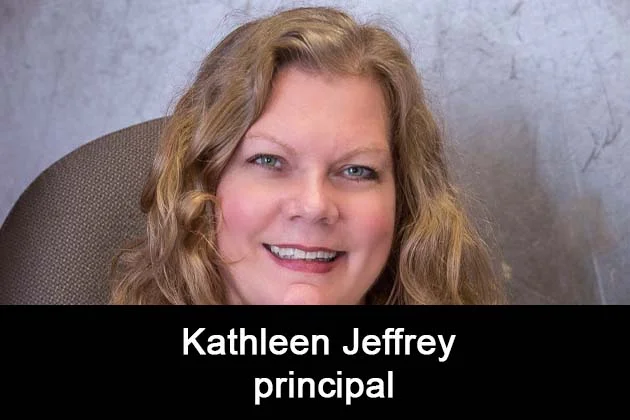
A child can understand something perfectly well and still struggle in a classroom. The problem may be the noise, the pace of the lesson, the way instructions are given, or simply the pressure of feeling that everyone else is keeping up. Kathleen Jeffrey, Principal of Greater Heights Learning Academy (GHLA), has spent her career looking closely at those moments. She believes education should leave room for them instead of expecting every student to fit the same mould.
For Jeffrey, some of the most important moments in education have nothing to do with a test score, they are the small breakthroughs that show a student is beginning to trust themselves again. That belief has shaped the way GHLA works with children and families across the Lower Mainland, particularly students whose learning, emotional, or developmental needs have not always been well served by traditional school settings.
School Should Make Room for the Child
Jeffrey’s view of education starts with a fairly simple idea. Before asking a child to learn, a school needs to understand the child sitting in front of it.
Traditional classrooms can sometimes place too much emphasis on following a set routine, finishing work and moving from one lesson to another. That structure works for some students, for others, it can become another barrier. Jeffrey wanted GHLA to offer something different, where cognitive and emotional differences were not treated as problems that needed to be hidden or corrected.
That thinking also influenced the creation of the academy. Jeffrey saw families trying to piece together different forms of support, often dealing with schools, therapists and other professionals separately. GHLA brings many of those services together; Speech-language pathologists, occupational therapists, physiotherapists and counsellors work alongside teachers, so support does not have to sit outside the school day.
Sometimes Safety Comes Before Learning
A student who is worried about what will happen next is unlikely to be thinking about a math problem or a writing assignment. Jeffrey pays close attention to that reality.
At GHLA, students may use visual schedules so they know what their day will look like. Teachers give advance notice when something is about to change, if a student becomes overwhelmed, staff focus on helping them regulate rather than immediately turning to punishment. Sensory spaces and reset areas give students somewhere to regroup when they need it.
There is also a strong emphasis on helping children separate a mistake from their sense of self. Getting an answer wrong does not make a student unsuccessful, and struggling with a task does not mean they are incapable. Staff use strengths-based feedback, collaborative problem solving and social-emotional coaching to help students work through difficult moments.
That matters because confidence can disappear quickly when a child repeatedly feels that they are getting everything wrong. Jeffrey wants students to experience school as a place where they are allowed to make mistakes, ask for help and try again.
The People Around a Student Matter
Jeffrey does not see teaching as a job that belongs to one person in one classroom. A child may need an educator, an occupational therapist, a speech-language pathologist, a counsellor and other specialists at different points in the same school day.
At GHLA, those professionals work together rather than operating in separate corners. A therapist might suggest a change that helps a student take part in a lesson, while a teacher can carry that strategy into the classroom. The team can also share observations that help shape a more complete Individual Education Plan.
The difference is often found in the details, a student who struggles with sensory overload may need a change in the environment. Another may need help with communication. Someone else may need time and encouragement before joining a group activity. Because the people supporting the student are already working together, those needs can be addressed as they arise.
Jeffrey believes that kind of teamwork also makes life easier for families. Parents are not left trying to connect separate pieces of information themselves. Everyone involved has a clearer picture of the child.
Teaching the Thinking Behind the Answer
One of the educational ideas that has influenced Jeffrey’s work is Mediated Learning Interactions, based on the work of Dr. Reuven Feuerstein. The focus is not simply on whether a student knows an answer. It is on helping them understand how they arrived there and how they might approach a similar problem next time.
Teachers use questions and guidance to help students slow down, notice patterns and make connections. A lesson does not necessarily end when the worksheet is finished. Students are encouraged to think about where else an idea might apply.
The same thinking extends into music, drama, film, athletics and other activities at GHLA, creative work gives students another way to communicate and take part. Music therapy, rhythm exercises and other activities can support communication, coordination and emotional expression. These experiences also give children opportunities to make choices and discover things they are good at without feeling that everything has to be perfect.
Every Child Has a Different Finish Line
Jeffrey sees a school as an ecosystem. Teachers, specialists, families and students all have a role in shaping what happens there. For that to work, she believes educators need trust, professional development, mental health support and enough freedom to respond when a student’s needs do not fit neatly into a standard plan.
Looking ahead, she wants GHLA to keep its close-knit character while continuing to be a place where neurodiverse students feel understood and families feel supported. Growth, in her view, should not mean losing the sense of community that brought people to the academy in the first place.
Her definition of success is equally personal; it might be a non-verbal child finding a way to communicate, it might be an anxious student walking into the classroom with confidence, it might be a young person discovering that a learning barrier does not have to define what they are capable of.
Those moments are easy to overlook when education is measured only through grades and test results, Jeffrey does not overlook them. For her, they are often where real learning begins.