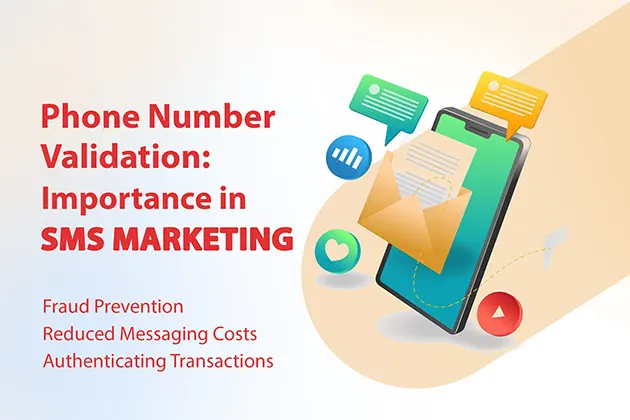
If you do not use SMS marketing to boost your customer engagement, you should start doing it. If you already use SMS, you should know about number validation. Business executives are often found asking themselves: Do I need a phone number validation process to be executed to ensure SMSs are sent to a valid phone number?
As is the case with other forms of customer data, accuracy is of utmost importance. Knowing that you are contacting a registered email or phone number and one that is in use can make a real difference. During the process of onboarding new customers, they enter their names and phone numbers. You can efficiently conduct a real-time check to verify the accuracy and validity of the provided data. If you notice any inconsistencies, you can ask them to enter a different number or repeat it.
Just like address validation, number validation is an essential aspect of customer data management. With the high utilization rate of mobile devices and e-commerce, email and phone validation have become just as crucial as address verification.
With this blog, The CEO Views aims to inform businesses and entrepreneurs about the importance of number validation in SMS marketing and how it could benefit their marketing efforts and the business success as a whole. Similar to our other articles and blogs, this piece of writing is crafted to strengthen business decisions for improved business performance.
How Does Phone Number Validation Work?
Onboarding customers involves the validation of their phone numbers to get them registered for your services. Validation of their numbers ensures accuracy and reduces fraudulent sign-ups. It is a type of identity verification that makes sure your customers have access to the provided phone number. SMS-based phone verification is a user-friendly way to ensure additional security. It is often provided through a one-time passcode sent over SMS or other authorized messaging service providers.
For the best results when validating phone numbers, businesses should use an API. An API can automatically remove landlines from the SMS list and send SMS to relevant mobile contacts after validation. You can have a web developer install an API on your website if you do not have the knowledge. However, you can use a batch validator if you already have a numbers database that needs validation.
Alternatively, you can use a reverse address tool to get the numbers belonging to contacts you already have in your database. You can then check the numbers using a phone validator to determine which ones to send an SMS to and which ones to ignore. If you need to validate an extensive list, consider using a batch append tool.
Let us explore some of the best API practices for validating phone numbers.
-
Confirming the Phone Number to be Valid
By using API tools, businesses can restrict users from signing up with invalid numbers like 12345 or +1 (111).
-
Verify Line Type (Mobile, landline, and VoIP numbers)
API tools designed for this verification purpose allow businesses to send voice verification codes to landline numbers, especially for older clientele. VoIP numbers can be verified by adding a protection step, such as reCAPTCHA.
-
Building an Allow List of Country Codes
Building an allow list of countries through API tools at the sign-up stage is a crucial way to make sure businesses are adhering to compliance requirements, while reducing chances of fraud and controlling the customer onboarding pipeline.
-
Maintaining a List of Reputed Carriers
Just like the list of allowed country codes, it is also essential in the verification process to eliminate certain carriers that have increased rates of fraud and spam. Detecting such carriers before sending the SMS can help businesses protect their application.
Why Do Businesses Need Accurate Phone Data?
Many businesses are yet to realize the money-saving benefits that come with getting accurate details of phone numbers. Validation of such numbers comes with different advantages for businesses, especially when it comes to cutting costs. It is an especially important aspect for any business that uses phones for communication. Below are some of the benefits companies get to enjoy through phone validation.
1. Reduced Messaging Costs
As we said before, phone data validation will make it easier for your business to verify the validity of all phone numbers in your database. As a result, you can easily filter out any invalid phone numbers before sending out communications via text message. This way, you do not have to worry about your business wasting money sending messages to numbers no longer in use. Eventually, you will notice a significant increase in your marketing return on investment since any marketing messages sent through SMS will address a valid client in your database. You will not waste any money on invalid numbers.
2. It Helps Prevent Unpredictable Business Costs
Say, for example, a parcel is delivered to a client’s parcel machine. The customer will receive an SMS notification for the delivery. What happens if you send the notification to an invalid number? You will face two potential challenges.
First, the customer will have no idea about the delivery of the parcel, even though the machine is at fault. However, your support team can find a solution to this problem.
Secondly, your business will have to return the parcel to the warehouse if it is not collected within the specified timeframe. Because of this, your business will incur additional costs. You can prevent this by phone number validations.
3. It Can Protect Your Business From Fraud
Trustworthy people do not own all phone numbers in your database. In some cases, a customer can use a burner phone, such as a prepaid phone number or portable VoIP, to place a fraudulent order. Falling victim to fraudsters who use such phone numbers can cost your business a good amount of money. With proper phone validation, you can avoid getting into trouble.
4. Authenticating Transactions
With phone validation, businesses can easily confirm transactions. This way, your company does not have to worry about making payments to the wrong number. You also save money you would otherwise lose through fraud or paying for fraud resolutions. Phone validation allows businesses to reduce fraudulent activities and other suspicious transactions, which can be quite costly.
Phone validation should be a priority for any business that uses SMS to send business communications. You can use various tools to validate phone numbers, including APIs, batch validators, reverse address tools, and batch append tools. Phone validation offers many money-saving benefits, including lower messaging costs, preventing unpredictable business expenses, protecting from fraud, and authenticating transactions.
Best Phone Verification Practices to Adopt
Below are some of the most used phone verification practices that ensure you do not lose out on the best offers from your preferred brands by signing up with them authentically.
One-Time Passcode
By sending a one-time passcode to the shared phone number, businesses verify that the number belongs to the customer. This helps prevent the user from sharing false or someone else’s phone number.
Building Retry Buffers
Building a retry login within the phone verification interface helps limit requests after the business attempts to send an OTP to the same phone number more than 5 times in 10 minutes without verifying the number. It helps prevent accidental spamming of users and reaching API rate limits.
Keeping Phone Numbers Visible in Enrollment Flow
Displaying the complete phone number in the interface lets users identify and fix any typos instead of waiting for a verification code.
Consumers often feel hesitant about sharing their phone numbers with brands, as questions of data mishandling rise in their minds: “What will they do with my phone number?” “Will they use it wisely?” and many such questions. Well! If you are having second thoughts about sharing your number with the brand you are purchasing from, this is what you might lose access to: personalized communication, spam prevention, and enhanced security.