Not long ago, frequent long-haul travel was seen as a sign of serious leadership. If you were scaling a company, you showed up in person. That assumption is now under pressure. Leaders running fast-growth businesses are no longer defaulting to flights. Travel is being questioned in the same way that hiring plans or large spending decisions are. If a trip does not produce a clear result, it does not happen.
Time Is Being Measured More Ruthlessly
A return trip from London to San Francisco can quietly consume four to five working days. Not just in flight time, but in lost focus, disrupted schedules, and recovery.
That trade-off is harder to justify when companies are moving quickly. Leaders are becoming far more precise about how they spend their time. The question is no longer whether a meeting matters, but whether it justifies the disruption of crossing time zones.
Fewer Trips, Higher Stakes
Travel has not disappeared, but it has become selective. When senior executives do get on a plane, there is usually something material at stake: a funding round that needs to close, a partnership that requires alignment at the highest level, or a negotiation where details cannot be missed.
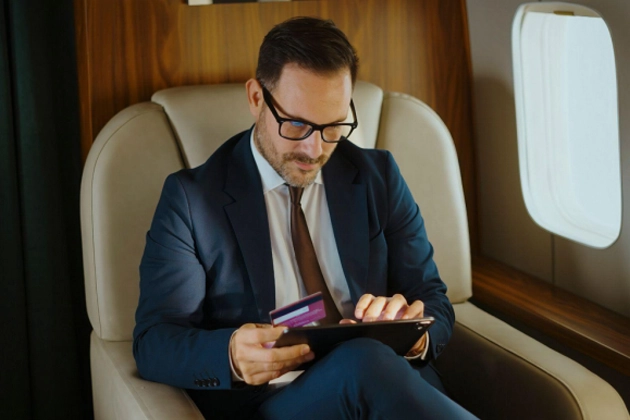
In some cases, companies are also reconsidering how they travel, not just how often they travel. For critical, time-sensitive trips, options like corporate private jet travel are being evaluated to reduce downtime, avoid commercial delays, and maintain tighter control over schedules.
Trips are often tightly structured, with multiple meetings packed into short windows—there is little room for open-ended travel.
What This Looks Like in Practice
Some scaling companies are formalising this shift. A European SaaS firm recently introduced a simple rule: no long-haul travel without a written objective tied to revenue, funding, or strategic change. Within a year, travel dropped significantly without slowing growth.
In the UK, one fintech business moved most investor communication to scheduled virtual updates. In-person meetings still happen, but only around key moments such as raises or major strategic decisions. The relationship did not weaken. It became more focused.
Delegation Is Doing More of the Work
Another change is happening quietly. Responsibility is moving down the organisation. Instead of one person attending everything, regional leaders and functional heads are stepping in. They handle local relationships, manage ongoing discussions, and represent the company without escalation. This reduces travel at the top, but more importantly, it builds stronger operators across the business.

Remote Interaction Is No Longer a Compromise
The quality of virtual communication has improved to the point where it no longer feels like a fallback. Well-run video meetings with clear agendas often produce better outcomes than rushed in-person sessions squeezed between flights. This way, documents are shared in advance, decisions are documented in real time, and follow-ups happen faster. For many interactions, physical presence no longer adds enough value to justify the cost.
Performance Is Part of the Equation
Long-haul travel directly affects decision-making. Fatigue, poor sleep, and time zone shifts affect how people think and respond.
For CEO’s making high-stakes calls, that matters. Some now avoid scheduling critical meetings immediately after landing. Others limit the number of intercontinental trips within a quarter.
When travel cannot be avoided, the way it is handled becomes part of the strategy. Private aviation, for example, removes many of the friction points that drain energy. No queues, no delays through crowded terminals, and far more control over departure times. Shorter overall travel windows and a quieter environment can reduce fatigue, allowing executives to arrive in a state closer to full operational status. This is less about comfort and more about maintaining consistent judgment.
Investor Expectations Have Adjusted
There was a time when regular in-person contact with investors was expected. That expectation has softened. What matters now is consistency and clarity. Frequent updates, clean reporting, and direct communication often carry more weight than physical meetings. When face time does happen, it is tied to moments where alignment needs to be reset or strengthened.
This evolution is also reducing pressure on executives, allowing them to focus on performance, while investors place greater value on transparency, responsiveness, and the ability to deliver against stated objectives.
A More Intentional Way to Lead
What is changing is not ambition or global reach; it is how presence is defined. Leaders are still traveling, but with far more discipline. Each trip has a purpose. Each journey is planned around outcomes, not optics. The result is a different model of leadership. Less movement, more focus, and a clearer understanding of where time actually creates value. This shift is also redefining team expectations, encouraging autonomy, and reinforcing trust, as leaders prioritise impact over visibility and make more deliberate, strategically aligned decisions.