

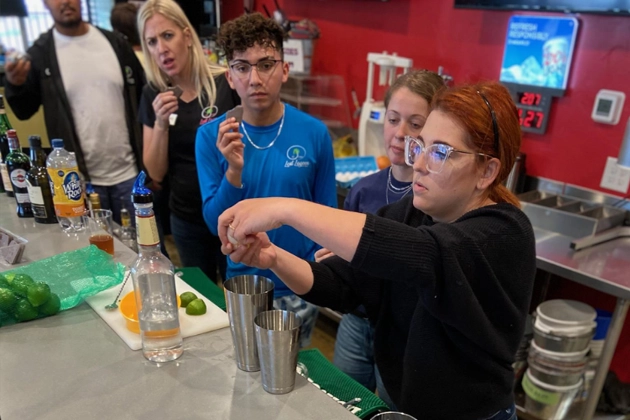
There’s something happening quietly across the hospitality industry. Small, highly specialized training businesses — the kind that would have seemed too niche five years ago to be viable — are growing faster than most people expected. And a big part of that growth comes down to one simple shift: people don’t just want a product or a service anymore. They want an experience they can take something from.
Welcome to the experience economy, where the transaction isn’t the point. The learning is.
What the Experience Economy Actually Means for Training Businesses
Back in 1998, Joseph Pine and James Gilmore wrote about the “experience economy” in Harvard Business Review. The idea was that businesses would increasingly charge for the feeling and the memory of doing something, not just the thing itself.
For a long time, that framing applied mostly to tourism, events, and consumer brands. But over the past decade, it’s quietly reshaped the professional training world too.
Today, operators, managers, and business owners across industries are willing to pay a premium for training that’s specific, practical, and gives them real skills they can use the next day. Generic certification programs and one-size-fits-all workshops are losing ground. Niche expertise is winning.
Why Specificity Is Now a Business Model
Here’s the thing about running a niche training business: your audience is small, but they’re incredibly motivated. They’re not buying training because someone told them to. They’re buying it because they have a concrete problem and they want someone who actually understands their world.
That specificity creates trust. And trust converts.
Take the bar and restaurant industry as an example. It’s an industry that runs on thin margins, high staff turnover, and operational chaos. General business coaching doesn’t cut it. What owners actually need is someone who:
- Has been behind the bar and understands the daily grind
- Knows how to navigate compliance pressure without losing sleep
- Can structure a profitable cocktail menu that actually sells
- Speaks the language of managing a team that mostly works nights and weekends
That’s why companies offering trainings for bar owners have found a genuinely receptive market. The content is relevant. The language is familiar. The problems being solved are real.
The Scalability Problem and How Niche Trainers Are Solving It
For years, the knock on niche training businesses was that you’d hit a ceiling fast. Your audience is small by definition, so how do you scale?
That thinking is increasingly outdated. Here’s why:
- Digital delivery changed the math. A bar owner in Nashville and one in Manchester can both access the same training program. The audience for a niche subject is actually global, it just wasn’t reachable before the internet made delivery cheap and location irrelevant.
- Community multiplies reach. The best niche training businesses aren’t just selling courses. They’re building groups of people who are all trying to solve similar problems. When your students talk to each other, refer each other, and advocate for your program inside their professional circles, you get organic growth that no ad budget can fully replicate.
- Repeat business is structurally built in. Hospitality businesses face constant staff turnover. That means the same owner might need refresher training, onboarding content for new hires, or an advanced program for their team leads. One relationship can generate years of recurring revenue.
- Specialization attracts media and partnerships. If you’re the go-to expert in a niche, journalists writing about that industry want to quote you. Trade associations want to partner with you. Other businesses in adjacent niches want to collaborate. All of that amplifies your reach without requiring a huge marketing spend.
What Successful Niche Trainers Are Doing Differently
It’s worth getting into the specifics of what separates training businesses that plateau from those that keep growing.
- They sell outcomes, not content. Nobody buys a course because it has great videos. They buy it because they want to make more money, avoid a compliance fine, reduce staff drama, or feel more confident running their business. Successful niche trainers lead with the result, not the curriculum.
- They charge what their expertise is worth. There’s a common trap where businesses underprice because they’re afraid of putting off a small audience. But niche audiences are often willing to pay more, not less, because they know generic alternatives won’t cut it. Premium pricing also signals seriousness, which matters when people are investing time as well as money.
- They build credibility before selling. The best niche trainers usually spend time establishing themselves as voices worth listening to through content, speaking engagements, industry events, or podcast appearances before aggressively pitching their programs. When someone already knows you understand their world, the sales conversation is much easier.
- They treat former students as an asset. Alumni networks, advanced programs, and community spaces for graduates aren’t just nice-to-haves. They’re part of the business model. The relationship shouldn’t end when the course does.
The Bar Industry as a Case Study
The bar and restaurant sector is a useful lens for all of this because it has several characteristics that make niche training particularly valuable.
- It’s heavily regulated. Licensing, liability, responsible service of alcohol — these aren’t areas where operators can afford to learn through trial and error. Good training isn’t a luxury; it’s a risk management strategy.
- It’s a word-of-mouth industry. Bar owners talk to each other. Restaurant groups share resources. If your training program has a reputation for actually working, that spreads.
- The skills gap is real and ongoing. The hospitality workforce changes constantly. That creates persistent demand for practical, fast, effective training that doesn’t require someone to sit through content that doesn’t apply to them.
Organizations focused on trainings for bar owners are operating in exactly this kind of environment, where the need is clear, the audience is identifiable, and the value of specialized knowledge is high. That’s a strong foundation to build a scalable business on.
Where This All Heads
The experience economy isn’t slowing down. If anything, the appetite for learning that feels relevant, not generic, not theoretical, is only growing.
For entrepreneurs thinking about building training businesses, niche is no longer a limitation. It’s the strategy. The question isn’t whether your audience is big enough. It’s whether you know their problems well enough to solve them in a way no one else can.
And for businesses in industries like hospitality, construction, beauty, or any other field that runs on practical skills and tight margins, the right training program built by people who actually understand the work is increasingly worth paying for.
That’s the real opportunity in the experience economy. Not scale first and specialize later. Specialize first, and let the scale follow.