
A product can look right, perform well, and still leave important questions unanswered. Is it safe? Does it meet the required standard? Is there anything in it that should not be there? For businesses working with food, agriculture, water, pharmaceuticals, and environmental services, finding those answers requires testing that is both dependable and practical.
For almost 30 years, Symbio Laboratories has been doing that work across Australia and, increasingly, beyond it. The Australian analytical testing company offers more than 3,500 testing solutions across microbiology, chemistry, residue analysis, and related areas. Its clients come from a wide range of industries, including food and agriculture, water, environmental services, pharmaceuticals, and personal care.
At its simplest, the company’s job is to provide scientific information that clients can use to make decisions about safety, quality, and compliance. But there is more to that than producing a technically correct result. The result has to be reliable, and it has to reach the client within a timeframe that fits the reality of their business.
That practical side of testing has remained important as Symbio Laboratories has grown. The company has continued to invest in its laboratories, technology, systems, and people, while developing its presence across Australia and expanding into New Zealand. It is now establishing its first laboratory in Guangzhou, China.
The Right Test Depends on the Question a Client Is Trying to Answer
There is no single testing process that can work for every industry or every product. A food manufacturer may be checking for pathogens, allergens, or chemical residues. An agricultural client may have different concerns, while pharmaceutical and environmental businesses work within their own technical and regulatory requirements.
The starting point, therefore, is understanding what the client actually needs. Symbio Laboratories’ technical teams work with clients to understand the purpose of the testing, the product or process involved, and the risks or requirements that need to be considered. Sometimes the answer can come from one test. In other cases, several types of analysis may be needed.
That is where having a broad range of capabilities under one organisation can make a difference. Microbiology can identify pathogens and other microorganisms, while chemical and residue testing can examine pesticides, antibiotics, heavy metals, and other substances. Allergen testing addresses another area of concern for food businesses and consumers.
Looking at these areas together can give clients a fuller understanding of their products. It can also be useful for companies with complicated supply chains, where questions about safety and quality can arise at several stages, from raw materials and suppliers through to production and the finished product.
The laboratory does not take the place of a client’s own quality systems. Its role is to provide sound scientific information that helps those systems work better and gives businesses evidence they can use when making decisions.
New Laboratory Technology Has Value Only When It Makes the Work More Useful
Modern analytical laboratories have access to tools that were not available in the same way a generation ago. Symbio Laboratories has invested in technologies including real-time PCR, MALDI-TOF, and whole-genome sequencing, particularly as part of its microbiology capabilities.
Each technology has a different role. Real-time PCR can detect specific genetic targets quickly. MALDI-TOF can be used to identify microorganisms, while whole-genome sequencing can provide much more detailed information when microorganisms need to be investigated or compared.
But the technology itself is not the main point. For Symbio Laboratories, the more important question is whether a method gives the client something useful. It may mean getting an answer faster, identifying something more accurately, obtaining more information from a sample, or making the testing process more efficient.
That also means technology cannot be separated from the people using it. A sophisticated instrument still needs experienced scientists who understand the method, the quality requirements, and the results.
This is one reason the company’s continued investment in its technical team is important. As Symbio Laboratories grows, it is bringing people with experience from different industries into the organisation. Their knowledge adds to the company’s ability to deal with different types of testing and different client requirements.
Good Laboratory Work Is About Consistency, Not Just Getting One Test Right
For clients that depend on laboratory results regularly, confidence has to extend beyond a single report. They need to know that testing is carried out properly each time and that results are recorded and reported within a dependable quality framework.
Symbio Laboratories’ NATA accreditation provides independent recognition of the technical competence of its laboratories in the areas for which they are accredited. Alongside this, the company’s quality systems help maintain consistency in the way testing is performed, documented, and reported. For the company, accreditation is not simply something to display. It is part of the discipline required to operate a professional laboratory.
Turnaround time is another part of that discipline. Testing often sits within a much larger business process. A delay in receiving results can affect production, release decisions, investigations, or other work taking place around the test. That is why accessibility has become increasingly important as Symbio Laboratories expands. Its laboratories across Australia bring testing closer to clients, while its move into New Zealand and the establishment of the Guangzhou laboratory are opening the door to a wider international presence. Being closer to clients also gives the company an opportunity to understand the requirements of individual markets rather than trying to apply the same approach everywhere.
After Nearly Three Decades, Symbio Laboratories Is Still Learning from Its People, Clients, and Changing Industry
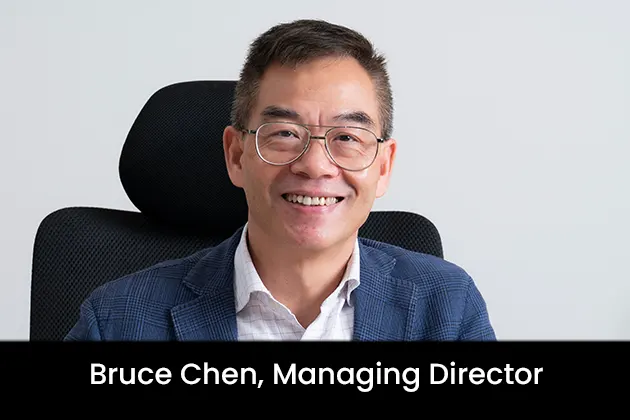
The company’s growth has been closely tied to the experience of its Managing Director, who has been involved in developing the business over many years. His career has not followed a rigid plan. Much of it has involved taking opportunities as they appeared, learning from difficult situations, and adjusting to change.
His experience of coming from China and adapting to a different environment earlier in life also shaped the way he approaches people and business. Listening, staying open to change, and being willing to work through unfamiliar situations have remained important lessons.
Those lessons have carried into the way he views clients. A laboratory can provide an accurate result, but that is not always enough. To support a client properly, the team needs to understand the industry, the problem behind the testing request, and what the client is trying to accomplish.
That attitude will become even more important as Symbio Laboratories develops new capabilities and enters new markets. Its priorities include continued investment in technology, technical expertise, people, and the systems needed to support sustainable growth.
New Zealand is already part of that journey, while the new Guangzhou laboratory marks the beginning of a longer-term opportunity in China. The company will continue to expand its services as testing requirements change across food safety, agriculture, environmental monitoring, pharmaceuticals, and other sectors.
For Symbio Laboratories, however, growth is not simply about adding more locations or more services. It is about having the right people, knowledge, technology, and processes in place to support clients without losing sight of the standards that have shaped the business for almost 30 years.
In the end, the work comes back to something quite simple. Businesses need answers they can rely on. Symbio Laboratories provides the testing and scientific expertise behind those answers, helping clients understand what is happening in their products and processes and giving them information they can use when the next decision needs to be made.
“We deliver innovative solutions, high-qualitycustomer service, and cost-effective analytical testing services.”
— Bruce Chen, Managing Director