

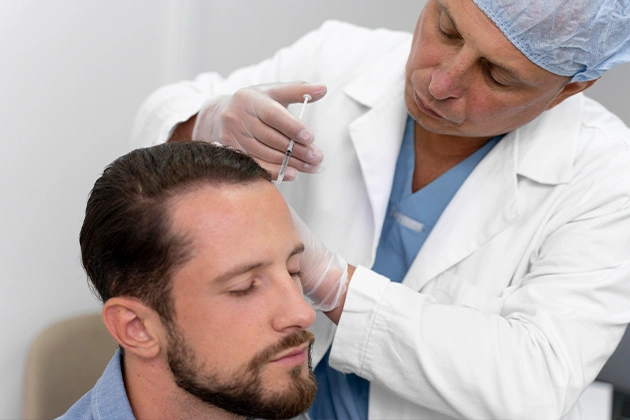
Hair restoration work looks very different today than it did even a few years ago. Back then, most planning happened in your head. You studied the scalp, made mental notes, sketched a rough hairline, and relied on experience to guide every step. That experience still matters, but now it is backed by tools that give you clearer answers before you ever touch a graft. Technology has shifted hair transplants from educated guesswork to careful, data-backed decisions that fit each patient instead of forcing everyone into the same plan.
Personalization is the real change here. When you can see more, measure more, and track more, you stop treating hair loss as a generic problem. You treat the person in front of you. That is where modern technology earns its place in your clinic.
Advanced Scalp Analysis and Digital Imaging
The scalp holds far more information than the eye can catch during a quick exam. High-resolution scalp imaging tools make that information visible. These systems use magnified cameras and digital scanners to show hair density, follicle spacing, shaft thickness, and scalp condition in detail. Instead of guessing how strong a donor area is, you can see exactly what you are working with.
Think about a patient who looks like a great donor candidate at first glance. Thick-looking hair, no obvious thinning. A digital scan might reveal that while coverage looks good, the actual density is uneven or the hair shafts are finer in certain zones. That changes how aggressively you extract and where you pull grafts from. Without that data, you might overharvest an area that cannot support it long term.
Digital imaging also helps when you plan the recipient area. You can identify weak or miniaturized hairs that are still active and decide where new grafts will blend best. This matters when you are trying to improve density without wiping out existing growth. Patients appreciate this level of care because it shows you are not just adding hair. You are protecting what they still have.
Another advantage is communication. When patients see their own scalp magnified on a screen, explanations land better. They understand why you recommend a certain graft count or hairline shape. That clarity builds confidence before surgery even begins.
AI-Powered Hairline Design and Planning Tools
Hairline design is where personalization matters most. A few millimeters can change how natural a result looks. AI-powered planning tools help you test ideas before making permanent choices. These systems analyze facial structure, age, hair characteristics, and current loss patterns to support your design process.
You still control the final plan, but the software gives you a second set of eyes. For example, a patient may want a low, dense hairline because they are focused on how they look today. Planning tools can show how that same hairline might age if further loss occurs behind it. Seeing that future scenario often leads to better conversations and smarter compromises.
These tools are also useful for subtle details. Natural hairlines are not straight lines. They have soft irregularities and varied density. AI planning highlights where small changes can make the result look more realistic. This is especially helpful for less experienced team members who are still developing their design instincts.
What matters most is how this technology supports honesty. Patients can see a realistic preview based on their own features. That keeps expectations grounded and reduces disappointment later.
Precision Graft Extraction and Placement Technology
Extraction and placement tools have improved quietly but significantly. Modern FUE systems allow you to adjust speed, depth, and torque to match each patient’s scalp. This reduces trauma and improves graft quality. You are no longer forcing every scalp to respond the same way.
Consider a patient with a firm scalp and tightly anchored follicles. Older tools might increase the risk of partial transection. Advanced systems let you slow things down, adjust depth, and extract more cleanly. That leads to healthier grafts and better growth.
Placement technology has also evolved. Implanter pens and refined forceps help control angle and depth with consistency. This matters when you are working in visible areas like the hairline or crown swirl. Hair that grows at the wrong angle stands out, even if the density is good. Technology helps you maintain natural direction across thousands of grafts.
Efficiency plays a role, too. Faster, smoother workflows reduce the time grafts spend outside the body. That improves survival rates and keeps results predictable.
Technology-Driven Personalization Across Locations
As clinics grow or operate in different cities, technology helps maintain consistency. Digital planning systems allow teams to follow the same standards regardless of location. Imaging, data storage, and shared protocols make it easier to deliver similar outcomes across clinics.
In competitive markets known for the best hair transplants, NYC, patients expect precision. Advanced planning and imaging tools help clinics handle complex cases while maintaining natural results. Technology supports that expectation by reducing variability between surgeons and cases.
Patients researching hair transplant in Dallas, Texas often compare clinics closely. Digital consultations, imaging, and personalized plans help you stand out without overselling. When patients see that their plan is built around their scalp data, not a template, trust follows.
Real-Time Monitoring and Customized Recovery Plans
Personalization continues long after surgery day. Technology now allows you to track healing and growth remotely. Patients can upload photos through secure platforms, and you can compare them to baseline images taken right after the procedure.
This makes follow-up more meaningful. If you notice uneven redness or delayed healing, you can adjust care instructions early. That prevents small issues from turning into larger problems. It also reassures patients who worry about every change they see in the mirror.
Customized recovery plans are another benefit. Not every patient heals at the same pace. Some return to normal quickly. Others need more time and guidance. Technology helps you tailor advice based on real feedback instead of general timelines.
This approach improves outcomes and reduces unnecessary visits. Patients feel supported without feeling monitored too closely.
The Impact of Technology on Patient Experience and Results
From the patient’s perspective, technology removes uncertainty. Clear scans, realistic planning, and measurable progress make the process easier to trust. They know what to expect and why decisions are made.
Comfort improves when procedures are precise and efficient. Recovery often feels smoother because less trauma occurs during extraction and placement. Results look more natural because planning and execution align closely.
Transparency builds long-term trust. When patients see progress documented over time, they feel confident recommending your clinic to others. That trust is earned through consistency, not promises.
Conclusion
Technology has changed how hair transplant specialists personalize results. Better imaging, smarter planning tools, refined surgical instruments, and real-time monitoring all support decisions that fit the patient instead of forcing standard solutions. Experience still leads the process, but data sharpens it.
For clinics, investing in advanced tools is about more than staying current. It is about delivering care that adapts to each patient’s scalp, goals, and future hair loss. Patients benefit from clearer planning, smoother recovery, and results that age naturally. Clinics such as maxim hair restoration, Austin reflect how technology supports patient-focused care when used correctly. The tools do not replace skill. They support better decisions, clearer planning, and more thoughtful execution. That balance is what patients respond to.
When you combine skill with technology, personalization becomes part of every step. That is what defines modern hair restoration and sets serious clinics apart.