

When a child struggles with learning, coordination, behaviour or everyday activities, the reason is not always easy to see. For parents, finding the right support can become a long process, especially when the usual explanations do not fit what they are noticing. Looking only at a child’s current difficulties can raise more questions than answers.
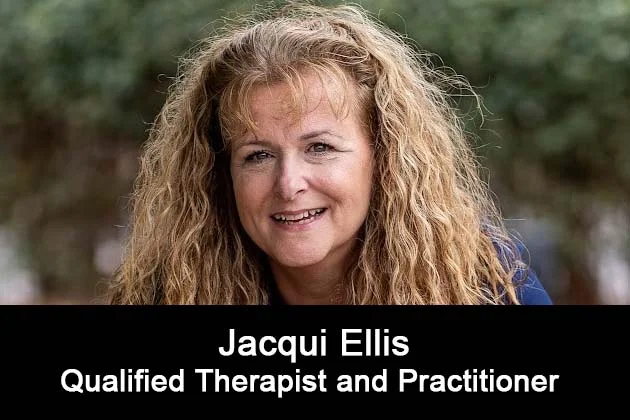
For Jacqui Ellis, this search for understanding began at home. Her own children’s difficulties at school and in everyday life, along with behaviour she found hard to make sense of, led her to look more closely at early development, pregnancy and birth. What began as a mother trying to understand her children became the foundation of her professional work.
Today, Jacqui is a Qualified Therapist and Practitioner at Deep Connexions, working with babies, children, adults and parents. Her practice brings together Neurodevelopmental Therapy, Biodynamic Craniosacral Therapy and Integrative Baby Therapy. Rather than treating a difficulty in isolation, she looks at the wider story behind it, the experiences that may have shaped how a person responds, develops and moves through life.
From Personal Experience to Professional Practice
Jacqui’s professional work grew from a personal need to understand her children. She could see that something was not quite right but did not feel that simply labelling a behaviour would explain its cause.
As she read and researched, she became interested in the connection between early development and later difficulties. The idea of retained reflexes caught her attention and led her to formal training. She then had the opportunity to work with children in a school setting, running a developmental movement programme designed to help pupils integrate retained reflexes.
The experience taught her something beyond the exercises themselves: the importance of creating a safe psychological space for children. In her view, when a child is frightened or under stress, it becomes much harder for them to engage with something new, an observation that has shaped her approach ever since.
Looking Beyond the Immediate Problem
Jacqui’s approach begins with a person’s history rather than jumping straight to the problem that has brought them through the door. When working with a child, she takes a detailed case history that can include conception, pregnancy, birth, developmental milestones and the concerns the family is currently facing. She also asks about family history, having noticed patterns that can extend across generations.
Her clients arrive with very different concerns. A child might struggle with coordination, attention, reading or writing, or find riding a bicycle, kicking a ball or playing sport difficult. Sleep, diet and behaviour can also bring a family to her door.
Adults come with their own stories, often having spent years struggling with emotions and trying different methods without finding the understanding or sense of ease they were looking for.
Jacqui believes that the present does not always tell the whole story. Her interest in early development has led her to consider what a person’s experiences may have been before they had the language to describe them.
Looking at Development from the Very Beginning
Pregnancy, birth and the first year of life are central to Jacqui’s thinking. The nervous system develops during pregnancy and continues to mature after birth, and she is particularly interested in what happens during that first year, and what early experiences may mean for a person’s later responses.
One of the areas she often discusses is movement. Human babies are born far less physically independent than many other mammals. A lamb or calf can stand and walk shortly after birth, while a human baby needs considerable time to develop the strength, coordination and control needed to stand and eventually walk on two feet.
Jacqui describes the developmental movement sequence during this period as “Nature’s Gym Programme.” Through her work, she looks at how early movement patterns relate to the development of the nervous system and uses developmental movement programmes with clients where appropriate.
She has worked with many children experiencing attention, coordination, reading and writing difficulties, always exploring the wider story surrounding their development.
Bringing Neurodevelopmental, Craniosacral and Baby Therapy Together
Neurodevelopmental Therapy opened the first door, but Jacqui’s curiosity did not stop there. After attending the Breath of Life Conference in London, she became interested in craniosacral work and went on to train in Biodynamic Craniosacral Therapy at the Karuna Institute with Franklyn Sills.
The two-year training deepened her interest in pre- and perinatal experiences and gave her another way to understand the earliest stages of life. She later trained in Integrative Baby Therapy with Matthew Appleton and Jenni Meyer at Conscious Embodiment Trainings, bringing her different strands of learning together.
Today, Jacqui does not follow one fixed method with every client. She draws on craniosacral therapy, integrated baby therapy and reflex integration according to what emerges during the work, allowing each person’s needs to guide the session.
When the Body Communicates Before Words
One of the most interesting parts of Jacqui’s work is her focus on experiences that happened before language. Babies cannot explain what they feel, but they communicate through movement, gestures, breathing and physical responses.
Jacqui calls this “Baby Body Language.” She observes these responses within the wider therapeutic process, helping parents explore what they may mean in the context of their child’s history. She compares this to putting together a 1,000-piece puzzle, where each piece gradually adds to the picture.
For parents, this can offer another way of seeing their child’s behaviour. Instead of focusing only on what is happening, they can begin to ask what the child may be trying to communicate.
The Important Role Parents Play in the Process
Parents are not on the sidelines of Jacqui’s work. She considers their involvement essential, particularly when she is working with children.
Jacqui believes children can sometimes mirror unresolved patterns within their families, though this is never about placing blame on parents.
One of her strongest messages to parents is that nobody gets everything right. People make decisions with the knowledge they have at the time, and parenting is a process of learning.
Her work with parents can include exploring their own experiences, learning to listen more closely and finding ways to manage and express intense emotions. She also offers tools and strategies to help parents create a calmer, more nurturing home for their children.
Her view of behaviour is simple, ” all behaviour is communication.” A child may not have the words to explain what is wrong, but that does not mean there is nothing being communicated.
Understanding the Person Behind the Behaviour
The question that began with her own children has grown into a wider interest in how early experiences may influence people later in life. Jacqui brings several disciplines into her work, while holding on to the curiosity that started it all.
She believes every person’s beginning is different, and that a baby’s experience of coming into the world deserves attention too. Rather than focusing only on behaviour, she looks at what may lie behind it and gives people space to explore their experiences.
What started as a mother’s search for answers now guides Jacqui’s work at Deep Connexions, where understanding remains at the centre of her practice.
“True healing begins when we look beyond the surface and become curious about the experiences that may be shaping how we feel, respond, and move through life.”
info@deepconnexions.co.uk
07790 783280
Willow Grove, Chippenham, Wiltshire, SN15 1AR
http://deepconnexions.co.uk