

As businesses become increasingly dependent on digital infrastructure, the pressure on modern data centers has never been greater. From supporting AI workloads and cloud services to handling mission-critical enterprise applications, today’s data centers must operate with speed, precision, and reliability. Yet many organizations still rely on disconnected management systems that create inefficiencies across operations. This is the challenge Tier44 has spent years working to solve.
The company has built its reputation around a simple but transformative idea: data center operations should not be divided into isolated silos. Traditionally, facilities teams and IT departments have worked separately, often using entirely different applications to manage infrastructure. Facility teams focus on cooling, power, racks, and physical layouts, while IT teams handle servers, networks, and software environments.
This fragmented structure slows communication, creates workflow challenges, and increases operational risks. Tier44 recognized early on that businesses needed a simpler, more connected way to manage operations. In 2014, the company saw the potential of ServiceNow and began using its platform to bring facilities and IT management together. Instead of relying on multiple disconnected tools, Tier44 built an integrated system around Service Now’s CMDB, giving organizations one reliable place for real-time operational data. That approach has since become one of the company’s biggest strengths.
Surface What Matters Across Complex Data Center Environments
Modern data centers generate enormous volumes of operational data—from rack-level power readings and equipment states to floor-level capacity snapshots. The challenge isn’t a lack of data; it’s knowing which data matters and where to focus.
Tier44 enhances ServiceNow with graphical visibility tools that cut through the noise. Teams get through the noise. Teams get detailed rack- and facility-level insights into space availability, equipment placement, power allocation, and overall utilization. – presented in a way that immediately highlights what requires attention.
By replacing spreadsheets and disconnected monitoring systems with a unified visual layer, Tier44 helps operations teams identify the information they actually need: available racks, emerging capacity constraints, and resource anomalies. The result is fewer missed signals, faster response times, and clearer situational awareness across even the most complex environments.
Turning Analytics into Actionable Insights
Visibility alone doesn’t tell teams what to do next. Tier44’s analytics layer translates raw operational data—space usage, power consumption, cooling performance, and network capacity—into insights that are specific, timely, and ready to act on. Rather than presenting raw metrics, the platform identifies trends, flags inefficiencies, and surfaces conditions that warrant attention before they scalate. Teams can see which racks are trending toward capacity limits, where power is consistently over- or under-utilized, and where cooling performance may be falling behind demand.
Ai-driven tools within the Tier44 ecosystem continuously monitor infrastructure data and surface anomalies and optimaization opportunities— giving operators clear signals without requiring them to manually comb through dashboards. The output isn’t just data; it’s insight with context.
Together, visualization and analytics give teams the complete picture they need—from what’s happening right now to what’s likely to happen next—without requiring them to dig for it.
ServiceNow provides the workflows, Tier44 provides the Visibility
ServiceNow is already embedded in most enterprise operations—handling IT service management, change workflows, and operational processes. Tier44 builds directly on top of that foundation rather than alongside it.
As a Premier Build Partner, Tier44 develops applications directly distributed through the ServiceNow Store. that extend what ServiceNow already does well. Where ServiceNow provides the workflow backbone, Tier44 adds the visibility layer: real- time infrastructure data, graphical rack and floor views, power allocation tracking, and operational analytics—all within the same environment teams are already working in.
This means no new platform to learn, no separate system to synchronize, and no gaps between where work gets managed and where infrastructure data lives. The two work together as a complete operational picture.
Helping Data Centers Address Stranded Power and Allocation Challenges
Stranded power is one of the most costly and least visible problems in data center operations. Power that has been allocated on paper but sits unused—or capacity that exists on the floor but can’t be confidently assigned—represents real cost without real return.
The problem often comes down to visibility. Without accurate, real-time data on how much power has been allocated, how much is actively being consumed, and how much headroom remains at each rack, operators tend to over-provision as a safety margin. That conservatism protects against risk but compounds the problem.
Tier44 addresses this challenge through integrated power allocation and monitoring capabilities. The platform models power usage at rack, room, and facility levels and traks real-time consumption through integrations with power distribution units (PDUs) and intelligent power strips. Operators can see exactly what’s allocated, what’s in use, and what capacity remains—making it possible to place equipment confidently and recover stranded capacity that would otherwise sit idle.
With accurate allocation data in hand, organizations can optimize server placement, right-size power reservations, and stop leaving usable capacity on the table.
AI-driven analytics layer on top of this to flag patterns that manual review would miss— identifying inefficiencies and surfacing optimization opportunities before they become a problem.
Tier44’s Takes a Phased Automation approach
Tier44 follows a deliberate, three-phase approach to automation, – built on the principle that automation only performs reliably when runs on clean, validated data. Poor data, doesn’t just limit automation; it amplifies the problems automation is supposed to solve.
To ensure reliability, Tier44 follows a three-phase strategy:
- The first phase focuses on data collection and visibility, where infrastructure, hardware, and operational data within ServiceNow are cleaned, structured, and centralized to create a reliable foundation.
- The second phase involves monitoring and analysis, using dashboards and analytics to track system performance, identify trends, and uncover inefficiencies or risks.
- In the final phase, Tier44 introduces automation and AI-driven workflows only after the data and insights have been validated, helping organizations reduce manual effort, minimize human error, and improve operational efficiency.
Freeing Your Team to Focus on What Matters Most
Data center operations involve a significant amount of manual checking—reading power meters one by one, pulling data from separate systems, cross-referencing spreadsheets to piece together a picture that should already exist in one place. That work is necessary but not high-value. It consumes the time and attention of people who should be focused on planning, problem-solving, and keeping infrastructure running reliably.
Tier44 is built to eliminate that overhead. When power readings, capacity data, and infrastructure status are automatically aggregated and surfaced in a single unified view, operators are freed from the manual reconciliation work that has historically defined the job. The information is already there—organized, current, and ready to act on.
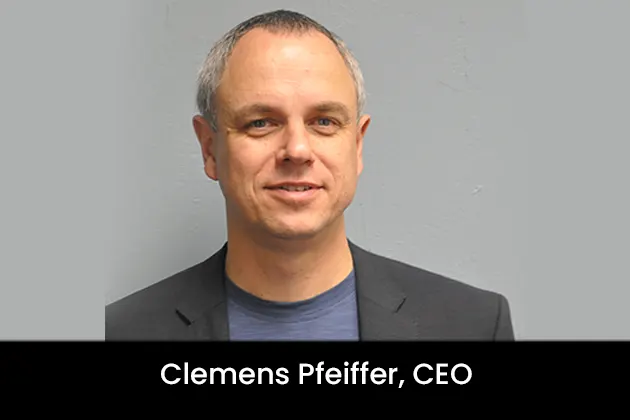
Under the leadership of CEO Clemens Pfeiffer, who brings more than 30 years of experience in IT architecture, and data center management, Tier44 has focused on building tools that give operations teams their time back. The goal isn’t to replace people—it’s to stop wasting their time on work that a well-built system can handle automatically, so they can focus on what actually matters.