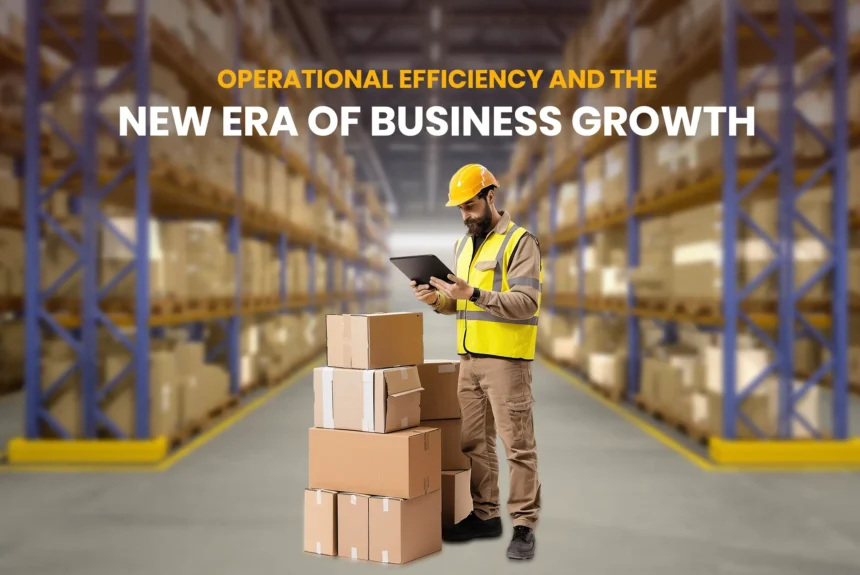
For years, many companies treated logistics as a background function that existed only to support sales and distribution. Today, that mindset has changed completely. In modern markets, operational efficiency directly influences profitability, customer retention, scalability, and brand reputation.
Consumers no longer evaluate companies only by product quality or pricing. They also judge reliability, delivery speed, sustainability practices, packaging quality, and the overall post-purchase experience. Because of this shift, logistics has become one of the most important competitive advantages in today’s economy.
For a growing small business, strong operational systems are no longer optional. They are part of the company’s long-term survival strategy.
The Shift from Selling Products to Delivering Experiences
Customer expectations have evolved rapidly over the last decade. The rise of e-commerce, same-day delivery services, and digital marketplaces has forced companies to compete not only on what they sell, but on how efficiently they deliver it.
This change has exposed a major difference between businesses that grow temporarily and businesses that scale sustainably.
Many companies succeed initially because of strong marketing or product demand. However, once order volumes increase, operational weaknesses begin to appear. Inventory becomes difficult to manage, delivery timelines become inconsistent, fulfillment errors increase, and customer complaints rise.
The businesses that survive long-term are usually not the fastest-moving companies. They are the ones that build operational systems capable of handling growth without losing consistency.
This is one reason many industry leaders are recognized as the best business models in their markets. Their success is often rooted not just in innovation, but in reliable execution across supply chains, warehousing, transportation, and customer fulfillment.
Why Packaging Has Become a Strategic Business Function
Packaging has evolved far beyond its traditional role of protecting products during shipping. It now influences customer perception, operational cost efficiency, sustainability performance, and brand identity simultaneously.
For online businesses especially, packaging creates the customer’s first physical interaction with the company. That experience shapes how professional and trustworthy the brand feels immediately after delivery.
Poor packaging creates several problems at once. Damaged products increase replacement costs, oversized packaging raises shipping expenses, and inconsistent presentation weakens customer confidence. On the other hand, carefully designed packaging improves product safety while strengthening the overall customer experience.
Modern businesses now approach packaging strategically by focusing on:
- Product protection during long-distance transit
- Lower shipping and storage costs
- Improved warehouse handling efficiency
- Sustainable and recyclable material usage
- Stronger customer presentation and branding
The growth of social media has also increased the importance of packaging because customers frequently share unboxing experiences online. This has turned packaging into a form of organic marketing that influences visibility and customer engagement.
As competition increases, businesses are discovering that packaging quality can significantly influence repeat purchasing behavior and customer loyalty.
Transportation Efficiency and Its Impact on Profitability
Transportation is one of the most expensive and operationally sensitive parts of modern business infrastructure. Fuel prices, labor shortages, shipping delays, infrastructure limitations, and international trade regulations all affect profitability.
For growing businesses, transportation inefficiencies create hidden costs that accumulate over time. Delayed deliveries increase refund requests, damaged shipments create replacement expenses, and inconsistent fulfillment weakens long-term customer trust.
This is why logistics is no longer viewed simply as product movement. Companies now treat transportation as a strategic system that directly affects business performance.
Advanced route optimization systems, real-time shipment tracking, predictive analytics, and automated scheduling software are increasingly being used to improve delivery efficiency while reducing operational waste.
Faster transportation systems also improve inventory management because businesses can operate with leaner stock levels when supply chains move reliably. This improves flexibility while reducing warehousing costs.
Modern Packaging and Transportation systems are now deeply interconnected, with packaging dimensions, shipment weight, and warehouse organization all influencing transportation efficiency and operational profitability.
Warehousing and Inventory Control in Growing Businesses
As companies expand, inventory management becomes significantly more complex. Many businesses struggle during growth phases because their operational systems were designed for smaller order volumes and simpler workflows.
Without proper inventory visibility, businesses often experience overselling problems, storage inefficiencies, delayed shipments, and supply shortages.
To solve this, companies increasingly rely on digital warehouse management systems that improve operational accuracy through automation and real-time tracking. Barcode systems, RFID technology, cloud-based inventory software, and automated picking systems are now common tools used to improve fulfillment speed and reduce errors.
Warehouses are also evolving into highly data-driven operational centers. Businesses now analyze inventory movement patterns, forecast demand changes, and monitor fulfillment efficiency in real time.
This level of visibility allows companies to scale more effectively while maintaining operational control and customer satisfaction.
Sustainability Is Reshaping Logistics Strategy
Environmental concerns are becoming increasingly important in business operations. Consumers, investors, and regulators now expect companies to reduce waste, improve energy efficiency, and lower environmental impact across supply chains.
This has accelerated the shift toward recyclable materials, biodegradable packaging, fuel-efficient transportation systems, and reduced shipping emissions.
Many businesses are redesigning packaging dimensions to reduce transportation weight and improve shipping efficiency. Smaller packaging not only reduces environmental impact but also lowers transportation costs and improves storage utilization.
Transportation providers are also investing heavily in electric delivery fleets, optimized route planning, and regional fulfillment centers designed to reduce delivery distances and fuel consumption.
Sustainability is no longer treated only as a branding initiative. It has become a long-term operational strategy that improves both efficiency and customer perception simultaneously
Technology and the Future of Operational Systems
Artificial intelligence, predictive analytics, automation, and real-time operational monitoring are allowing companies to optimize transportation routes, forecast customer demand, reduce inventory waste, and improve fulfillment accuracy at scale.
One of the most important changes technology provides is operational visibility. Businesses can now monitor products across the supply chain in real time, identify bottlenecks immediately, and make faster operational decisions.
Cloud-based logistics platforms have also reduced barriers for growing companies. Smaller businesses now have access to advanced operational tools that were previously available only to large corporations.
As markets become increasingly competitive, technology-driven logistics systems will continue shaping how businesses scale, reduce costs, and maintain customer satisfaction.
Operational Efficiency Driving Sustainable Business Growth
Modern business success depends on much more than product quality or marketing visibility. Companies must now compete on operational reliability, customer experience, fulfillment efficiency, and scalability at the same time.
Businesses that invest in stronger logistics infrastructure create long-term advantages through improved efficiency, lower operational waste, better customer retention, and more stable growth.
In today’s economy, operational excellence is no longer hidden behind the scenes. It has become one of the clearest indicators of whether a company is prepared to grow sustainably in increasingly demanding markets.