Every time you connect to the internet, your device shares information that helps websites identify your location, device, and browsing activity. While this allows websites to deliver personalized experiences, it also raises concerns about online privacy, cybersecurity, and data tracking.
As cyber threats continue to evolve and businesses increasingly rely on digital platforms, more internet users are asking what’s a proxy and whether it can help them browse more securely. Whether you’re an individual looking to protect your identity or an organization managing online operations, understanding proxy servers is becoming an essential part of staying safe online.
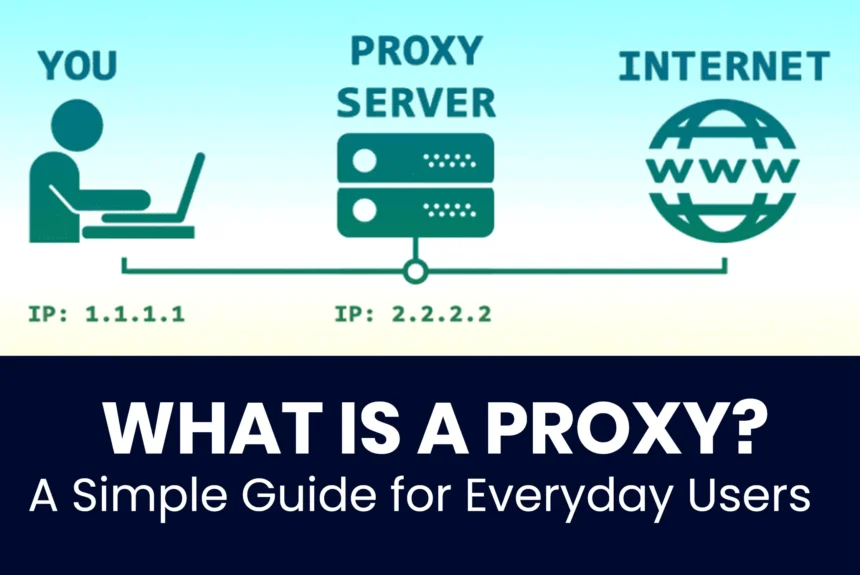
A proxy server acts as an intermediary between your device and the internet. Instead of connecting directly to a website, your request first passes through the proxy server, which then communicates with the destination website on your behalf. The website responds to the proxy, which forwards the information back to your device. Throughout this process, your actual IP address remains hidden, giving you greater privacy while browsing.
The importance of proxy servers has grown significantly over the past decade. Remote work, cloud computing, digital transformation, and increasing cyberattacks have encouraged organizations to invest in technologies that improve security while maintaining productivity. According to Cybersecurity Ventures, global cybercrime damages are expected to exceed $10.5 trillion annually by 2025, highlighting the growing need for stronger online protection.
What Is a Proxy?
A proxy server is a system that stands between your device—whether it’s a computer, smartphone, or tablet—and the internet. Instead of allowing your device to communicate directly with a website, the proxy server receives your request first, forwards it to the destination website, and then returns the website’s response back to you. Throughout this process, the website interacts with the proxy server rather than your actual device, helping conceal your real IP address and providing an added layer of privacy while browsing online.
How Does a Proxy Server Work?
Many people wonder, how does a proxy server work without requiring technical knowledge. The concept is actually quite simple.
Imagine sending an important package through a trusted courier instead of delivering it yourself. The recipient sees the courier as the sender rather than your personal address. A proxy server performs a similar function online.
When you request a webpage, the proxy server receives your request first. It then forwards that request to the destination website using its own IP address instead of yours. Once the website responds, the proxy sends the requested information back to your browser.
Besides protecting your IP address, proxy servers can also:
- Improve browsing efficiency by caching frequently visited websites
- Filter harmful or inappropriate web content
- Reduce unnecessary network traffic
- Monitor internet usage within organizations
- Help businesses manage large-scale online operations
Because the proxy handles communication between your device and websites, it becomes easier to control how internet traffic flows across personal and corporate networks.
Why People Use Proxy Servers
People use proxy servers for many different reasons, depending on their personal or professional needs.
One of the most common reasons is online privacy. Every website you visit can collect information about your browsing activity through your IP address. A proxy helps reduce this exposure by masking your real location.
Another major benefit is access to geographically restricted content. With a proxy service such as Croxy, you can make it seem like you are accessing the content from another country, opening up content otherwise not accessible in your area.
This feature is particularly useful for international travelers, remote workers, researchers, and businesses that need to view websites exactly as users in other countries experience them.
Proxy servers also provide additional protection while using public Wi-Fi networks. Coffee shops, hotels, airports, and public libraries often provide convenient internet access, but these networks can also become attractive targets for cybercriminals. While a proxy should not replace comprehensive security tools, it adds another layer of privacy that helps reduce online exposure.
Businesses increasingly rely on proxy servers for competitive research, digital marketing, cybersecurity testing, and large-scale data collection. Instead of making thousands of requests from a single IP address—which may trigger website restrictions—organizations distribute traffic through proxy servers to maintain reliable access while gathering publicly available information.
Another growing use case is remote work. Companies with distributed teams often use proxy infrastructure to help employees securely access company resources while maintaining greater visibility over network activity.
Types of Proxy Servers
Not all proxy servers work the same way. Different types are designed to meet different browsing, security, and business requirements. Understanding these options can help users choose the most suitable solution for their personal or professional needs.
HTTP proxies are among the most common types and are designed specifically for web browsing. They support HTTP and HTTPS traffic, making them ideal for accessing websites while providing a level of anonymity.
SOCKS proxies are more versatile because they can handle different kinds of internet traffic, including gaming, file transfers, video streaming, and peer-to-peer applications. Although they may be slightly slower than HTTP proxies, they offer greater flexibility.
Transparent proxies are commonly used by schools, universities, businesses, and public institutions. They help administrators monitor internet activity, block inappropriate websites, and manage network traffic without requiring users to configure their devices.
Elite proxies provide one of the highest levels of anonymity. They hide both the user’s IP address and the fact that a proxy is being used, making them suitable for users who prioritize privacy.
Another increasingly popular option is residential proxies. For example, using static isp proxies can offer more consistent performance and reliability.
These solutions use IP addresses assigned by Internet Service Providers, making them appear as legitimate residential users instead of data center traffic.
They are perfect for use with tasks that need a high level of trustworthiness, such as visiting websites that restrict data center IP addresses. If you’re looking for a stable and secure option, many users choose to buy static residential proxy solutions for consistent IP access and stronger protection across sensitive use cases.
Many organizations also invest in static residential proxies because they maintain the same IP address over longer periods. This consistency is valuable for account management, long-term automation, market research, and business intelligence.
Companies that regularly perform large-scale online operations often choose to buy static residential proxy services from trusted providers to reduce detection risks while maintaining stable and reliable internet access.
Real-World Examples of Proxy Servers
Proxy servers quietly support many online services that people use every day. For example, an international marketing agency launching a campaign in Europe may need to verify how advertisements appear to users in Germany, France, and Spain. Instead of traveling to each country, employees can use proxy servers to view localized search results and advertisements from their office.
Streaming services also demonstrate the practical value of proxy servers. Different countries often receive different movie libraries because of licensing agreements. Travelers sometimes need temporary access to region-specific websites while working abroad.
Retail companies frequently use proxies to monitor competitor pricing across different regions. This helps businesses adjust pricing strategies quickly while remaining competitive in rapidly changing markets.
Cybersecurity researchers rely on proxy servers when investigating potentially malicious websites. Instead of exposing their primary systems directly, they route traffic through proxy infrastructure to reduce security risks during investigations.
Industry-Specific Use Cases
The value of proxy servers extends far beyond personal browsing. Today, they play an important role across numerous industries.
E-commerce
Online retailers use proxy servers to monitor competitor pricing, verify localized product listings, detect counterfeit products, and analyze customer experiences across different countries.
Digital Marketing
Marketing agencies use proxies to monitor search engine rankings, verify online advertisements, conduct SEO audits, and evaluate localized campaign performance without geographical limitations.
Cybersecurity
Security professionals depend on proxies during penetration testing, malware analysis, and threat intelligence research. These tools help isolate investigations while protecting internal systems.
Financial Services
Banks and financial institutions use proxy infrastructure to strengthen network security, manage internet traffic, and reduce exposure to cyber threats while supporting secure online operations.
Healthcare
Hospitals and healthcare providers use proxy servers to manage employee internet access, improve network efficiency, and strengthen cybersecurity practices that protect sensitive medical environments.
Education
Schools, universities, and libraries commonly use proxy servers to filter inappropriate content, encourage safe internet usage, and manage network bandwidth for students and faculty.
The Growing Demand for Proxy Services
Demand for proxy services continues to increase as businesses accelerate digital transformation.
According to industry research, more than 5.5 billion people now use the internet worldwide, while billions of connected devices exchange information every day. At the same time, cyberattacks continue increasing in frequency and sophistication.
Organizations are responding by investing in layered cybersecurity strategies that combine proxy servers, firewalls, endpoint protection, multi-factor authentication, and VPN technologies. Rather than relying on a single security solution, businesses increasingly recognize that multiple protective layers provide stronger overall defense.
Proxy vs VPN: Understanding the Difference
One of the most frequently asked questions about online privacy is whether to use a proxy or a VPN. Although both technologies help hide your IP address, they are designed for different purposes and offer different levels of protection. Understanding the difference can help you choose the right solution for your specific needs.
A proxy server primarily acts as an intermediary between your device and the internet. It masks your IP address and allows websites to see the proxy’s IP instead of your own. This makes proxies ideal for activities such as accessing region-specific content, conducting market research, web scraping, testing websites from different locations, and improving browsing privacy.
A VPN (Virtual Private Network), however, provides an additional layer of security by encrypting all internet traffic between your device and the VPN server. This encryption protects sensitive information from hackers, internet service providers, and other third parties, making VPNs a preferred choice for online banking, confidential business communication, and secure remote work.
For casual browsing or location-based access, a proxy is often sufficient. If protecting confidential information is your highest priority, a VPN provides stronger overall security.
Choosing the Right Proxy Provider
Selecting the right proxy service depends on your objectives. Some users simply need occasional anonymous browsing, while businesses require enterprise-grade solutions capable of handling thousands of simultaneous requests with consistent performance.
There are various proxy providers, including free and paid ones. Free proxies are convenient but less secure and slower. Paid proxy services such as Travchis Proxies or Proxy-cheap tend to have better performance, reliability, and support. Providers offering static residential proxies are particularly valued for consistent IP stability and secure, long-term usage.
Before selecting a provider, consider factors such as connection speed, server locations, uptime, customer support, pricing, security features, and compliance with privacy regulations. Businesses should also evaluate whether the provider offers dedicated IP addresses, scalable infrastructure, and reliable technical assistance.
Setting Up a Proxy
Modern proxy services are designed to be user-friendly, making them accessible even for beginners. Most providers offer detailed setup guides for Windows, macOS, Android, iOS, and popular web browsers, allowing users to configure their proxy settings with minimal effort.
After selecting a proxy provider, you simply need to enter the server details into your device or browser’s network settings by following the provider’s instructions. Once the configuration is complete, you can begin browsing with enhanced privacy, improved access to region-specific content, and greater control over your online activities.
Whether you’re using a proxy for personal privacy or business operations, choosing a reputable provider and keeping your settings up to date will help ensure a secure and reliable browsing experience.
Best Practices for Using Proxy Servers
While proxy servers offer numerous advantages, they should be used responsibly. Choosing reputable providers, keeping software updated, using strong passwords, and enabling multi-factor authentication all contribute to a safer online experience.
Businesses should also establish clear internet usage policies and regularly monitor network activity to identify unusual behavior before it becomes a security concern. Proxy servers work best when combined with other cybersecurity tools such as firewalls, antivirus software, endpoint protection, and VPNs.
It’s also important to understand that not every website or online service allows proxy traffic. Some platforms actively detect and restrict proxy usage to prevent abuse or automated activity. Using proxies ethically and in accordance with website terms of service helps ensure a secure and reliable browsing experience.
Final Thoughts
As our personal and professional lives become increasingly digital, protecting online privacy has never been more important. Proxy servers have evolved from simple networking tools into valuable solutions that support secure browsing, business intelligence, digital marketing, cybersecurity research, remote work, and enterprise network management.
Whether you’re an individual looking to browse more privately or an organization managing online operations across multiple regions, proxy servers offer practical benefits that extend well beyond hiding an IP address. From accessing geographically restricted content to supporting large-scale business activities, they continue to play an important role in today’s connected world.
Understanding the purpose of a proxy and how a proxy server works enables users to make informed decisions about protecting their online privacy. Comparing Proxy vs VPN further helps individuals and businesses determine which solution best meets their security and browsing needs.
When combined with responsible online habits and trusted cybersecurity practices, proxy servers can play an important role in building a comprehensive strategy for safer and more secure internet use.
FAQs
- What’s a proxy, and why is it used?
A proxy is an intermediary server that sits between your device and the internet. It helps mask your IP address, improves online privacy, enables access to geo-restricted content, and supports activities such as secure browsing, market research, and web scraping. - How does a proxy server work?
A proxy server receives your internet request before forwarding it to the destination website. The website responds to the proxy, which then sends the information back to your device. This process hides your real IP address and adds an extra layer of privacy. - What is the difference between a Proxy vs VPN?
A proxy primarily hides your IP address and reroutes your internet traffic, making it useful for anonymous browsing and accessing location-specific content. A VPN not only hides your IP address but also encrypts all your internet traffic, offering stronger privacy and security for sensitive online activities. - What are static residential proxies used for?
Static residential proxies provide a consistent residential IP address, making them ideal for long-term account management, web scraping, SEO monitoring, digital marketing, competitor research, and other business activities that require reliable connections. - Which industries benefit the most from proxy servers?
Proxy servers are widely used across industries such as e-commerce, digital marketing, cybersecurity, finance, healthcare, education, and market research. They help organizations improve security, manage online operations, verify localized content, and analyze public web data efficiently. - Are proxy servers safe to use?
Yes, proxy servers are generally safe when obtained from reputable providers. Choosing a trusted service with reliable security practices helps protect your privacy and ensures better performance while browsing or conducting business activities online. - Should I choose a free proxy or a paid proxy service?
Free proxies can be suitable for occasional browsing but often have slower speeds, limited reliability, and fewer security features. Paid proxy services typically provide faster connections, better customer support, enhanced security, and more stable performance, making them a preferred choice for businesses and regular users.
The CEO Views is a renowned global business magazine that celebrates visionary leaders, innovative enterprises, and transformative ideas shaping the future of industries worldwide. Through exclusive interviews, thought-provoking feature stories, and expert insights, the magazine offers valuable perspectives on leadership, innovation, entrepreneurship, and the latest business trends, inspiring professionals to drive growth and lasting success.