
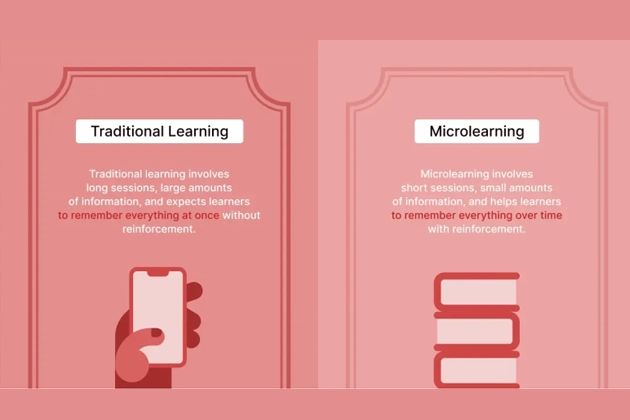
The human attention span has shifted significantly, and while the 8-second figure is often debated, the reality for leadership is a fragmented schedule where deep work is rare. The new executive habit is about focusing on microlearning — the practice of engaging with short, structured knowledge sessions that fit into the cracks of a high-pressure day. This shift addresses the primary friction point for modern leaders: the paradox of needing to evolve intellectually and focus on continuous learning while having zero surplus time to do so.
To identify the most effective systems for this habit, we reviewed behavioral research, executive usage patterns, educational apps ranking, various leadership development tools, and nonfiction books on productivity. We filtered these selections based on their usability within 10–15 minute windows. The sections below break down how this habit works in practice. Each option shows how learning can fit into a real executive schedule!
Learning One New Concept With the Educational Microlearning Method
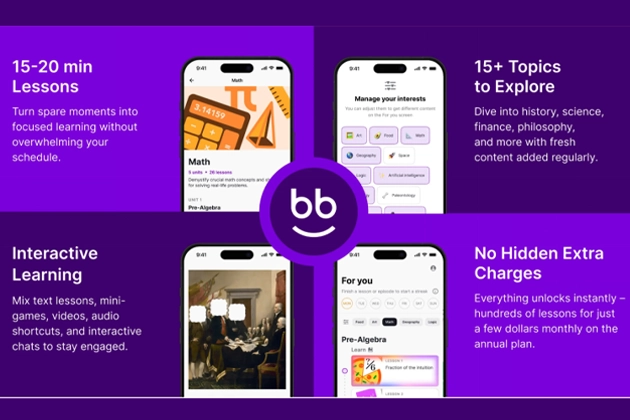
The primary barrier to executive learning is actually decision fatigue. After a day of high-stakes choices, the last thing a leader wants is to browse a library of 40-hour courses. This is where the Nibble app provides a structured curriculum across 20 diverse topics, from Personal Finance and Analytics, delivered in lessons designed to be completed in under 10 minutes.
This approach is rooted in Cognitive Load Theory, developed by John Sweller. By breaking information into chunks, the brain processes and moves data into long-term memory more efficiently than during long sessions. If we take the Nibble’s Shortcasts (8–11-minute audio lessons) and interactive quizzes, you will find they are useful for 10 minutes of active engagement.
From Cognitive Theory to CEO Habits: Making Learning Stick
From a cognitive perspective, this model aligns with Cognitive Load Theory, which suggests that information is processed more effectively when delivered in smaller, focused units. Instead of overwhelming working memory, microlearning supports gradual encoding into long-term memory.
In practice, formats like Shortcasts (8–11 minute audio lessons) and interactive quizzes enable active engagement within a constrained time frame. This is critical for executives, who face fragmented attention and non-linear time. Why this works for executives and CEO habits:
- Reduces learning friction: No need to plan long sessions or commit to full courses
- Preserves cognitive bandwidth: Learning fits into low-energy windows
- Supports consistency: Daily 10-minute inputs compound into strategic knowledge
- Enables just-in-time learning: Concepts can be applied immediately to business decisions
The shift here is subtle but important. Learning becomes a continuous, embedded process. For modern leaders, this is one of the most practical ways to stay flexible and cognitively sharp without adding more pressure to an already overloaded schedule.
Building Daily Knowledge Input Habit
Successful leadership requires a broad mental model library. To build this, you need a reliable engine for daily input. When browsing an educational apps ranking, it becomes clear that the best tools for adults are those that categorize learning by time-to-complete.
Actually, leadership adaptability is directly tied to the diversity of one’s knowledge base. By using platforms that offer modularity, an executive can pivot from a lesson on Artificial Intelligence to Stoic Philosophy. This prevents intellectual silos and keeps the mind sharp for cross-disciplinary problem-solving.
Using Idle Time for Input With Audio Learning
Executives spend a significant portion of their day in transition time, like commuting. Short-form audio learning (typically 10–15-minute episodes) turns this passive time into a competitive advantage. Unlike standard podcasts, which often meander, executive-focused audio learning is scripted to be dense.
Many professionals are shifting toward educational content that offers specific takeaways. By using offline listening and topic-based playlists, you can curate a daily brief that functions like a private briefing from a subject matter expert.
Absorbing One Book Idea Daily With Summaries
The classic image of the CEO reading 50 books a year is daunting. However, book summary platforms with nonfiction lists like Headway have redefined what reading looks like for the time-poor. These platforms provide 10 or 15-minute summaries of non-fiction bestsellers, focusing on the core thesis and actionable Key Ideas that you can apply every day.
This habit perfectly aligns with James Clear’s Atomic Habits principle of Habit Stacking. You can start reading a summary and stack this habit onto your morning coffee or your evening wind-down.
Practical Tip: Don’t just read the summary. Most executives find value in the Audio and Text format, where they listen while scanning the key bullet points to reinforce the message, and then apply the core ideas into their daily routine.
Retaining What You Learn with the Spaced Repetition System
The most common failure in executive learning is the Forgetting Curve. First hypothesized by Hermann Ebbinghaus, the curve shows that we forget nearly 70% of new information within 24 hours if it isn’t reinforced.
Spaced Repetition Systems (SRS) use algorithms to prompt you to review a concept exactly when you are about to forget it:
- How it works: Spend 5 minutes of your 10-minute block reviewing flashcards or prompts from previous days.
- The result: You move from I read that somewhere to I can apply this framework in this board meeting.
Capturing Ideas in Real Time With Note Systems
Learning is a two-step process: consumption and synthesis. Without a place to put ideas, microlearning remains fleeting. Modern executives use Second Brain systems like Notion to track the 10-minute habit version or journaling the concepts.
The goal is one note per idea. If you learn a new concept about Statistics or Negotiation, you take 60 seconds to write one sentence in your own words about how it applies to your current project. This active recall is what turns a fact into insight.
Turning Learning into Decisions: Reflection Blocks
The final and perhaps most critical 10-minute habit is the Reflection Block. Employees who spent 15 minutes reflecting on their learning performed about 23% better than those who did not.
As an executive, you can use your last 10 minutes of the day to ask:
- What did I learn today?
- How does this change a decision I have to make tomorrow?
This practice transitions knowledge from the academic to the operational. It ensures that your Learning is a core component of your Leadership Development Habits. It is important to journal and use tools for it, or even just write all ideas into a notebook.
Testing a 10-Minute Habit That Fits Your Schedule
The executive habit is about continuous micro-learning habits. Whether you are using the Nibble app to master a new mental model or using audio summaries to catch up on industry trends, the goal is the same: consistent, incremental growth.
The value of this approach lies in its sustainability. By choosing one format and attaching it to an existing routine, you can build a knowledge base that compounds over time. Better decision-making comes from the daily input of diverse, high-quality information.
Your next step could be to choose one tool today. Dedicate your next 10-minute waiting block to a single lesson, and observe how a small shift in your schedule leads to a significant shift in your perspective.