For many manufacturers, sourcing decisions no longer sit quietly in the purchasing department. They reach the executive table because they affect cash flow, production schedules, customer trust, and long term resilience. A small metal component that arrives late, fails inspection, or needs unexpected rework can slow an entire product line.
That is why more leadership teams are looking closely at where critical formed metal parts come from, how they are made, and how much operational support sits behind the supplier relationship. Price still matters, but the lowest unit cost rarely tells the whole story.
For companies that use formed metal components in demanding applications, a USA based multi site manufacturer offers a practical advantage. It gives buyers more visibility, more coordination, and a stronger foundation for growth.
1. Domestic sourcing gives leaders more control over production risk
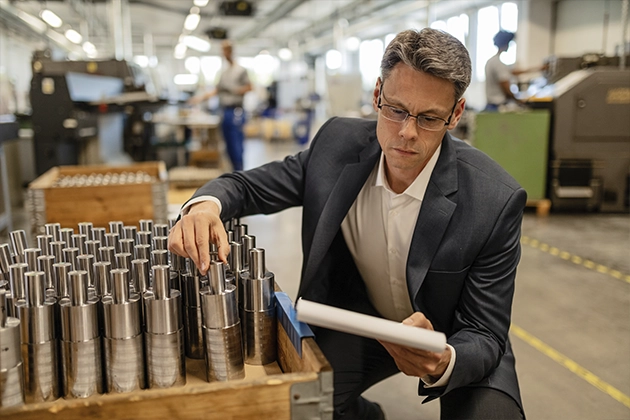
For companies that depend on steel extrusions, a USA based manufacturing partner gives leadership teams a clearer view of what is happening before parts arrive at the loading dock. That matters when the component is tied to safety, pressure performance, dimensional accuracy, or a larger assembly that cannot move forward without it.
Overseas sourcing often looks efficient on paper until freight delays, communication gaps, customs issues, or long correction cycles enter the picture. A domestic supplier does not remove every challenge, but it shortens the distance between the problem and the people who can solve it. A leadership team gains several practical advantages:
- Easier communication between purchasing, engineering, and production teams
- Shorter review cycles when part changes are needed
- Better visibility into capacity, tooling, and inspection processes
- Fewer surprises tied to overseas freight and long transit windows
For CEOs and operations leaders, that control supports planning, protects customer commitments, and helps teams respond quickly when demand shifts or a design issue appears late in the process.
2. Multiple sites support capacity without creating unnecessary complexity
A manufacturer with more than one domestic facility brings a different kind of stability to sourcing. It is not just about square footage or equipment count. It is about having operational depth when customer demand grows, production mix changes, or one facility needs to focus on a specific material, process, or part family.
In metal component sourcing, capacity is often discussed only after there is a problem. A company wins new business, a forecast increases, or a product line expands, and suddenly the supplier that worked well at one volume struggles at the next. That is when executives discover whether their manufacturing partner has real scale.
A multiple site partner gives the customer more room to grow. It also supports better internal specialization. One location can focus on certain equipment, materials, or production strengths while another adds volume or backup support.
This matters for manufacturers serving industries where delivery reliability is part of the brand promise. Automotive, medical, defense, energy, and specialty product companies all understand that supply chain weakness becomes customer experience weakness.
3. Near net shape production helps reduce waste and secondary work
A major reason companies evaluate impact extrusion is simple: they want to get closer to the finished part faster. Near net shape manufacturing helps create components that need less machining, less material removal, and fewer added steps before they are ready for use.
This has strategic value. Every extra process adds time, labor, handling, inspection points, and cost. When a part starts as bar stock and large amounts of material are cut away, the buyer pays for both the material and the waste. When an assembly depends on multiple pieces being welded or joined, the buyer also inherits added labor and more points of failure.
Impact extrusion changes that equation for the right parts. It is well suited for certain hollow components, closed end shapes, pressure tight containers, shells, and parts that benefit from strong wall and base geometry. The process creates a cleaner path from raw material to finished component.
For executives, the lesson is not that one process fits every part. The better lesson is that process selection shapes margin.
4. Engineering support turns sourcing into a design advantage
The strongest supplier relationships usually begin before a purchase order is issued. For technical components, early engineering input often improves the part, the tooling plan, and the manufacturing path. A USA based partner with design and engineering support gives customers a chance to review the component through a production lens instead of waiting until a drawing is already locked.
That can lead to more practical decisions. A tolerance that looks harmless on paper can add cost if it is tighter than the application requires. A feature that seems simple can create unnecessary secondary work. A material choice can affect forming behavior, tool life, inspection, and long term performance. When engineers and manufacturing teams work together early, they can often improve:
- Part geometry
- Material selection
- Tolerance strategy
- Tooling expectations
- Secondary operation planning
- Cost and timeline estimates
This is especially important for steel extrusions because steel places more stress on tooling and equipment than softer materials. Strong engineering support helps address those realities before they become production problems.
A CEO does not need every technical detail of the extrusion process. The executive priority is simpler. The supplier should have the people and process discipline to turn technical complexity into a stable production plan.
5. In house tooling improves accountability and timing
Tooling is one of the quiet pressure points in formed metal manufacturing. A project can have a good design and strong demand, but if tooling is outsourced, delayed, fragile, or difficult to adjust, the timeline suffers. In house tool and die capability gives a manufacturer more control over that part of the process.
When the same organization designs, builds, maintains, and repairs tooling, communication is tighter. Problems are easier to diagnose. Adjustments do not have to travel through a long chain of vendors. Cost and timeline estimates also become more grounded because the supplier understands its own equipment and tooling demands.
For customers, that accountability reduces friction. It also supports better launch planning. A part that requires a specialized die, fixture, or process setup depends on a team that manages tooling with care.
6. Quality control becomes easier to verify
Quality is often discussed as a promise, but buyers need proof through process. Critical metal components require consistent inspection, repeatable production controls, and a culture that treats defects as business risks, not just production issues.
A domestic multi-site manufacturer gives customers more opportunity to understand how quality is built into the work. That includes first piece and last piece inspections, measuring equipment, documentation practices, and clear communication when a part has tight tolerance or performance requirements.
For leadership teams, quality control affects more than the cost of scrap. It influences warranty exposure, customer confidence, assembly line performance, and the workload placed on internal teams. Poor parts create hidden costs. Good parts create smoother operations.
7. A stronger supplier base supports long term business strategy
Executives are judged on growth, but growth depends on operational choices that hold up under pressure. Sourcing from a capable domestic manufacturer gives companies a better foundation for new product launches, customer expansion, and production stability.
This is especially true when a part belongs to a larger system. A component that looks small on a bill of materials can carry major consequences if it delays an assembly or creates quality concerns in the field. Smart sourcing recognizes that strategic parts deserve strategic partners.
For companies evaluating steel extrusions, the decision should include more than piece price. Leadership teams should consider engineering support, tooling control, inspection discipline, domestic capacity, and the supplier’s ability to grow with the program.
The goal is not to choose the closest supplier. The goal is to choose the supplier that reduces friction from design through delivery.
In Conclusion
Sourcing decisions reveal how a company thinks about risk, quality, and growth. A USA based multi site manufacturer brings value because it connects production capability with communication, engineering support, tooling control, and supply chain resilience.
For leadership teams, the advantage is practical. Better sourcing gives teams fewer delays, fewer surprises, and stronger confidence in the parts that keep production moving. In a manufacturing environment where customer expectations are high and schedules are tight, that kind of stability is part of how companies compete.