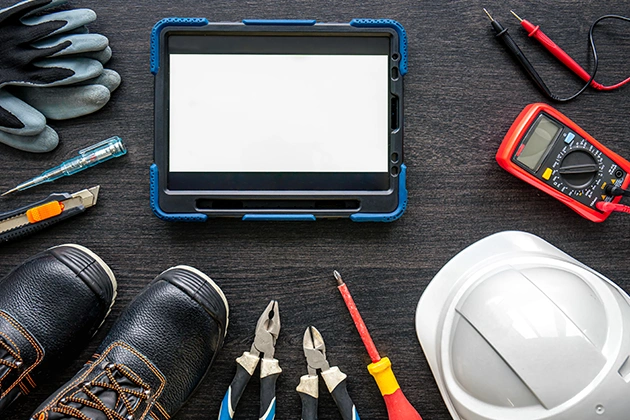
A daily site tool kit needs to support speed, reliability and mobility without becoming heavy or disorganised. For technicians and tradespeople moving between installations, maintenance tasks and fault finding, the goal is not to carry every tool available but to carry the right tools for the majority of daily jobs. A practical setup reduces downtime, improves safety and allows consistent performance across changing site conditions. Building that kit requires careful selection based on task frequency, tool durability and efficient storage rather than habit or preference alone.
Start With The Core Tools Used Every Shift
The foundation of a daily kit is the group of tools used repeatedly across most jobs. These typically include cutting, gripping, fastening and basic testing equipment. Selecting high-quality, multi-purpose tools reduces the number of items you need to carry while maintaining capability on site.
Many tradespeople standardise their setup by sourcing trade tools for everyday workshop and site use that are designed for continuous handling, consistent tolerances and long service life. This approach ensures compatibility between tools, predictable performance and less time spent adapting to different equipment during urgent work.
The emphasis at this stage is on reliability and ergonomics, as these tools will be in constant use throughout the day.
Match The Kit To Your Most Common Tasks
A practical kit reflects the actual work performed, not a theoretical list of tools. An electrician focused on cable terminations and testing requires a different daily setup from a technician handling control enclosures or field repairs.
Identifying high-frequency tasks allows you to prioritise the tools that directly support them. This prevents overloading the kit with rarely used items and keeps the overall weight manageable. It also improves workflow, as the most important tools remain immediately accessible without unpacking multiple layers of storage.
This task-based approach is central to efficient workflow optimisation, particularly on large or time-sensitive sites.
Choose Compact Versions Without Losing Capability
Space and weight are critical when tools are carried throughout the day. Modern compact tools are designed to deliver full functionality while reducing bulk, allowing more capability within a smaller footprint.
Short-handle drivers, slim-profile cutters and modular test instruments maintain performance while improving access in confined spaces such as cabinets, conduits and equipment panels. Compact design also supports better balance inside the tool bag, reducing strain during transport and making it easier to locate tools quickly.
Durability remains essential, as daily transport exposes tools to vibration, impact and environmental contaminants.
Use A Storage System That Supports Fast Access
Tool selection is only effective if the storage system allows quick retrieval and secure transport. A modular layout strengthens this by dividing the kit into task-based units that can be removed, replaced or reconfigured without rebuilding the entire setup.
According to research on modular product architecture, modular systems improve flexibility, simplify inventory control and allow components to be reorganised or upgraded without redesigning the whole structure.
This directly translates to site work, where dedicated modules for termination, testing or mechanical fixing keep tools in a repeatable position and reduce search time. Mobile technicians can carry only the required modules for the day, while fixed-site trades benefit from structured cases with interchangeable internal sections that preserve order and readiness.
Include Testing And Measurement As Daily Essentials
Modern site work relies heavily on verification and diagnostics. Tools for electrical testing, alignment or measurement are no longer occasional-use items but part of everyday workflow.
Keeping these instruments in the daily kit allows immediate confirmation of system status, reducing delays and improving safety. It also supports a consistent quality standard, as installations and repairs can be checked and signed off without leaving the work area.
Protective storage for these devices is essential to maintain calibration and long-term accuracy.
Maintain And Review The Kit Regularly
A practical daily kit is not static. Tools wear, job requirements change and new methods are introduced. Regular inspection ensures cutting edges remain sharp, insulated tools maintain compliance and measurement devices stay accurate.
Periodic review also allows you to remove redundant items and introduce tools that better support current tasks. This process keeps the kit lightweight, relevant and aligned with real site conditions.
Consistent maintenance is a key part of tool lifecycle management, ensuring dependable performance over time.
Built For Readiness, Not Just Convenience
An effective daily site tool kit is defined by readiness. When each tool supports a specific, high-frequency task and is stored for immediate access, work progresses without interruption. By focusing on core tools, compact capability, structured storage, and regular review, technicians and tradespeople create a system that moves with them across sites while maintaining precision, safety and efficiency throughout the day.