

Emerging markets have become increasingly prominent in the global financial markets over the past few decades on account of their rapid economic growth, growing middle class, and developing financial systems.
Like any investment proposition, these markets bring both prospects and risks; typically, investors can expect higher growth rates but more volatility when compared with developed markets. Consequently, investors must develop a strategic approach to emerging markets investments to identify potential opportunities and mitigate risks along the way.
What is an emerging market?
An emerging market is a country that is in the process of developing into a more advanced economy, characterised by increasing economic output, industrialisation, and consumer demand. The term is somewhat broad and typically applies to countries and regions like Asia, Africa, Latin America, and parts of the Middle East, based on their macroeconomic performance in relation to developed markets. The growth in economic momentum is appealing to investors, but the asset class is also known for a number of factors that contribute to higher volatility, including political risk, regulatory change, market opacity, and currency and inflation risks; investors therefore require a nuanced investment approach to achieve long-term results.
How to gain exposure with strategies
Investors have a number of strategies for gaining exposure to emerging markets. One of the most popular strategies is diversification, which refers to spreading exposure across regions and asset classes in efforts to curb idiosyncratic risk. Instead of pushing the chips “all in” on one country or sector, diversification can ensure that performance across an emerging markets portfolio is spread out so that one-off issues don’t wreak havoc. Investors can, and do, invest in equities, commodities, indices, and currencies in emerging markets, using a range of ETFs, futures, options, and other derivatives.
A comprehensive suite of tradable instruments can enhance the investment strategy using this method. Equiti offers an array of global market instruments to its clients via its product offering (https://www.equiti.com/uae-en/products/).
The role of technology and market access
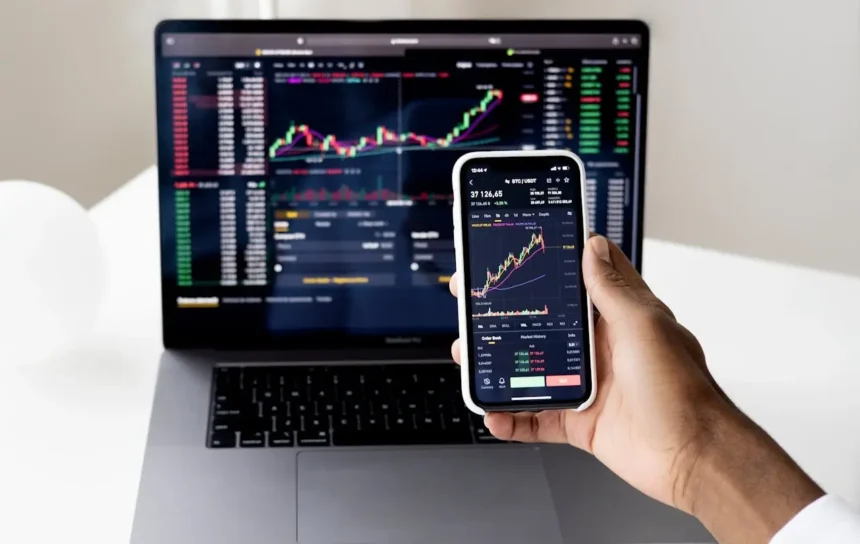
Investing tools have changed significantly over the past several years, potentially transforming the way that investors gain exposure to emerging markets. Do you ever wonder who some of the Forex players are? Look no further; these are some of the most crucial aspects of what the forex markets consist of. Modern mobile and web-based trading platforms enable the average investor to gain access to global markets, whether emerging or developed, in real time and with the research tools and order flow analytics that were once only available to institutions. A great investor app makes the international financial markets more welcoming to today’s individual investors, such as the Equiti Trader App (https://www.equiti.com/uae-en/platforms/equiti-trader-app/).
This kind of technology allows market participants to stay on top of important information and adjust their portfolios, as necessary, when economic reports, political events, or currency moves spur unexpected shocks; it also enables them to gain international market exposure in a diversified manner.
Risk management in developing markets
Perhaps even more critical in emerging market investing is risk management. Certain moves, like large fluctuations in currency, can drastically eat into an investor’s gains. This is especially true for foreign investors because if their native currency is different from the emerging market they are investing in, they are exposed to currency risk. In order to prevent something like this from occurring, investors can use stop-loss orders to prevent further losses, as well as use position sizing and portfolio rebalancing to maintain a grip on their risk-reward profile.
But arguably, the more crucial way to manage risk is to keep one’s eyes and ears open. By doing so, an investor can get a handle on key pieces of data like an emerging market’s latest economic indicators, its central bank’s activities, and its trade relationships with other countries. By watching global trends and having access to educational materials, a trader can get a view on not only the rewards in a particular economy, but also the risks.
Bigger views on reward
Emerging markets are not a monolith that all have the same reward characteristics. These economies are all individual and have their own unique traits. With this in mind, investors cannot just use the same strategies in each one of these countries. When investors stick to the strategies that they already know and try to force them to fit in different market conditions, it usually ends in disaster.
At the same time, however, investors can avoid the pitfalls and lost opportunities by sticking to the strategies that work and applying them in a different way. This is made all the more possible by using providers like Equiti (https://www.equiti.com/uae-en/).