The digital age has snuck into more than just schools. It took it apart and moved the furniture around. AI, VR, and gamification are being used by millions of students daily. What about the classroom? As we learn more about EdTech, an essential issue arises.
New concepts are thrilling, but the actual beauty of learning is frequently in the spaces between the lines, the support, the customized explanations, and the emotional connection that can only come from a human guide. Finding the right balance between high-tech tools and one-on-one instruction is contemporary education’s toughest challenge.
1. The Rise of Personalized Learning Paths: From Mass Production to Custom Mastery
The one-size-fits-all education is a thing of the past, a holdover from the industrial age that was meant to make people uniform. In traditional classes, students were often forced to move at a speed that fell in the middle. This meant that students who were ahead were bored, and students who were behind were stuck. One of the biggest wastes of time and money in history was estimating people’s abilities.
The rules have changed now that there are flexible learning tools. They use complex formulas to look at each student’s work in real time and change the job’s level of difficulty, tone, and delivery right away. This is the start of the road of hyper-personalized learning.
Technology as the Diagnostic Tool
Modern EdTech can be thought of as a very accurate brain scan. It is incredibly accurate at finding exactly where a student’s information is broken. The software doesn’t just mark the answer wrong if a student is having trouble with difficult math. The mistake is found by going back through many levels of thought. It can tell you if the problem is with the derivative itself, with how you understand limits, or with simple math skills you haven’t used in years. With this kind of monitoring power, small problems can be fixed before they become so big that they sink a student’s trust.
The Mentor as the Surgeon
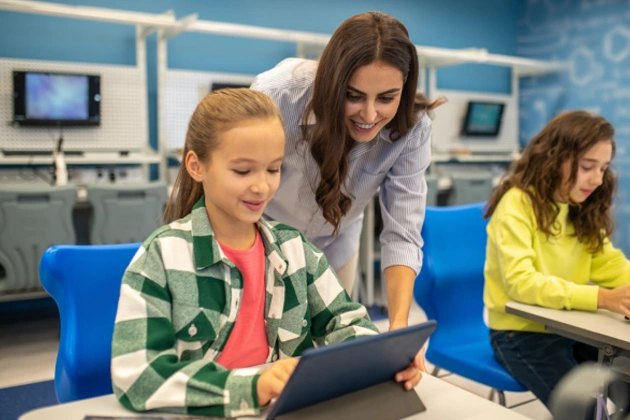
It is the human guide who does the surgery, not the statistics, which accurately pinpoints the challenge. A guide gives important background information that simple data doesn’t have. Even though data may show that a student is taking a while to answer, a guide knows that the student may not be doing well because they are stressed, tired, or having a problem at home.
For those looking for this precise blend of data-driven insight and empathetic guidance, finding the best math tutoring Toronto ensures that students don’t just solve equations by rote, but actually understand the profound logic behind them. The so what? is what a guide does with what the machine gives them. This helps the student move from having cold facts to having warm knowledge.
2. Artificial Intelligence: The Tutor’s Assistant, Not the Replacement
In the past of teaching tools, AI is likely the most important change agent, maybe even more important than the printing press or the internet. Generative AI can make full lesson plans in seconds, grade hundreds of multiple-choice tests right away, and even give 24/7 feedback on basic code vocabulary or essay structure. It’s a machine that can wait forever.
Automating the Mundane to Elevate the Human
By giving AI routine and repetitive tasks, teachers get back their most valuable and rarest resource: time to do nothing. If a teacher or trainer doesn’t have to grade papers or check writing every night for three hours, they can use that time for high-impact one-on-one lessons. As part of their lessons, they can really get students to think critically, argue about moral issues, and look into the gray areas of history and science. AI does the low-level thinking work so people can focus on coming up with new ideas at the high level.
The Nuance of Socratic Dialogue
AI is a prediction engine at its core, despite how powerful it is. It does a great job of giving the most likely right answer. But it still has trouble with the Socratic Method, which is the tricky art of asking just the right question to help a student come to their own realization.
A human guide feels the “aha!” moment. moment just seconds before it happens. They can tell a lot from a small change in a student’s stance, that frown, or the way their voice sounds. A guide can change the subject of a talk based on a subtlety that a program doesn’t fully understand yet, deciding not to answer in order to help the student learn how to do research. The machine tells you what to do. The guide helps people find new things.
3. Immersive Technologies and the Presence Gap
The boring manual is dead thanks to VR and AR. History and science books used to be flat, two-dimensional pages, but now they are engaging, three-dimensional experiences that engage many senses.
- Gamification
EdTech raises dopamine levels and psychological involvement by changing a tough biology unit into a quest with levels, prizes, and story stakes.
- Global classrooms
VR breaks down walls between places. A student in a small town in the middle of nowhere can put on a headset and virtually sit in the front row of a class at one of the best universities in the world, working with digital models of the Large Hadron Collider or the ruins of Pompeii.
The Risk of Digital Isolation: The Silo Effect
The risk that comes with interactive technology is known as the “silo effect” in the classroom. A student who wears VR gear is cut off from their classmates and teachers, both physically and socially. They live in their own world, which can make it hard for them to share a social reality.
This is where having a guide is so important. The debriefing after a high-tech event is led by a guide. They help the student turn a cool computer exercise into useful information that can be used in the real world. They ask: How did you feel when you were in that online meeting? What does that have to do with the rules we have now? Without people to ground these high-tech experiences, technology could just become fun, like a digital field trip that doesn’t leave any brain marks.
4. Data-Driven Insights vs. Emotional Intelligence (EQ)
The way things stand right now, we are literally drowning in student data. It’s possible to see exactly where on the screen their eyes are moving, how long they stay on each slide, and how fast they type to the millisecond. But let’s not forget that data is cold. It usually tells us what, but not why.
Tracking Engagement vs. Tracking Passion
If a student is moving quickly through a lesson, an EdTech monitor might show that they are very interested. This is a good measure for a machine. If a guide looked over that student’s shoulder, they might see that the student is really upset and stressed, and is clicking on things at random to get the work done and escape the stress.
Mentors have Emotional Intelligence (EQ), which lets them tell the difference between the speed of control and the speed of fear. They can step in if the data looks good, but the student is unhappy, which stops stress before the program even notices a problem.
Building Resilience: The Power Skills
Tech is great for teaching Hard Skills like math, writing, and coding, but the only surefire way to improve Soft Skills, which many people now call “Power Skills,” is to have a guide.
- Resilience. Learning how to fail, sit with the frustration of a wrong answer, and try again without losing heart.
- Ethics. Understanding the moral implications of what we build with our technology, questions of bias in AI, or the environmental cost of hardware.
- Collaboration. Learning how to argue a point respectfully and work within a diverse human team to achieve a common goal.
To write code that works, you can learn from algorithms. Some people teach you why you should care about how your code affects the people who will use it.
5. The Hybrid Model: The Future of Global Education
These days, the big question in education is not whether or not to use technology, but how to do it without losing our minds. The most effective ways to teach in the future will not be only digital or only traditional. They are going to be Hybrid or Blended.
The Components of a Successful Hybrid Model:
- Asynchronous technology. Students use high-end digital tools to learn the what, the foundational facts, formulas, dates, and definitions, at their own rhythm and in their own time.
- Synchronous mentorship. Students meet with mentors (in person or via video) to explore the why and how. These sessions are reserved for high-value activities: debate, project-based learning, and personal coaching.
- Peer-to-peer learning. Using digital platforms not just for content delivery, but to facilitate human-to-human collaboration across borders.
Mentors play a very different part in this new plan than they did before. They are no longer the Sage on the Stage, the person with all the answers who stands at the front of the room. They are now the Guide on the Side instead. They are in charge of the students’ education and help them find the islands of truth and knowledge in the vast seas of digital information.
FAQ
Can AI eventually replace human teachers?
AI can give knowledge and grade it, but it doesn’t have emotional intelligence or the power to inspire. Being a teacher means working with people. AI is a powerful helper that frees up teachers to focus on more difficult tasks like critical thinking and social and emotional support that machines can’t do.
Is too much screen time a concern in EdTech?
Yes. Too much time in front of a screen can make you tired and less likely to connect with others. It is the goal of balanced EdTech that people use it actively instead of passively. Good programs make collaborative problem-solving a priority and make sure that digital work is paired with physical activities and conversations that happen away from the computer.
How does mentorship improve student retention?
When students feel like they fit and are responsible, they are more likely to keep going. A guide gives you the mental safety to fail and the motivation to keep going. This mental connection is a big reason why students stay committed to and do well in school over time.
What is the most important soft skill that technology cannot teach?
Empathy. Even though a computer can mimic situations, real understanding can only be gained by interacting with real people. To understand other points of view, deal with cultural differences, and truly care about others, you need a human role model and social practice in the real world.
How should parents choose the right EdTech tools?
You should look for tools that do more than just entertain kids. The best tools give parents clear data insights and also let them give comments in person. Always give more weight to sites that help students meet with qualified teachers or mentors.