
Modern home design leaves little room for mistakes. Clean geometry, open plans, exposed materials — everything is visible, everything is judged. A weak exterior visualization can flatten a strong architectural idea, hiding proportion issues or material conflicts.
A good one does the opposite: it sharpens relationships between forms, clarifies intent, and builds confidence long before construction begins.
That’s why 3D exterior rendering has become a core part of modern residential design. Not as decoration, and not as surface-level marketing, but as a working tool used early in the process.
Architects rely on it to test scale, light, and context. Developers use it to align teams, secure approvals, and communicate value to investors. Clients use it to understand space, materials, and atmosphere in a way drawings rarely allow.
When done well, exterior rendering doesn’t just show how a house looks — it explains how the design works and why the decisions behind it make sense.
What Sets Strong Agencies Apart
The best exterior rendering agencies don’t overdesign. They respect architectural intent and understand that modern homes leave no room for visual excess.
Restraint over spectacle
Modern architecture depends on balance. Too much contrast, drama, or polish can overpower the design. Strong agencies let proportion, material, and natural light do the work instead of forcing visual effects.
Architectural understanding
Good renderings reflect how buildings are actually conceived and built. Materials behave realistically. Scale feels correct. Nothing looks added just to impress.
Clear communication and process
Exterior rendering is collaborative. Strong agencies work with clear timelines, structured feedback loops, and defined responsibilities. No guessing. No unnecessary back-and-forth.
Consistency under pressure
Tight deadlines, revisions, multiple stakeholders — these are normal conditions. The best teams deliver the same level of quality even when timelines are compressed.
When these elements are in place, rendering stops being a risk and becomes a reliable part of the design process.
1. Fortes Vision
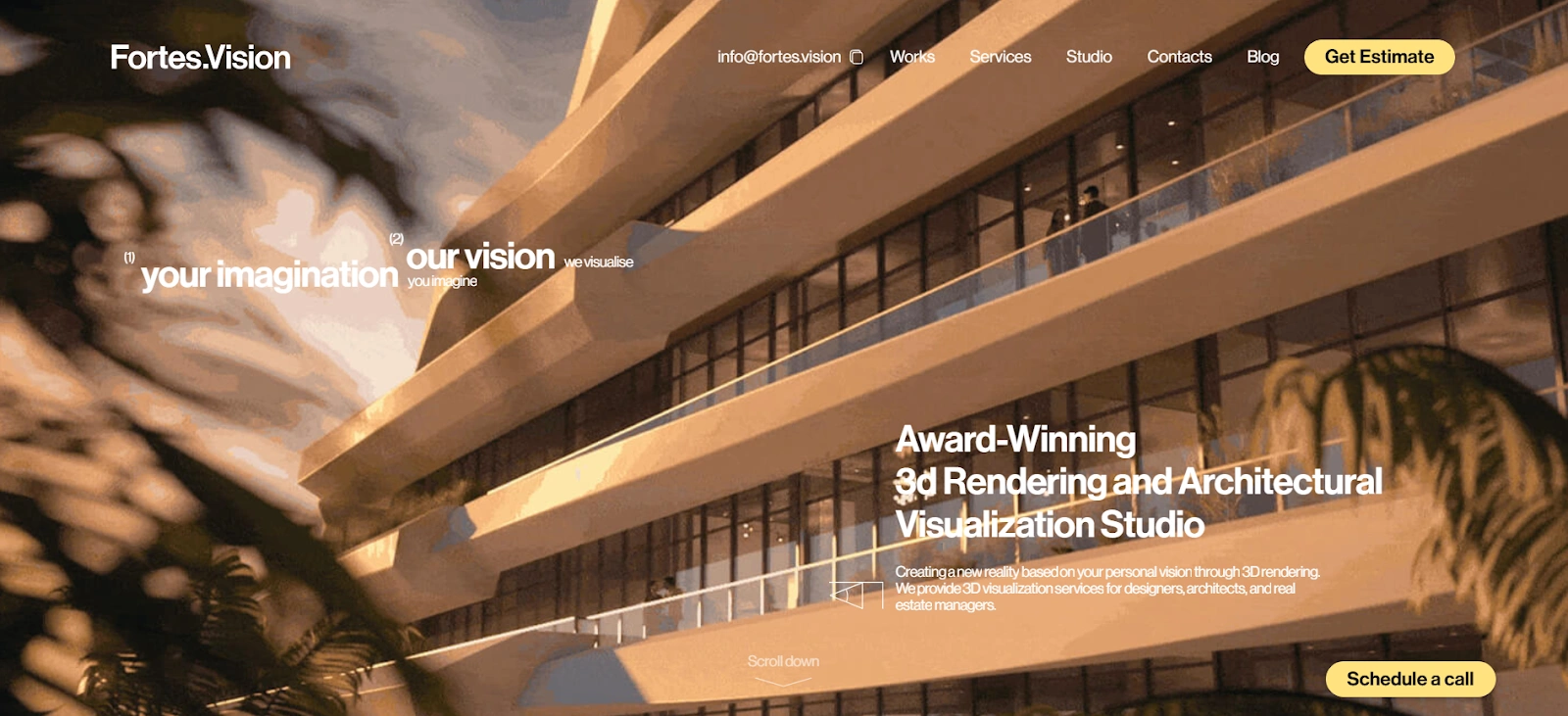
Fortes Vision has built its reputation around one thing: control. Control over form, light, materials, and process.
Best for:
- Modern residential architecture;
- Luxury villas and private homes;
- Developers who need fast, reliable exterior visuals.
Their 3D Exterior Rendering Services are designed specifically for modern architecture, where restraint matters as much as realism.
The work avoids visual noise. Materials behave like materials. Light feels natural, not cinematic. Modern homes remain modern — clean, balanced, intentional. Nothing is added just to impress.
What makes Fortes Vision particularly effective is its structured workflow. Each project moves through clearly defined stages: scope alignment, modeling, draft previews, atmosphere references, refinement, and final quality checks. A dedicated project manager stays involved throughout, which keeps communication tight and revisions efficient.
Speed is another advantage. Exterior renderings are typically delivered within 5–7 days without sacrificing detail, making the studio a strong partner for time-sensitive residential projects, investor presentations, and planning approvals.
2. Brick Visual
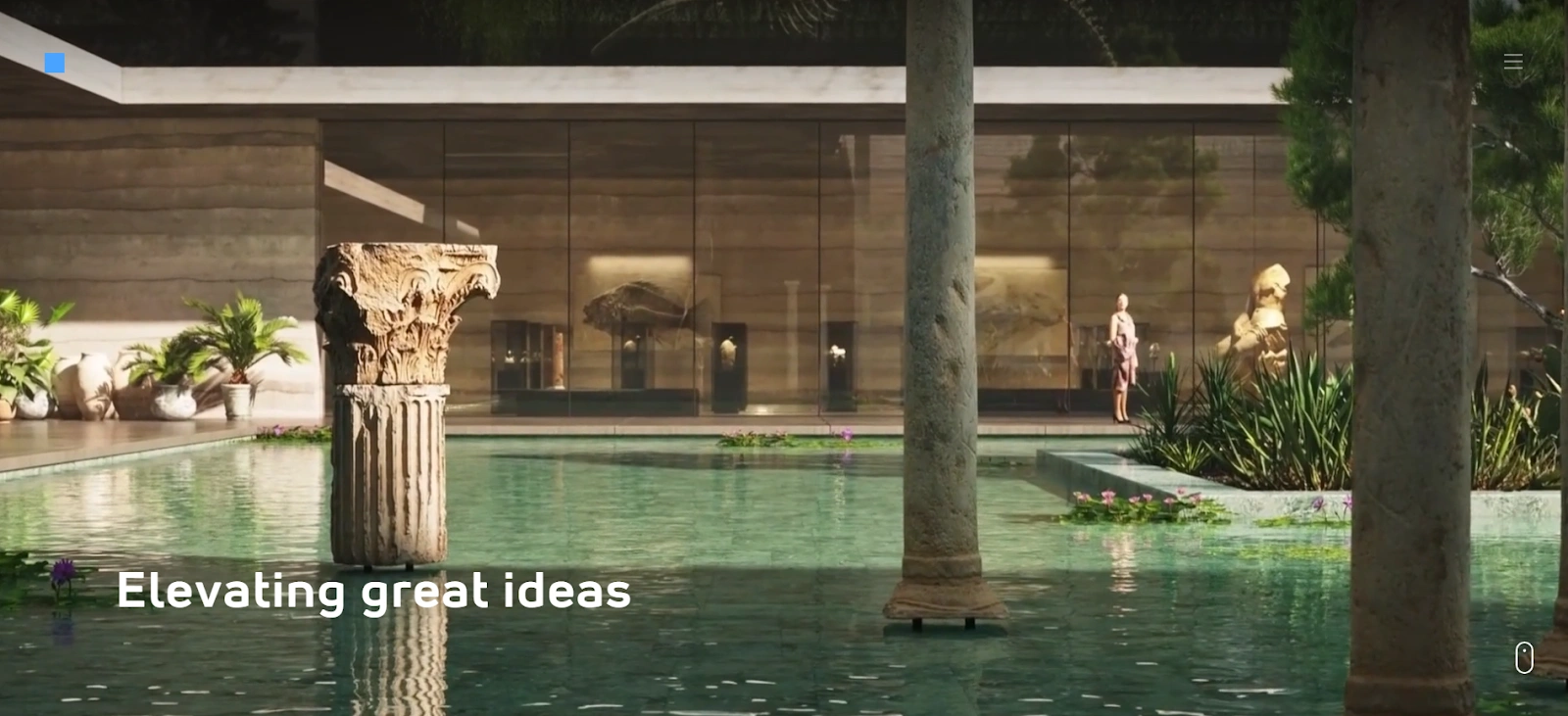
Brick Visual is known for architectural clarity and compositional discipline. Their exterior renderings favor minimalism, which works exceptionally well for modern homes built around strong forms and material contrast.
Best for:
- Design-driven modern homes;
- Architectural studios;
- Competition and publication visuals.
Camera angles are deliberate. Context is controlled. The result often feels closer to architectural photography than visualization. Brick Visual is a solid choice for architects who already have a defined design language and want it translated cleanly, without interpretation.
3. MIR (MIR.no)
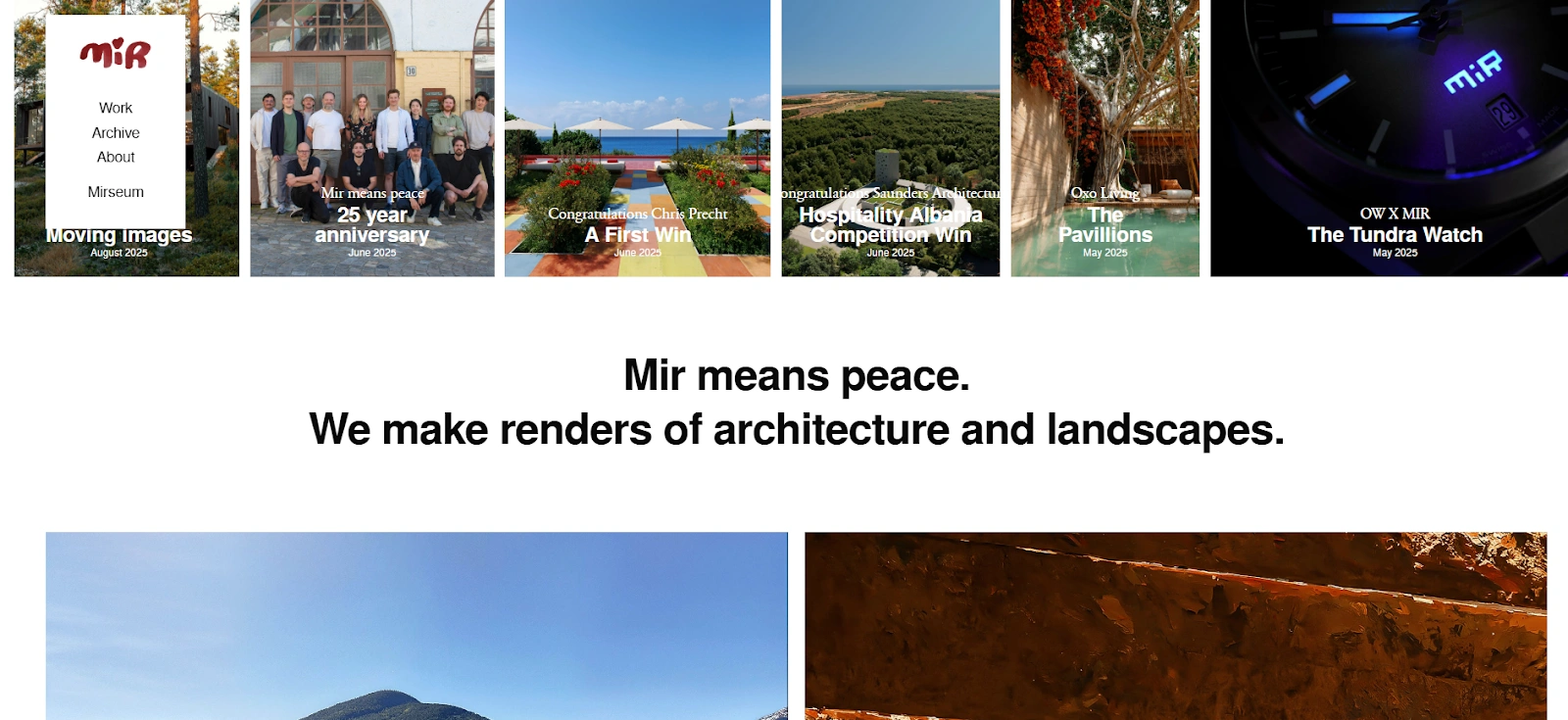
MIR approaches exterior rendering from a more atmospheric angle. Their work is emotional, sometimes abstract, and heavily context-driven.
Best for:
- Conceptual modern homes;
- Landmark residential projects;
- Architecture with a strong environmental context.
For modern homes, this can be powerful when landscape, weather, and mood are central to the concept.
They are less about speed and more about narrative. Each image feels considered and intentional, often telling a broader story beyond the building itself.
4. DBOX

DBOX operates at the intersection of visualization and marketing. Their exterior renderings often form part of larger branding systems — launch campaigns, sales materials, and digital platforms.
Best for:
- Residential developments;
- Marketing-focused visuals;
- Investor and sales presentations.
For modern residential developments, DBOX emphasizes lifestyle and use. Buildings are shown as lived-in, active spaces rather than isolated objects. This makes them especially effective for developer-led projects.
5. Hayes Davidson

Hayes Davidson brings consistency and technical rigor. Their exterior renderings are clean, accurate, and reliable, particularly valuable for projects involving multiple stakeholders or regulatory approvals.
Best for:
- Large-scale residential projects;
- Technically complex designs;
- Approval-driven workflows.
Modern homes with complex glazing, layered materials, or challenging lighting conditions are handled with confidence and control.
Why Exterior Rendering Matters More for Modern Homes
Modern architecture exposes everything. Flat roofs, open facades, minimal detailing — mistakes have nowhere to hide.
Exterior rendering reveals issues early. Proportion problems. Material conflicts. Weak transitions. Fixing those in visualization is cheap. Fixing them on-site is not.
For clients, strong visuals build trust. For architects, they sharpen decisions. For developers, they speed approvals and sales.
Final Thoughts
Exterior rendering is no longer just about looking good. In modern home design, it’s about clarity and confidence.
Clean architecture demands clean communication, and exterior visuals are often the moment when abstract ideas become concrete. They help reveal issues early, support better decisions, and reduce uncertainty for everyone involved.
The strongest agencies don’t decorate architecture. They explain it. They show how a home sits in its environment, how light moves across surfaces, how materials age and interact with context.
When that work is done well, the image stops being a presentation asset and starts functioning as a tool. A tool for alignment, approval, and trust. And that’s where the real value of exterior rendering lives.