Quick Answer
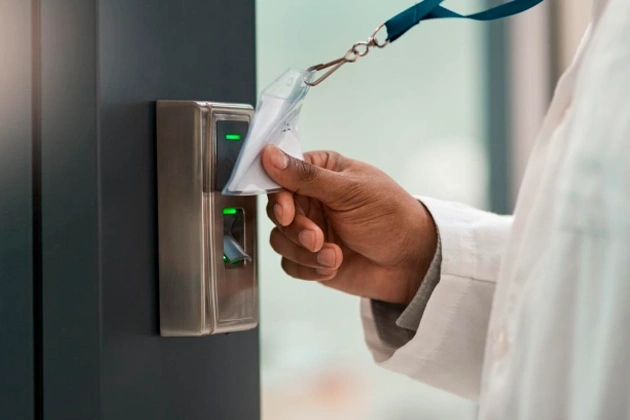
Control systems enhance security by restricting entry to authorized individuals using digital methods such as keycards, PINs(Personal Identification Numbers), or biometrics. Unlike traditional locks, they provide real-time monitoring, instant access revocation, and detailed entry logs. These systems are especially effective in offices, warehouses, and retail settings – protecting assets, sensitive areas, and personnel while supporting operational efficiency through scalable access control solutions.
Introduction
Gone are the days when a simple lock and key could reliably protect a business. Today’s commercial spaces face complex security demands – from managing employee access across shifts to safeguarding high-value inventory and confidential data. That’s why many organizations are moving toward modern entry management powered by intelligent authentication.
Digital systems offer a smarter alternative to mechanical locks, delivering precision, accountability, and remote oversight. Businesses exploring upgrades often start by researching access control systems to understand which options align with their layout, risk profile, and workflow needs. Whether it’s a keypad at a back entrance or a credential-based system for executive suites, the right setup balances security with usability.
How Access Control Systems Improve Security Across Different Business Types
Whether it’s a corporate office, a distribution center, or a storefront, each commercial environment faces distinct security challenges. A one-size-fits-all approach rarely works – which is why modern door access control systems are designed to be flexible, scalable, and highly configurable. By tailoring entry permissions to specific roles, zones, and schedules, businesses can enforce security without sacrificing workflow efficiency.
Offices – Protecting Sensitive Data and Private Areas
In office settings, security isn’t just about keeping intruders out – it’s about managing internal access. Server rooms, executive offices, HR departments, and finance suites often house confidential information that should only be viewable by authorized staff. Digital systems allow administrators to assign unique credentials to employees, granting access only to the areas relevant to their responsibilities.
Temporary permissions can also be issued seamlessly – for example, to IT contractors or cleaning crews – set to expire automatically after a project ends. This eliminates the risk of lingering access rights, a common oversight with physical keys. Integration with visitor management software further strengthens control, ensuring guests are logged, escorted, and restricted to designated zones.
Warehouses – Controlling High-Traffic and High-Value Zones
Warehouses combine heavy foot traffic with high-value inventory, making granular access management essential. Loading docks, cold storage units, and inventory vaults may need different clearance levels. A forklift operator shouldn’t have the same permissions as a security supervisor, and night-shift staff may require limited admission compared to daytime logistics teams.
Modern systems support time-based rules – allowing entry only during scheduled shifts – and can trigger alerts for unusual activity, such as multiple failed attempts or access outside approved hours. Some setups even integrate with inventory tracking, creating an additional layer of accountability. This level of oversight deters internal theft and simplifies incident response when discrepancies arise.
Retail Locations – Balancing Staff Access and Theft Prevention
Retail environments must strike a delicate balance: enabling staff to move freely while preventing unauthorized admission to stockrooms, cash offices, and employee-only areas. A cashier might need entry to the sales floor and break room, but not to the safe or back-office filing cabinets.
With card access systems, managers can configure role-based profiles and instantly deactivate credentials if an employee is terminated – eliminating the need to change locks or worry about copied keys. Audit logs also help pinpoint when and where inventory shrinkage might be occurring, turning security systems into investigative tools. In high-theft areas, even secondary verification – like a PIN after a card swipe – adds meaningful deterrence without slowing down daily operations.
| Feature | Traditional Locks | Digital Access Control |
| Access Revocation | Requires rekeying | Instant deactivation |
| Entry Logs | None | Timestamped records |
| Multi-Location Management | Manual | Centralized dashboard |
| Cost Over Time | High (keys, labour) | Lower TCO with scale |
By aligning entry permissions with operational realities, businesses transform security from a static barrier into an active, intelligent layer of protection.
Choosing the Right Access Control Solutions for Your Needs

Not every business requires the same level of entry management. The most effective strategy begins with aligning technology to your operational reality – not the other way around. Businesses seeking a tailored approach can explore Benson Systems access control solutions, which support scalable entry management, centralized oversight, and flexible authentication options. A thoughtful approach considers physical layout, staff size, risk exposure, and future growth before selecting hardware or authentication methods.
Providers like Supreme Security specialize in tailored commercial installations, though buyers should always compare capabilities against their specific operational demands. A small retail outlet might benefit most from a standalone keypad at the back door, while a multi-tenant warehouse may require a networked system with remote management and integration capabilities.
Assess Your Space and Entry Points
Start by identifying all access zones: main entrances, back doors, server rooms, stockrooms, and employee-only areas. Note which require constant protection and which need conditional or time-limited access. This mapping exercise clarifies how many readers, panels, or credentials your system will need – and whether a wired or wireless setup fits your infrastructure best.
Match Authentication Methods to Your Workflow
Different verification tools serve different purposes. The right choice balances security, convenience, and cost:
- Keypad PIN entry – well-suited for low-traffic zones or shared access points where physical credentials aren’t practical
- Proximity or smart cards – efficient for teams of any size, offering quick, contactless entry
- Mobile credentials – ideal for modern workplaces where employees carry smartphones and value keyless convenience
- Biometric scanners – reserved for high-sensitivity areas where identity must be uniquely verified
Keypads, in particular, offer a cost-effective blend of security and simplicity. Touch or button-based models eliminate the need for issued cards while still providing audit-ready logs – making them a practical fit for small retail back doors or standalone offices.
Plan for Integration and Scalability
Today’s systems often connect with other building technologies. Ask whether your chosen solution can integrate with video surveillance, alarm panels, or HR platforms for automated onboarding and offboarding. Cloud-based management also allows remote updates and real-time monitoring across multiple sites – a valuable feature for growing operations.
The best access control solutions are those that adapt as your business evolves. Rather than chasing the latest feature, prioritize reliability, ease of use, and compatibility with your daily routines. After all, even the most advanced system only works if people actually use it correctly.
Final Thoughts – Building a Smarter, Safer Business Environment
Security today is less about barriers and more about intelligent control. Understanding what is access control systems reveals a shift from passive locks to active, data-driven management of who enters where – and when. These technologies don’t just prevent unauthorized access; they generate insights, simplify operations, and reduce long-term risk across offices, warehouses, and retail spaces alike.
From eliminating the vulnerabilities of shared keys to enabling instant deactivation of lost credentials, modern door access control transforms how businesses protect people and assets. Whether through a keypad at a service entrance or a networked system managing dozens of zones, the core benefit remains the same: precise, responsive, and auditable entry management.
As threats evolve and workspaces grow more dynamic, security must keep pace – not with complexity, but with clarity. The right system doesn’t add friction; it removes uncertainty. By investing in thoughtful, scalable control solutions, businesses lay the foundation for a safer, more efficient future – where every entry point is a point of control, not concern.