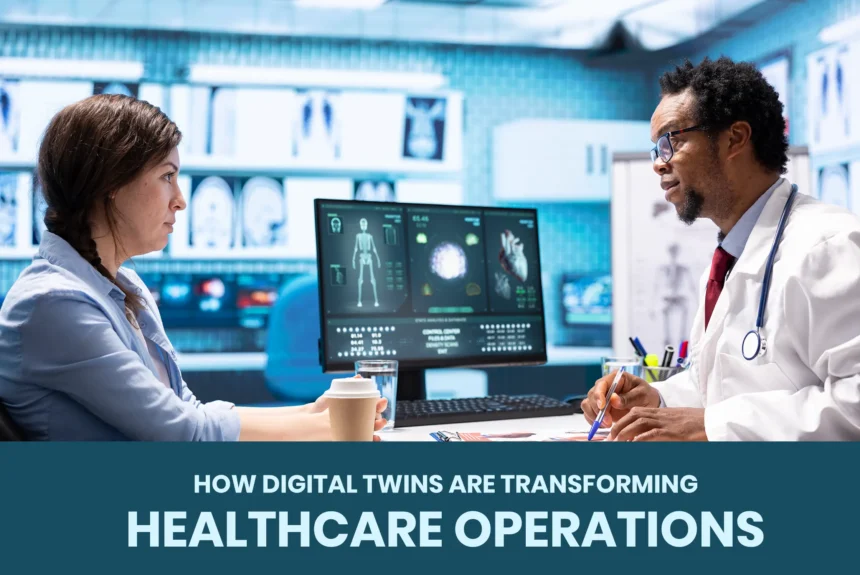
Healthcare organizations worldwide are facing mounting pressure to improve patient outcomes while controlling costs, managing workforce shortages, and adapting to rapidly evolving technologies. As digital transformation reshapes the healthcare landscape, one innovation is emerging as a powerful tool for solving these challenges: digital twin technology.
Originally developed for industries such as aerospace and manufacturing, digital twins have found a valuable place in healthcare. By creating virtual representations of patients, medical devices, hospital systems, and clinical processes, healthcare organizations can gain deeper insights into operations, predict outcomes, and make more informed decisions.
Today, hospitals, pharmaceutical companies, medical device manufacturers, and research institutions are increasingly investing in digital twins to enhance efficiency, improve care delivery, and accelerate innovation.
What Is a Digital Twin?
A digital twin is a virtual replica of a physical object, process, or system that continuously receives real-world data. Using information from sensors, medical imaging systems, electronic health records, wearable devices, and connected equipment, digital twins mirror real-world conditions in real time.
Unlike traditional simulations, digital twins are dynamic and continuously updated. This allows healthcare providers to monitor changes, predict future scenarios, and test interventions before implementing them in real-world environments.
In healthcare, digital twins can represent:
- Individual patients
- Medical devices
- Hospital departments
- Clinical workflows
- Pharmaceutical production systems
- Entire healthcare facilities
The ability to create virtual models of complex healthcare systems is opening new opportunities for optimization and innovation.
Optimizing Healthcare Operations Through Digital Twins
Understanding how digital twins are transforming healthcare operations starts with recognizing the complexity of modern healthcare systems. Hospitals generate enormous volumes of data every day, yet much of this information remains underutilized.
Digital twins convert this data into actionable intelligence. By creating a virtual representation of a hospital, administrators can analyze patient flow, staffing requirements, bed occupancy rates, and equipment utilization in real time.
For example, a hospital can use a digital twin to identify bottlenecks in its emergency department. By simulating patient arrivals, treatment durations, and discharge patterns, administrators can test different staffing models and resource allocation strategies before implementing changes.
This approach helps healthcare organizations reduce waiting times, improve operational efficiency, and enhance patient experiences.
Real-World Examples of Digital Twins in Healthcare
While digital twins may sound futuristic, several leading healthcare organizations are already using the technology successfully.
Dassault Systèmes’ Living Heart Project
One of the most widely recognized healthcare digital twin initiatives is the Living Heart Project developed by Dassault Systèmes. The project created a highly detailed virtual model of the human heart that enables researchers, physicians, and medical device manufacturers to simulate cardiac conditions and evaluate treatments.
The digital heart can be used to test medical devices, study disease progression, and improve treatment planning without exposing patients to unnecessary risks.
Siemens Healthineers and Precision Medicine
Siemens Healthineers has been developing virtual patient models that combine imaging data, laboratory results, and clinical records. These digital representations help physicians predict how patients may respond to specific treatments and support personalized healthcare strategies.
The technology enables healthcare providers to tailor treatment plans based on individual patient characteristics rather than relying solely on generalized clinical data.
Philips’ Smart Hospital Operations
Philips has incorporated digital twin technology into hospital management systems to optimize operations. By creating virtual models of healthcare facilities, hospitals can monitor patient flow, manage resources, and improve equipment performance.
The company’s solutions help healthcare organizations identify inefficiencies and make data-driven operational improvements.
The Role of Artificial Intelligence
Artificial intelligence significantly enhances the capabilities of digital twins. Machine learning algorithms analyze large volumes of healthcare data, identify patterns, and generate predictive insights that improve decision-making.
Several AI-powered digital twin in healthcare examples demonstrate how AI is expanding the technology’s potential. Companies such as Unlearn use AI-generated patient twins to support clinical trials by predicting patient outcomes and reducing the number of participants needed for studies.
AI also enables digital twins to learn from new information continuously, making predictions more accurate over time. This combination of real-time data and predictive analytics is helping healthcare providers move from reactive care models toward proactive and preventive approaches.
Improving Patient Care Through Personalized Medicine
One of the most promising applications of digital twins is personalized medicine. Every patient responds differently to treatments due to variations in genetics, lifestyle, medical history, and environmental factors. Digital twins allow healthcare providers to create individualized models that reflect these unique characteristics.
By simulating different treatment options on a patient’s digital twin, physicians can evaluate potential outcomes before selecting a treatment plan. This approach helps reduce trial-and-error decision-making and increases the likelihood of successful outcomes.
For patients with chronic conditions such as diabetes, heart disease, or cancer, digital twins may provide valuable insights into disease progression and treatment effectiveness.
Industry-Specific Use Cases
Digital twin technology is being applied across multiple healthcare sectors, each benefiting from its unique capabilities.
Hospitals and Healthcare Facilities
Hospitals use digital twins to improve operational efficiency and resource management.
Applications include:
- Emergency department optimization
- Bed capacity planning
- Staff scheduling
- Patient flow management
- Energy efficiency monitoring
Healthcare leaders can simulate operational changes and assess their impact before implementation.
Medical Device Manufacturing
Medical device companies are using digital twins throughout product development and lifecycle management.
Manufacturers can:
- Test device performance virtually
- Identify potential design flaws
- Monitor deployed equipment
- Predict maintenance needs
This reduces development costs and improves product reliability.
Pharmaceutical Research
Drug development is traditionally expensive and time-consuming. Digital twins help pharmaceutical companies model biological systems and predict drug interactions.
Researchers can evaluate treatment responses virtually before conducting clinical trials, reducing risks and accelerating development timelines.
Surgical Planning
Digital twins are becoming valuable tools for surgical preparation.
Patient-specific anatomical models allow surgeons to rehearse procedures, evaluate alternative approaches, and identify potential complications before surgery.
This improves surgical precision and enhances patient safety.
Medical Education
Healthcare educators are using digital twins to create realistic training environments.
Students and clinicians can practice diagnostic and treatment decisions using virtual patients without exposing real patients to risk.
Digital Twins and Predictive Maintenance
Healthcare facilities rely on thousands of critical devices, including MRI scanners, CT scanners, ventilators, infusion pumps, and laboratory equipment.
Unexpected equipment failures can disrupt patient care and create costly delays.
Digital twins continuously monitor device performance and analyze operating conditions. When abnormalities are detected, maintenance teams receive alerts before failures occur.
This predictive maintenance approach helps healthcare organizations:
- Reduce downtime
- Extend equipment lifespan
- Improve reliability
- Lower maintenance costs
As a result, hospitals can ensure critical equipment remains available when needed most.
Healthcare Statistics Supporting Adoption
The adoption of digital twins continues to grow across the healthcare industry.
According to MarketsandMarkets, the global digital twin market is expected to surpass $110 billion by 2028.
Research from IDC suggests organizations implementing digital twins can improve operational efficiency by as much as 30 percent.
McKinsey reports that predictive maintenance technologies can reduce equipment downtime by 20 to 50 percent while lowering maintenance costs significantly.
Industry analysts also predict that digital twins will become a foundational technology supporting future healthcare transformation initiatives.
These statistics demonstrate the increasing confidence healthcare organizations have in digital twin technology.
Why Healthcare Organizations Are Investing in Digital Twins
The growing adoption of digital twins is driven by the numerous benefits of digital twin technology in healthcare.
- Enhanced Patient Outcomes: Healthcare providers can personalize treatments, predict disease progression, and improve clinical decision-making.
- Operational Efficiency: Hospitals gain greater visibility into workflows, resource utilization, and capacity management.
- Cost Reduction: Predictive maintenance and optimized operations help reduce unnecessary expenses.
- Faster Innovation: Researchers can test therapies, devices, and processes in virtual environments before deploying them in real-world settings.
- Better Resource Allocation: Healthcare organizations can use simulations to improve staffing, equipment usage, and facility management.
- Improved Safety: Virtual testing reduces risks associated with surgeries, treatments, and operational changes.
The Future of Digital Twins in Healthcare
The future of healthcare will likely be shaped by increasingly sophisticated digital twins powered by artificial intelligence, cloud computing, and advanced analytics.
Future applications may include:
- Real-time virtual patient monitoring
- Personalized disease prevention programs
- Virtual clinical trials
- Intelligent hospital command centers
- Population health simulations
- Advanced treatment optimization systems
As technology continues to mature, digital twins will become more accessible and capable, creating new opportunities for healthcare innovation.
FAQs
- What is a digital twin in healthcare?
A digital twin in healthcare is a virtual representation of a patient, medical device, hospital system, or healthcare process that uses real-time data to simulate, monitor, and optimize performance. - How are digital twins used in hospitals?
Hospitals use digital twins to improve patient flow, optimize bed management, predict equipment maintenance needs, enhance staff scheduling, and streamline overall operations. - What are some real-world examples of digital twins in healthcare?
Notable examples include Dassault Systèmes’ Living Heart Project, Siemens Healthineers’ patient-specific digital twins, Philips’ hospital operations models, and Unlearn’s AI-powered digital patients for clinical trials. - How does artificial intelligence improve digital twins in healthcare?
Artificial intelligence helps digital twins analyze large datasets, predict outcomes, identify patterns, and provide recommendations that support personalized treatment and operational decision-making. - What benefits do digital twins offer healthcare providers?
Digital twins help improve patient outcomes, increase operational efficiency, reduce costs, optimize resource allocation, enhance patient safety, and accelerate medical innovation. - Can digital twins support personalized medicine?
Yes. Digital twins can combine a patient’s medical history, imaging data, genetics, and health records to help physicians predict treatment responses and develop personalized care plans. - How do digital twins help with medical equipment maintenance?
Digital twins continuously monitor equipment performance and identify potential issues before failures occur, enabling predictive maintenance and reducing downtime. - Are digital twins used in drug development?
Yes. Pharmaceutical companies use digital twins to model biological systems, simulate drug interactions, and improve clinical trial design, helping reduce development time and costs. - What challenges are associated with implementing digital twins in healthcare?
Key challenges include data integration, cybersecurity concerns, regulatory compliance, implementation costs, and ensuring the accuracy of healthcare data. - What is the future of digital twins in healthcare?
Digital twins are expected to play a major role in precision medicine, virtual clinical trials, predictive healthcare, smart hospital management, and population health planning as AI and data technologies continue to advance.
The CEO Views is a leading U.S.-based business magazine that delivers in-depth coverage of global industry trends, visionary leadership, innovation, and emerging technologies. Through expert analysis, comprehensive research, and compelling storytelling, the magazine showcases influential executives, groundbreaking ideas, and transformative strategies that help businesses drive sustainable growth, foster innovation, and achieve long-term success across diverse industries.