
For decades, commercial roofing was viewed mainly as a protective layer that kept buildings safe from rain, heat, wind, and other weather conditions. Today, that role is changing. As businesses look for practical ways to reduce operating costs and meet sustainability goals, sustainable commercial roofing is becoming an important part of modern building design.
From reflective surfaces and advanced insulation to recyclable materials and rooftop solar, today’s roofing systems can help businesses improve energy efficiency while reducing long-term maintenance and replacement costs. For property owners, the focus is shifting from simply asking how much a roof costs to understanding how much value it can deliver throughout its entire service life.
This shift is happening at a time when commercial buildings are under increasing pressure to become more energy efficient. The International Energy Agency estimates that buildings and construction account for around 30% of global final energy consumption and approximately 26% of energy-related emissions. These numbers have made energy performance a priority for developers, facility managers, and business owners.
A commercial roof can play a surprisingly important role in that equation. The size and design of a roof influence how much heat a building absorbs, how much energy is needed for cooling, and whether renewable energy systems can be installed. In large buildings, even small improvements in thermal performance can have an impact on annual operating expenses.
Why the Roof Matters More
Think about a large distribution warehouse operating in a hot climate. Its expansive roof is exposed to sunlight throughout the day, and if the roofing system absorbs significant amounts of heat, that heat can transfer into the building. The result is a greater demand for air conditioning and higher energy consumption.
Now consider the same building with a reflective roof, adequate insulation, and a well-designed ventilation system. The building envelope can perform more efficiently, reducing heat transfer and helping maintain more stable indoor temperatures.
This principle applies across industries. A supermarket may benefit from reduced cooling demand, while a manufacturing facility can improve the energy performance of its production space. A school can combine a high-performance roof with solar panels, and a hospital can use energy-efficient roofing as part of a larger effort to control the cost of operating a facility that runs around the clock.
The value of a sustainable roof, therefore, is not limited to its environmental impact. It can also influence the daily economics of running a commercial property.
Insulated Metal Roofing Delivers Long-Term Value
Insulated metal roofing has become a popular solution for commercial and industrial properties because it combines strength, longevity, and energy performance. These systems generally consist of metal panels installed with insulation that helps reduce heat transfer between the interior and exterior of a building.
Besides that, one of the major advantages of insulated metal roofing is its durability. They are cost-effective in the long run and can last upwards of 50 years with very minimal maintenance. Their versatility enables them to be installed on different types of roofs-from flat to sloped roofs. Independent Power Producers like REC Solar, which focuses on commercial solar solution.
For commercial property owners, longevity can make a significant difference. Replacing a large commercial roof is a major project that can disrupt operations and require substantial investment. A durable system that remains functional for several decades can reduce the frequency of major replacements and help businesses plan their capital expenditure more effectively.
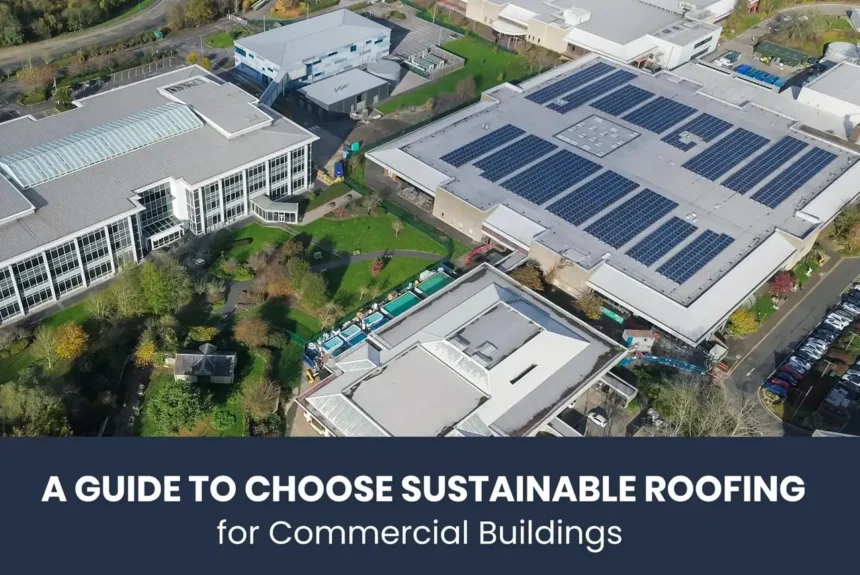
Metal roofing can also be a practical choice for facilities that need to support solar installations. Large warehouses, factories, distribution centers, and retail properties often have extensive roof areas that can accommodate photovoltaic systems. Combining a long-lasting roof with solar power can create a more integrated approach to energy management.
For example, a manufacturing facility that operates primarily during daylight hours may use rooftop solar to generate electricity when its production lines are running. A logistics company could use a large warehouse roof to generate renewable power for lighting, cooling, and other operations. In both cases, the roof becomes an active part of the property’s energy strategy rather than simply a structural necessity.
Cool Roofs Can Help Reduce Energy Demand
Another solution gaining attention in commercial construction is the cool roof. These systems are designed to reflect more sunlight and absorb less solar energy than conventional roofing materials.
The concept is particularly relevant in warm and sunny regions where air conditioning accounts for a significant portion of building energy consumption. By keeping the roof surface cooler, reflective roofing can reduce the amount of heat transferred into the building.
The U.S. Department of Energy has noted that cool roofs can remain significantly cooler than conventional roofs under the same conditions. However, the actual energy savings vary depending on the climate, insulation, building design, HVAC efficiency, and occupancy patterns.
For a large retail center in a hot climate, even a modest reduction in cooling demand can add up over time. The same applies to warehouses and manufacturing facilities where roof areas may cover thousands or even hundreds of thousands of square feet.
The best results usually come when cool roofing is combined with other energy-efficiency measures. Better insulation, efficient HVAC equipment, smart building controls, and improved air sealing can work together to create a more efficient building envelope.
Choosing Eco-Friendly Materials with a Purpose
When considering eco-friendly commercial roofing options, businesses should look beyond the label and examine how a roofing material performs throughout its life cycle.
Metal roofing, for example, can contain recycled content and is recyclable at the end of its service life. Its long lifespan can also reduce the need for repeated replacement. This makes it an attractive option for property owners focused on durability and resource efficiency.
Single-ply membranes such as TPO and PVC are also widely used in commercial roofing. Many products are available in reflective colors and can be suitable for large, low-slope roofs commonly found on commercial buildings.
Another option is a green roof, which incorporates vegetation and growing media into the roof design. Green roofs can help manage stormwater, provide additional insulation, and reduce the urban heat island effect. They can be particularly appealing for offices, public buildings, and developments where environmental design is an important part of the property’s identity.
However, green roofs require careful planning. The building must be able to support the additional weight, while waterproofing, drainage, irrigation, and maintenance requirements must be considered from the beginning.
The key is not to select a material simply because it is marketed as sustainable. The right choice should be based on the building’s location, climate, purpose, structural requirements, maintenance expectations, and expected lifespan.
Different Industries, Different Roofing Priorities
There is no universal roofing solution for every commercial building. Each industry has its own requirements.
- Warehousing and logistics: Large distribution centers often have enormous roof areas and significant energy requirements. Reflective roofing, insulation, and rooftop solar can help reduce heat gain and energy costs.
- Manufacturing: Factories may operate for long hours and use substantial amounts of electricity. Durable roofing systems combined with solar installations can support both operational efficiency and renewable energy goals.
- Healthcare: Hospitals operate 24/7 and have strict requirements for indoor temperature and air quality. High-performance insulation and energy-efficient roofing can contribute to more efficient building operations.
- Retail: Shopping centers and supermarkets often have extensive roof areas and high cooling loads. Reflective roofing can help reduce heat absorption, while solar systems can generate electricity during peak daytime operating hours.
- Education: Schools and universities can use roofing upgrades to improve energy efficiency while incorporating sustainability into their campuses. Rooftop solar can also provide a visible example of renewable energy for students.
- Hospitality: Hotels have year-round energy demands for guest rooms, kitchens, pools, lighting, and climate control. Combining efficient roofing with solar power and other energy-saving technologies can help reduce operating expenses.
- These examples show why commercial roofing should be considered as part of the wider building system. A roof that performs well for a warehouse may not necessarily be the best choice for a hospital or hotel.
The Financial Case for a Better Roof
Sustainability may be the reason a business begins exploring a new roofing system, but financial performance often determines whether the investment makes sense.
A roof with a lower upfront price is not necessarily the most affordable option over its lifetime. Frequent repairs, high energy bills, premature deterioration, and early replacement can quickly increase the total cost of ownership.
A more durable and energy-efficient system may require a larger initial investment but provide greater value over several decades. This is why commercial property owners are increasingly considering life-cycle costs rather than focusing only on the initial installation price.
Energy savings are another important consideration. According to ENERGY STAR, commercial buildings can achieve significant energy savings through efficiency improvements, although the actual results depend on the building and the measures implemented. Roofing is one component of a broader efficiency strategy that can also include lighting, HVAC systems, insulation, and building automation.
Solar energy can further strengthen the business case. A commercial property with a suitable roof may be able to generate part of its electricity onsite, reducing reliance on grid power and potentially lowering long-term energy expenses.
The combination of roofing and solar is particularly attractive for businesses with large facilities. A warehouse, factory, or retail center may have enough roof space to support a substantial solar installation, turning an otherwise underused surface into an energy-generating asset.
How to Choose Sustainable Roofing for Commercial Buildings
Choosing a sustainable roofing system for a commercial building is not as simple as picking the material with the greenest label. A roof can be considered sustainable for several different reasons. It may have a long service life, contain recycled materials, reduce energy consumption, support renewable energy systems, or require fewer resources to maintain and replace. For a business, the best choice is usually the one that delivers a combination of these benefits while meeting the practical requirements of the building.
The first consideration should be the building’s location and climate. A commercial property in a hot region will have different roofing needs from one in a colder or wetter climate. In areas with intense sunlight and high temperatures, reflective roofing can reduce the amount of solar heat absorbed by the roof and help lower cooling demand. In colder regions, insulation becomes particularly important because it can help prevent heat from escaping through the roof during winter. Understanding the local climate allows property owners to choose a roofing system that improves energy performance throughout the year.
The purpose of the building also matters. A warehouse, for example, may have a large roof area but relatively few occupants, while a hospital operates continuously and requires carefully controlled indoor conditions. A supermarket may have high energy consumption because of refrigeration and cooling, whereas a manufacturing facility may need a roof that can withstand heat, equipment emissions, and demanding operating conditions. The roofing system should therefore be selected according to how the building is used rather than relying on a one-size-fits-all approach.
Evaluating Energy Efficiency, Durability, and Materials
Energy efficiency is another important factor. Property owners should examine how effectively a roofing system can control heat transfer and work alongside the building’s insulation and HVAC systems. A highly reflective roof may be beneficial in a hot climate, while a well-insulated roof can help maintain consistent indoor temperatures. Looking at the entire building envelope rather than the roof in isolation can help businesses identify where improvements will have the greatest impact.
Durability should also be considered carefully. Replacing a commercial roof is expensive and can interrupt business operations. A roofing material that needs to be replaced every 15 or 20 years may require more resources over the building’s lifetime than a durable system that lasts several decades. For this reason, businesses should compare the expected service life of different materials and consider how much maintenance each system is likely to require.
The availability of recycled and recyclable materials can further influence the decision. Metal roofing, for instance, can include recycled content and can often be recycled at the end of its useful life. Other roofing systems may offer different environmental benefits, so businesses should examine the full life cycle of the material, from manufacturing and transportation to installation, maintenance, and eventual disposal.
Considering Solar Compatibility and Long-Term Costs
The roof’s compatibility with renewable energy should also be part of the planning process. Commercial buildings often have large, unused roof areas that can accommodate solar panels. If a business is considering solar power, it makes sense to evaluate the condition and expected lifespan of the roof before installing the system. A strong, durable roof can provide a better long-term foundation for solar panels, while installing solar on an aging roof may mean having to remove and reinstall the panels when the roof eventually needs replacement.
The financial side of the decision is equally important. Sustainable roofing may have a higher upfront cost than a basic roofing system, but the initial price does not tell the full story. Businesses should consider energy savings, maintenance expenses, repair costs, expected lifespan, and replacement frequency when calculating the total cost of ownership. A more expensive roof that lasts longer and reduces energy consumption may ultimately be more economical than a cheaper system that requires frequent repairs or early replacement.
Maintenance should also be part of the evaluation. Even a high-quality roofing system can fail prematurely if it is neglected. Businesses should choose a system that can be inspected and maintained without excessive difficulty. Regular inspections can help identify damaged panels, blocked drainage systems, leaks, or deteriorating seals before they become major problems. Preventive maintenance not only extends the life of the roof but can also reduce material waste and avoid costly emergency repairs.
Finally, businesses should work with qualified roofing professionals who can assess the property and recommend solutions based on its specific requirements. A professional evaluation can help identify structural limitations, insulation needs, drainage concerns, and opportunities for solar installation. It can also help property owners compare different systems based on long-term performance rather than simply choosing the lowest installation price.
Ultimately, the best roofing materials for commercial buildings are not the same for every property. The right choice depends on the building’s climate, purpose, energy requirements, structural design, budget, and future plans. By looking at durability, energy efficiency, material life cycle, maintenance, solar compatibility, and total cost together, businesses can invest in a roofing system that protects their property while supporting long-term sustainability and financial performance.
FAQs
-
What is sustainable commercial roofing?
Sustainable commercial roofing refers to roofing systems designed to reduce environmental impact while improving energy efficiency, durability, and long-term building performance. These systems may include reflective roofs, insulated metal roofing, recycled materials, green roofs, and solar-compatible roofing solutions.
-
Why is sustainable roofing important for commercial buildings?
Sustainable roofing can help commercial property owners reduce energy consumption, lower operating costs, minimize maintenance needs, and reduce the environmental impact associated with frequent roof replacement. It can also contribute to broader sustainability and energy-efficiency goals.
-
What are some eco-friendly commercial roofing options?
Popular options include insulated metal roofing, cool or reflective roofs, TPO and PVC membranes, green roofs, and roofing systems made with recycled or recyclable materials. The right choice depends on the building’s climate, design, usage, and energy requirements.
-
How long can a sustainable commercial roof last?
The lifespan depends on the roofing material, installation quality, climate, and maintenance. Some durable commercial roofing systems, particularly well-maintained metal roofs, can last 50 years or more, making them a long-term option for many businesses.
-
Can commercial roofing be combined with solar energy?
Yes. Many commercial buildings have large roof areas that can accommodate solar panels. A durable roof with sufficient remaining service life can provide a strong foundation for a solar installation, allowing businesses to generate renewable electricity while making productive use of available roof space.
-
How can businesses choose the right sustainable roofing system?
Businesses should consider the property’s location, climate, building use, energy consumption, roof condition, expected lifespan, maintenance requirements, and future plans for solar energy. Comparing the total life-cycle cost rather than only the initial installation price can also help identify the most suitable option.
-
Is sustainable commercial roofing more expensive than conventional roofing?
Some sustainable roofing systems may have higher upfront costs, but they can offer long-term savings through improved energy efficiency, lower maintenance requirements, greater durability, and reduced replacement frequency. The overall value depends on the specific building and roofing system selected.
The CEO Views showcases inspiring CEOs, entrepreneurs, and innovators who are driving change and making a meaningful impact across industries. Through insightful interviews and compelling stories, it highlights their journeys, leadership approaches, ideas, and perspectives on the future of business.