American educator and author Stephen R. Covey has once said, “The biggest communication problem is we do not listen to understand. We listen to reply.” His words truly echo the biggest loophole in people’s approach to communication. In today’s big data, natural language processing, and artificial intelligence-backed business world, communication is somewhat lacking in that personal touch of understanding and becoming more of a mechanical approach to solving customer issues.
Compared to human conversations, communicating your concerns with a chatbot can be frustrating sometimes. Communicating with these tech-powered human-like communicators in customer support may feel more like one-way communication, lacking the required emotion and capabilities to understand consumers’ grievances. Although technology companies are continuously evolving and refining these chatbots to make them more human-like, communicating with them may not always resolve specific, complex customer problems.
Good communication works both ways. It allows your customers to express their opinions about your products or services, and at the same time, it helps you understand their needs and what needs to be done to improve your business. However, with our growing reliance on technology, communication in customer support is gradually becoming less personal.
In this article, we present the most popular theories and models of communication and how they can redefine modern-day customer service for businesses. This write-up will also examine the importance of effective communication in supporting consumers and the best ways to communicate clearly with them to ensure they receive a better experience each time they come to you.
Communication Ideologies that Resonate in Modern-Day Business
Approaches to communication have transformed over time. Communication today goes beyond the mere exchange of information between the sender and the receiver. Modern-day communication is a transactional process. It is a two-way process in which both parties are actively involved. Nowadays, communication has expanded its horizon by taking context, feedback, and the influence of social and cultural factors under its wings. Modern theories and models of communication put forward the importance of building relationships through effective communication. Let us delineate a few of these ideologies that could help businesses view customer communication in a new light.
-
Cybernetic Theory
The Cybernetic Theory of Communication emphasizes feedback loops and message clarity. In today’s highly competitive business environment, we cannot deny the importance of feedback and clear delivery of messages to ensure robust consumer relationships and loyalty. By working on consumers’ needs and feedback, customer support teams can refine processes, promote continuous improvements, and ensure early detection of issues faced by them. On the other hand, by clearly conveying messages to the customers, businesses can maintain transparency and win consumer trust. While taking into consideration the core philosophy of this theory, modern organizations can effectively unlock a customer-centric support system.
-
Lasswell’s Model of Communication
Lasswell’s communication model postulates that an act of communication involves answering the following questions:
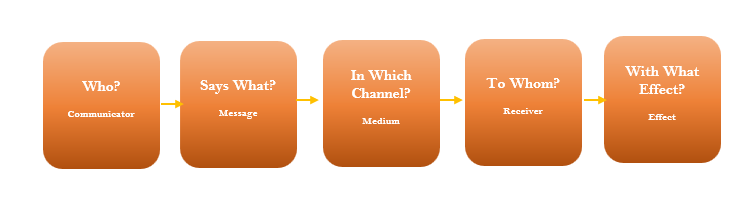
- Who?
- Says What?
- In Which Channel?
- To Whom?
- With What Effect?
According to Lasswell, communication serves three purposes: surveillance of the environment, correlation of society’s components, and cultural transmission between generations. His communication model expresses that a message flows in a multicultural society to multiple audiences through various channels. By finding answers to these questions, businesses can evaluate consumer concerns, identify the medium through which the message is shared, and the effect it may have on their operations.
-
Nudge Theory
Nudge theory in behavioral policy, social psychology, consumer behavior, and related behavioral sciences suggests that by subtly influencing people’s choices and behavior through the transformation of the decision-making environment, healthy choices and desirable behaviors can be enforced. In order to establish a long-term customer relationship, businesses can use tech-powered nudges or small marketing initiatives to influence consumer behavior toward desired results. Without restricting their freedom of choice, these nudges could be leveraged to encourage customers to buy a product or get hooked on a specific content.
-
Barnlund’s Transactional Communication Model
Barnlund’s Transactional Communication Model views communication as a simultaneous, multi-layered, and complex process where messages are constantly sent and received within a shared context, ensuring that both parties remain responsible for its meaning. Barnlund sees communication as a two-way process, where the sender and receiver are in constant contact. Keeping in mind the essence of this model, businesses can focus on making their customer service an effective two-way procedure, where every concern and feedback is heard, interpreted, and addressed with understanding, patience, and transparent solutions.
-
The Osgood-Schramm Communication Model
As a circular and dynamic model of communication, the Osgood-Schramm model emphasizes senders and receivers to act as encoders and decoders. By highlighting the reciprocal nature of communication, this model encourages the communicators to interpret shared messages based on their “field of experience.”This model prioritizes feedback and shared meaning in communication to better engage people. In today’s world of digital transformation, modern-day businesses can work on their feedback mechanisms to ensure they have all that their customers need and win a competitive edge.
The Value of Effective Communication in Customer Service and Relationships
Customer service is one of the most crucial touchpoints for businesses to tap into consumer emotions and behavioral patterns, a strategic step taken to establish a positive customer relationship. To establish that relationship, communication plays an instrumental role. Where good communication can help win consumer trust and engagement, poor communication can lead to consumer attrition. Let’s find out why communication is so important in customer service.
Drives Sales and Helps Generate Revenue
Effective communication strategies could help businesses drive sales by engaging and influencing customers to purchase their products or services. Communication is an essential marketing tool for modern-day organizations. By exploring consumer data and analyzing it, businesses get an insight into their buying patterns, choices, and influence them by offering exactly what they need.
According to a Forbes report, 87% of global brands report that they have increased their investment in digital customer engagement in 2022. A 2025 McKinsey report has found that social media influences consumers’ brand and product recommendations in the USA and in Europe. By leveraging social media as a crucial communication medium, businesses can reach out to a larger audience base, ensuring more sales and increased revenue.
Faster Problem-Solving
Efficient communication can lead to faster problem-solving, reducing business costs. Using technology as a tool, organizations can now unlock efficient and faster solutions to consumer concerns. By listening to consumers’ concerns carefully, the consumer service team can avoid making more calls and resolve the issue right away over the first phone call.
Improved Brand Image and Consumer Loyalty
Good communication can result in an improved brand image. Another Forbes study reveals that 84% consumers believe that clear communication is a prime factor driving their trust in a company, and 68% believes that they will likely recommend a brand that has exceptional services for its customers.
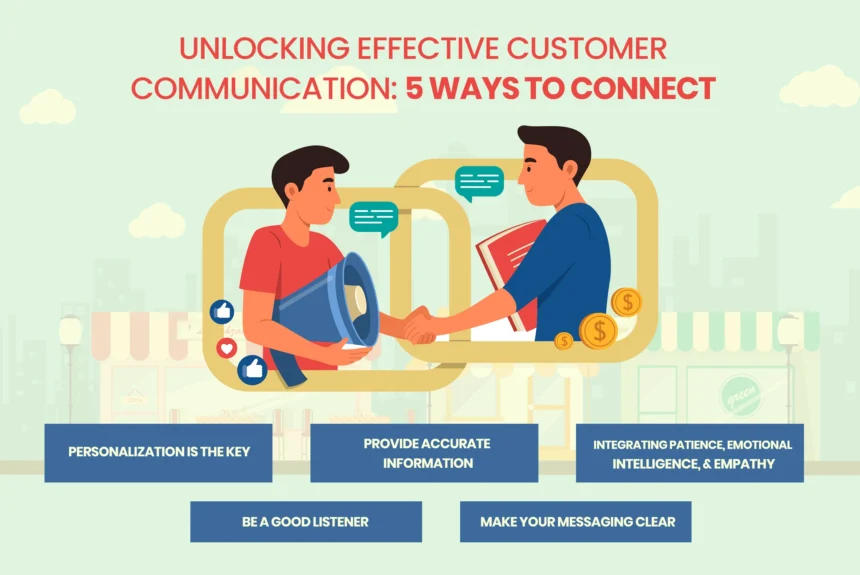
Five Ways to Improve Communication with Customers
Good communication and consumer services are interrelated. From personalization to feedback responses, several factors influence customer communication and improve consumer experiences. Listed below are five ways you can improve communication with customers.
Personalization is the Key
With the advent of artificial intelligence, personalization has become a new norm. Be it product delivery or marketing, companies are integrating personalization to attract consumers to the brand. Personalized communication makes for exceptional customer service. By connecting with the customer’s needs, the customer service representatives can make the customer feel heard and valued.
Imagine your company sells beauty products, and to ensure your consumers receive a world-class treatment, you may ask your representatives to scroll through their order history and previous interactions across channels. By collecting information about your targeted customers beforehand through effective database management, you can give them the impression that you are aware of their concerns and would do anything possible to help them with that. Such context-rich and personalized assistance eventually leads to enhanced customer satisfaction and engagement.
Provide Accurate Information
It’s true what they say that honesty is the best policy.
It’s inevitable for mishaps to happen, no matter how hard you try to prevent them, as some things are beyond our control. And in those times, it can be tempting to make your company seem as appealing as possible by exaggerating or hiding some truths from your customers.
However, providing accurate information is important for building a positive and lasting customer relationship. Thus, instead of sugarcoating issues, be honest and admit your mistakes, and find ways to make up for them. Sometimes, a simple “sorry” and a promise to do better next time go a long way.
Always remember that TRUST is crucial to your business success. If your customers don’t trust you, they will choose somebody else.
Integrating Patience, Emotional Intelligence, and Empathy
By showing that you care, you can undoubtedly win consumers’ trust in your business. There will be times when customers may express frustration with you regarding the issue they have faced while availing of your service or using your product. Losing patience while addressing them may result in a negative impact on your brand. During such times, consumers need you to walk that extra mile or that extra world of assurance to feel satisfied. By being empathetic towards their grievances, representatives can figure out the root cause of their problems.
Emotional intelligence is one of the most underrated components of customer service communication. Emphasizing with customers and speaking their language can help customer care representatives put themselves in their shoes. This shows how genuine you are about fixing the problem.
Be a Good Listener
Consumers want brands that listen to them. Unfortunately, research shows that 42 percent of companies don’t listen to their customers.
Listening to your customers is the only way to ensure their satisfaction. By listening to them, you will have a better understanding of their needs, demands, and expectations, and eventually, shape your business into something that they will find more desirable.
Moreover, listening builds trust and lowers resistance on the part of the customers when they realize they aren’t being forced to purchase a product or service. Most importantly, listening to your customers makes them feel valued, which greatly enhances their overall experience with your company.
Here’s how you can upgrade your customer-listening skills:
- Let them speak without interrupting. Even if you already know what they need or how to address their issues, wait until they are done speaking to fully understand your customers’ concerns.
- Engage with customers through social media. Since most people are on social media platforms like Facebook and Instagram these days, they are great venues to interact with your customers.
- Gather their feedback. Conduct surveys to get their suggestions about your product or services, or to assess whether they meet, fall short of, or exceed your customers’ expectations. Apart from getting helpful insights, it’s also a great way to show how you value your customers’ opinions.
Make Your Messaging Clear
Modern technology enables businesses to communicate easily with their customers. However, the challenge with online communication is that there’s a possibility that your customers might not get your message right, leading to confusion, worse, disappointment.
This is where working with marketing experts like StoryBrand makes sense, as they can help refine your content so your customers get the right message. You can find a StoryBrand consultant who will walk you through a 7-part framework that provides all the necessary elements for clear communication.
Lastly, when interacting with customers online, whether through chat or email, communicate as if you’re doing it face-to-face. Be concise and polite. Before hitting the “send” button, read your message a couple of times, as if you’re the customer. This way, you can easily gauge if they will get your messaging right.
Final Words
Effectively communicating with your customers is crucial to gaining their trust and loyalty. Providing accurate information, actively listening to your customers, and keeping your messaging clear are some of the best ways to improve the way you communicate with your customers. Also, by leveraging the power of data science in today’s digital world, businesses can collect, evaluate, and use consumer data to unlock effective consumer interaction and stay competitive.