
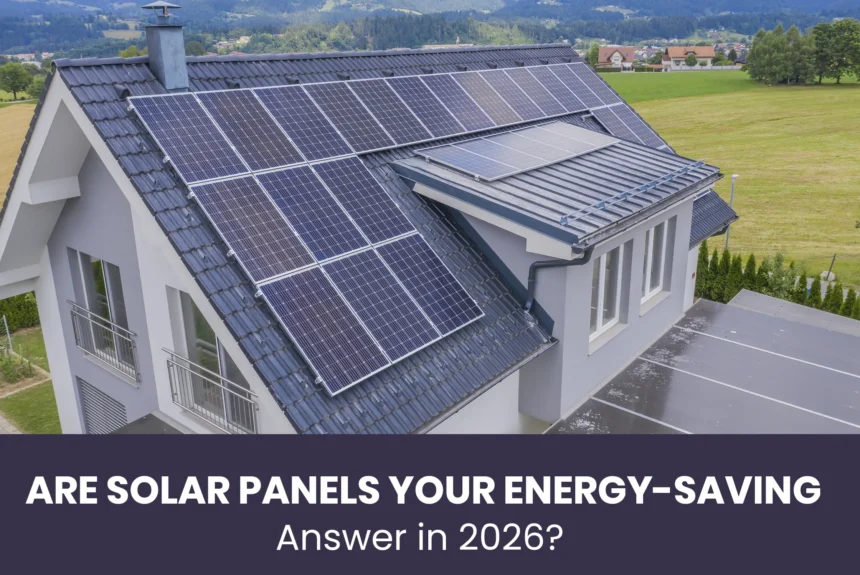
As electricity prices continue to rise, homeowners and businesses are looking for smarter ways to reduce their monthly utility bills. Investing in energy saving solar panels has become one of the most effective strategies for lowering electricity costs while supporting clean energy initiatives.
With monthly utility costs reaching unprecedented levels in states like California, Texas, and Florida, many are asking: Could solar panels be the answer to achieving meaningful energy savings? The answer depends on several factors, including your location, roof size, energy consumption, local electricity rates, and available incentives. However, for millions of homeowners, solar panels have already proven to be a worthwhile long-term investment.
Besides lowering electricity bills, solar energy reduces dependence on the power grid, increases property value, and helps lower carbon emissions. According to the International Energy Agency (IEA), solar photovoltaic technology has become one of the fastest-growing renewable energy sources worldwide, while the U.S. Energy Information Administration (EIA) reports that solar generation continues to expand each year as installation costs decline.
Understanding How Solar Panels Generate Electricity
Solar panels convert sunlight into electricity using photovoltaic (PV) cells. When sunlight strikes the silicon cells inside each panel, it creates an electric current that flows through an inverter. The inverter converts direct current (DC) into alternating current (AC), which powers household appliances.
A complete residential solar system typically includes:
- Solar panels
- An inverter
- Mounting hardware
- Optional battery storage
- Energy monitoring software
Modern monitoring systems allow homeowners to track electricity production and consumption in real time, helping them optimize their energy usage.
Why More Homeowners Are Choosing Solar
Solar technology has become significantly more affordable over the past decade. Improved efficiency, government incentives, and increasing electricity prices have made residential solar installations financially attractive.
Some of the biggest advantages include:
- Lower monthly electricity bills
- Reduced dependence on utility companies
- Protection against rising energy costs
- Increased property value
- Lower environmental impact
- Long-term return on investment
Many homeowners recover their installation costs within several years and continue saving for decades afterward.
Real Examples of Solar Savings
- California Homeowner
A family in Southern California installed an 8-kW solar system after experiencing summer electricity bills exceeding $350 per month. After installation, their monthly bills dropped to less than $60, saving thousands of dollars annually.
- Texas Ranch
A cattle ranch in Texas installed rooftop solar panels to operate irrigation systems and farm equipment. The reduced operating expenses allowed the business to reinvest savings into additional agricultural improvements.
- Florida Residence
A homeowner in Florida paired solar panels with battery storage to maintain electricity during hurricane-related outages while reducing dependence on the local utility company.
These examples demonstrate how solar installations benefit different property types and lifestyles.
- Types of Solar Panels
Selecting the right panel technology affects efficiency, installation cost, and long-term performance.
- Monocrystalline Panels
These panels offer the highest efficiency, typically between 15% and 22%. They perform exceptionally well where roof space is limited and generally last more than 25 years.
- Polycrystalline Panels
These provide slightly lower efficiency but remain a cost-effective solution for homeowners with larger roof areas.
- Thin-Film Panels
Thin-film technology performs well in hot climates and offers flexible installation options, although overall efficiency is generally lower than crystalline panels.
Each technology serves different needs depending on climate, available space, and budget.
- Installation Options
Solar systems can be installed in several ways.
- Roof-Mounted Systems
The most common option uses available roof space to maximize sunlight exposure. South-facing roofs generally provide the highest energy production.
- Ground-Mounted Systems
Ground installations work well for properties with large yards or roofs that receive significant shade.
- Portable Solar Systems
Portable solar panels provide electricity for RVs, camping, emergency backup, workshops, and outdoor activities. They are increasingly popular among homeowners seeking flexible renewable energy solutions.
Financial Analysis: How Much Can You Save?
For many homeowners, the financial benefits of solar energy are the biggest reason to make the switch. Although the initial installation cost typically ranges from $15,000 to $25,000 before incentives, various federal and state programs help reduce those upfront expenses.
The U.S. federal solar tax credit currently allows eligible homeowners to claim a significant percentage of installation costs, while many states and local utilities offer additional rebates and performance-based incentives.
A well-designed residential solar system usually pays for itself within 5 to 8 years, depending on electricity rates, system size, and local sunshine levels. Since quality solar panels often last 25 to 30 years, homeowners can enjoy decades of lower electricity bills after recovering their investment.
Are Solar Panels Worth It?
One of the most common questions homeowners ask is are solar panels worth it. The answer depends on several important factors:
- Your average monthly electricity bill
- Local utility rates
- Roof orientation and available sunlight
- State and federal incentives
- Long-term plans for the property
- Financing options
For homeowners living in sunny states like Arizona, California, Nevada, Florida, and Texas, the return on investment is often much faster because the systems generate more electricity throughout the year.
Even in northern states, modern solar panels perform efficiently under cloudy conditions, making them a practical investment for many households.
Industry-Specific Use Cases
Residential Homes
Homeowners benefit from lower monthly electricity bills, increased home values, and greater energy independence. Many families also install battery storage systems to maintain power during outages.
Agriculture
Farmers use solar energy to power irrigation pumps, barns, water treatment systems, and livestock facilities. Solar installations help reduce operating costs while supporting sustainable farming practices.
Manufacturing
Manufacturing plants consume significant amounts of electricity. Installing rooftop or ground-mounted solar systems helps reduce operating expenses and improve sustainability goals.
Healthcare
Hospitals and healthcare facilities require reliable electricity around the clock. Solar panels paired with battery storage provide backup power for critical medical equipment while lowering operational costs.
Education
Schools and universities install solar systems to reduce utility expenses and redirect savings toward educational programs. Solar-powered campuses also provide students with practical learning opportunities about renewable energy.
Commercial Buildings
Office buildings, shopping centers, hotels, and warehouses use solar installations to reduce energy costs while meeting corporate sustainability commitments.
Statistics That Show Solar’s Growing Popularity
The adoption of solar energy continues to accelerate worldwide.
- The International Energy Agency (IEA) identifies solar photovoltaic technology as one of the fastest-growing renewable energy sources.
- According to the U.S. Energy Information Administration (EIA), utility-scale solar generation continues to increase every year across the United States.
- Studies by the U.S. Department of Energy show that homes equipped with solar systems often sell faster and at higher prices than comparable homes without solar installations.
- Modern monocrystalline panels can maintain around 85% of their original performance after 25 years, making them a durable long-term investment.
These trends demonstrate why millions of homeowners and businesses continue investing in renewable energy.
Factors to Consider Before Installing Solar Panels
Before purchasing a solar system, homeowners should evaluate several important factors.
Roof Condition
Your roof should have enough structural strength and remaining lifespan before installing solar panels. Replacing a roof after installation can significantly increase overall costs.
Sunlight Exposure
South-facing roofs generally receive the highest sunlight exposure, although east- and west-facing roofs can also generate substantial electricity.
Energy Consumption
Review at least 12 months of electricity bills to determine your average usage. This information helps installers recommend the correct system size.
Financing Options
Solar systems can be purchased outright or financed through loans, leases, or power purchase agreements (PPAs). Each option has different financial advantages depending on your budget.
Maintenance Requirements
Solar panels require minimal maintenance. Periodic cleaning and occasional inspections are usually sufficient to maintain peak performance throughout their lifespan.
Environmental Benefits
Beyond financial savings, solar panels provide important environmental advantages.
Solar electricity generates no greenhouse gas emissions during operation, reducing dependence on fossil fuels and lowering carbon footprints. As more homes adopt renewable energy, communities benefit from cleaner air and reduced pressure on traditional power grids.
Many businesses also install solar systems to meet Environmental, Social, and Governance (ESG) objectives while improving their corporate sustainability profiles.
Final Thoughts
Solar energy has become one of the most practical long-term investments for homeowners and businesses seeking lower electricity costs and greater energy independence. Advances in solar technology, generous government incentives, and increasing utility prices continue to improve the value of residential and commercial installations.
Whether you’re interested in reducing your monthly bills, increasing your property’s value, or contributing to a cleaner environment, solar panels offer measurable long-term benefits. If you’re still wondering how much do solar panels save, the answer depends on your energy usage, location, and available incentives, but many homeowners save thousands of dollars over the lifetime of their systems while enjoying reliable, renewable power for decades.
Frequently Asked Questions
- Are solar panels worth the investment?
Yes. For many homeowners, solar panels reduce electricity bills, increase home value, and provide long-term savings that outweigh the initial installation costs.
- How long do solar panels last?
Most high-quality solar panels last between 25 and 30 years, with many continuing to produce electricity beyond their warranty period.
- Do solar panels work on cloudy days?
Yes. Solar panels still generate electricity on cloudy days, although production is lower than during direct sunlight.
- Can solar panels power an entire house?
Yes. A properly sized solar system can produce enough electricity to meet most or all of a home’s annual energy needs.
- Do solar panels require regular maintenance?
Very little. Occasional cleaning and periodic inspections are generally enough to keep the system operating efficiently.
- What incentives are available for solar installations?
Many homeowners qualify for federal tax credits, state rebates, and utility incentive programs that reduce installation costs.
- How much do solar panels save each year?
Annual savings vary based on electricity usage, local utility rates, and system size, but many homeowners save hundreds or even thousands of dollars every year after installation.
The CEO Views celebrates the visionaries, organizations, and groundbreaking ideas transforming the global business landscape. Through exclusive interviews, remarkable success stories, and expert commentary, it delivers valuable perspectives on leadership, entrepreneurship, innovation, and the trends shaping the future of industries worldwide.