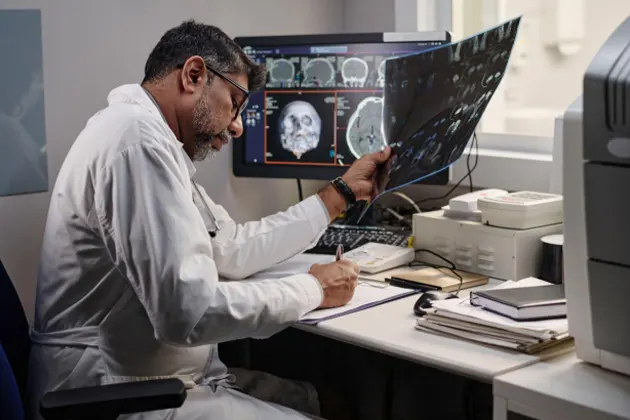
Brain and spinal cord injuries occupy a separate category in personal injury law. They produce long-term consequences that are difficult to quantify, require highly technical medical records to document, and often involve disputes between competing experts about causation, prognosis, and the true cost of future care. In Florida, where these cases are governed by a combination of statutory rules and case law, how a legal team handles medical evidence from the earliest stages of a case can determine whether a claim succeeds or falls short.
Why Medical Evidence Is the Foundation of These Claims
Florida law requires injury claimants to establish both the existence of an injury and its causal connection to the defendant’s conduct, which in brain and spinal cord cases means building a detailed evidentiary record from day one. The legal team at Brain & Spinal Cord Injury Lawyers typically begins this process well before any litigation is filed, securing imaging studies, emergency room records, neurological evaluations, and treating physician notes that together form the factual core of the case. Without that foundation in place, even a well-argued legal theory can collapse under cross-examination.
Medical evidence in these cases is rarely self-explanatory. A radiologist’s report, a neurosurgeon’s operative notes, or a physiatrist’s functional assessment each require interpretation in the context of the legal standard being applied, whether that is negligence, comparative fault under Florida Statute Section 768.81, or another theory of liability.
How Florida’s Legal Framework Shapes Evidence Strategy
Florida follows a modified comparative fault system, which means a plaintiff’s recovery is reduced in proportion to their own share of fault, and under the 2023 amendment to Section 768.81, a plaintiff found more than 50 percent at fault is barred from recovering damages entirely. This rule directly affects how medical evidence is gathered and presented, because defense teams routinely argue that a plaintiff’s pre-existing conditions, delayed treatment, or gap in care contributed to the injury or its severity.
Anticipating those arguments requires a legal team to obtain records that address causation with specificity rather than generality. Treating physicians may need to provide written opinions distinguishing between a pre-existing degenerative condition and the acute trauma caused by the incident at issue. That distinction, documented in the medical record rather than introduced at trial, carries significantly more evidentiary weight.
The Role of Independent Medical Examinations
Under Florida Rule of Civil Procedure 1.360, a defendant in a personal injury case has the right to request an independent medical examination of the plaintiff. In brain and spinal cord injury cases, this examination is often conducted by a neurologist, neurosurgeon, or rehabilitation medicine physician retained by the defense. The report produced from that examination frequently contradicts the opinions of the plaintiff’s treating physicians on issues such as permanency, future care needs, and causal connection.
Florida law permits plaintiffs to have a representative present during an independent medical examination, and recorded examinations are allowed in certain circumstances, depending on how the court rules on any objections. How a legal team prepares a client for this process and responds to an unfavorable IME report is a significant part of the overall case strategy.
Building the Future Damages Picture
Florida allows recovery for future medical expenses and future lost earning capacity, but these categories require evidentiary support that goes beyond a treating physician’s general opinion. Life care planners, vocational rehabilitation experts, and economists are typically retained to project the long-term costs associated with a severe brain or spinal cord injury. These projections must be grounded in current medical literature and the specific facts of the plaintiff’s condition and pre-injury life.
Florida courts have addressed the standard for admissibility of expert testimony under Section 90.702 of the Florida Evidence Code, which was amended in 2023 to adopt the Daubert standard statewide. Under Daubert, expert opinions must be based on sufficient facts or data, reflect reliable methodology, and connect that methodology to the facts of the case. Any future damages projection that cannot withstand that scrutiny is at risk of being excluded before trial.
How Evidence Management Affects Settlement and Trial Outcomes
A well-documented medical record changes the dynamics of settlement negotiations. When defense counsel can see that causation is clearly established, future care costs are supported by qualified expert opinions, and the IME report has been addressed in the plaintiff’s own expert disclosures, the pressure to settle at a fair value increases.
Cases that proceed to trial in Florida are decided by juries applying the comparative fault framework, and the strength of the medical evidence directly shapes what those juries are asked to weigh.
What the Evidence-Handling Process Means for Your Case
If you or someone in your family is dealing with a brain or spinal cord injury in Florida, the way medical evidence is gathered, organized, and presented will shape every stage of the legal process, from initial demand letters through trial. Understanding that your legal team’s approach to this evidence is a substantive legal function, not an administrative task, helps you ask better questions and make more informed decisions as your case develops.