

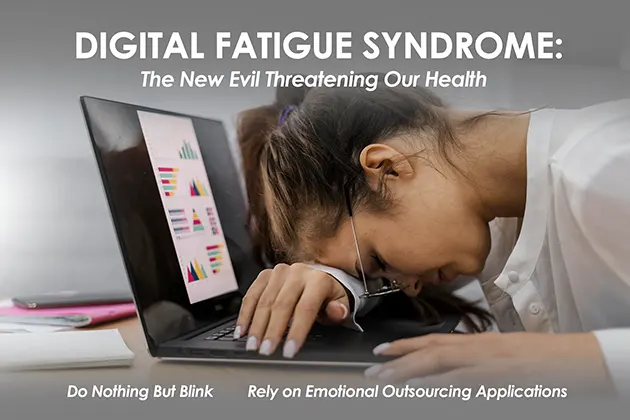
Wondering why you are having sudden headaches, with sore eyes and blurred vision? Beware! You might be suffering from digital fatigue syndrome. Surprised? Well, with constant screen time and digital connectivity ruling our day-to-day lives, we are bound to face some physical and mental consequences of this excessive use of digital devices. Digital fatigue can manifest as emotional, mental, and physical exhaustion, often causing symptoms such as headaches, eye strain, foggy thinking, poor sleep quality, irritability, and neck or shoulder pain.
With this blog, we will explore what digital fatigue syndrome is, why it occurs, and solutions to manage it. So, let’s explore this new evil threatening human health in today’s digital era.
Digital Fatigue: What this Syndrome is All About?
Our world is continuously evolving around screens, from smartphones to laptops. Today, almost everything is done through the blue light, be it your daily work or your leisure time. Whether you are sitting at your desktop at a 9-to-5 job, streaming a movie on your laptop, or scrolling through your social media feeds on your smartphone in your leisure time, you are never off the screen. Our lives are highly immersed in digital technology, and with digital devices being our constant companions, we are knowingly or unknowingly putting our physical and mental health at risk.
Access to the vast digital world can feel exciting, but it is leading to addiction to constant entertainment, social media validation, and visibility, increasing our screen time more than ever. The sudden occurrence of a throbbing headache, a burning sensation in the eyes, and a constant feeling of emotional exhaustion may mean your body is signalling you to take a break from this digital space.
So, to better manage the condition, we need to first understand what digital fatigue is. In simple form, digital fatigue refers to a state of mental and physical exhaustion caused by excessive exposure to digital devices such as smartphones, computers, laptops, tablets, televisions, and others. The omnipresent technologies in our lives can make our bodies overstimulated by the associated world we inhabit.
Although the symptoms of digital fatigue may resemble some other serious health issues, the following signs often indicate you are digitally burned out:
- Eye Strain: You may feel that your eyes sting, feel sore, and your vision is blurry sometimes.
- Brain Fog: When you are so into something, your brain starts to feel foggy due to the dominance of the thing you are addicted to. This causes difficulty in concentrating on other tasks.
- Lethargy or Lack of Motivation: You may not feel like doing anything except scrolling through your social media feeds or reels.
- Disturbed Sleep Cycle: Watching movies or chatting with friends late at night can disturb your sleep cycle. You may find it difficult to sleep or may feel sleepy during the day.
- Anxiety: You can actually be mean when you are constantly on screen. Sounds unbelievable? Well, it’s actually true. The fast-paced digital world and the constant urge to remain entertained may make you anxious and irritable, affecting your behavior with others.
- Feeling Overwhelmed: With so much going on in your brain, you may feel overloaded with information by watching reels for straight 3 hours.
- Feeling Tired: Although tiredness can indicate multiple other issues, it is also a prominent symptom of being digitally burned out. When you are investing the majority of your body’s energy in making presentations on a laptop, watching movies to feel relaxed, and scrolling through your phone, you can feel exhausted both physically and mentally.
In The Digital Life Survey of 2025 by the Human Clarity Institute, 70% of participants agreed that they felt tired after long periods of digital activity. This shows how the screen space of over 7 hours daily could leave you feeling exhausted.
Impact of Digital Fatigue on Mental and Physical Health
Research has shown that excessive screen time causes lasting damage to human brain function. Watching digital devices for more than 7 hours causes a 15% decrease in gray matter volume in areas related to memory and learning, causing memory problems. On the other hand, excessive exposure to blue light disrupts the melatonin production in the human body and hampers the natural sleep cycles.
The consequences of excessive screen time also affect the musculoskeletal system. Poor postures in front of screens and repetitive movements on smartphones lead to chronic tendonitis and deformities in the spine.
Solutions to Deal With Digital Fatigue
Now that we know the evil spawn behind our digital exhaustion, let us identify some solutions that could help us save ourselves from its malicious effects. Here are the solutions you can rely on:
-
Do Nothing But Blink
Although it may sound stupid, blinking can actually help you prevent eye strain or reduce its symptoms. Blinking 10 times very slowly every 20 minutes can naturally rehydrate the surface of your eyes to prevent dryness occurring through prolonged screen time.
-
Rely on Emotional Outsourcing Applications
Emotional outsourcing apps are AI-powered digital tools that are designed to offer mental wellness support. The anxiety, irritability, and often depression resulting from digital exposure impact our mental health, often leaving us feeling lonely and detached from other people. With the help of these apps, we can get mental health support when human support is not available.
-
Follow the 20-20-20 Rule
This is a simple technique. You just have to look at a point 20 meters away for 20 seconds every 20 minutes you spend in front of laptops, desktops, or mobiles. This helps release digital eye fatigue.
-
Digital Wellness Apps
The digital wellness apps can help you manage your screen time effectively, ensuring your mental and physical wellness. These apps remind us to take visual breaks during the working day.
-
Arranging Office Ergonomically
Arranging the office ergonomically can help us prevent digital fatigue. We must position the screen at arm’s length and tilted slightly backward. The screen brightness must be adjusted according to the ambient lighting. Using lubricating eye drops while working can also help. These small changes in the workstation could help fight digital fatigue.
-
Wearing Blue Light-Blocking Spectacles
Wearing spectacles with blue light-blocking lenses while working can reduce the impact of prolonged blue light exposure.
By implementing these solutions in our lives, we can better manage our screen time and the impact of prolonged screen time.
The CEO Views is a widely recognized US business magazine that takes pride in its approach to connecting industry peers with well-researched articles, blogs, and news reports on diverse topics. Our reputation is built on our continuous investment in research and development of quality content.