

When managing complex electrical infrastructures and industrial automation panels, the logical organization and traceability of conductors and components are key elements to the quality of the installation. A system designed to professional standards must include strict coding that instantly identifies every connection point and every protective device.
In this context, the use of advanced marking systems is not only a matter of good practice but a technical necessity to ensure the efficiency of maintenance operations. The use of appropriate cable labels and component tags effectively turns a tangle of conductors and a series of switches into a “speaking” system, where every signal, every power line, and every logic module is clearly defined. This approach sharply reduces human error, ensuring that every device operates according to the original design conditions.
The strategic importance of permanent identification
In the industrial sector, labeling addresses needs that go far beyond the aesthetic organization of wiring. For a specialized electrician, the ability to clearly identify the origin and destination of a conductor, as well as the function of a contactor or circuit breaker within an electrical panel, is essential for service continuity. An inefficient or absent labeling system forces the operator to carry out repeated tests, increasing downtime and the risk of accidental disconnection of critical circuits.
Cable labels and markings for electrical panels must be designed to withstand harsh environmental conditions, such as temperature fluctuations or the presence of industrial vapors. The longevity of the marking ensures that the information stays clear for as long as the system is in use, allowing even external technicians to work on the panel’s logic with maximum precision and safety.
Marking categories and professional technological solutions
A professional identification system consists of various solutions designed to adapt to both the conductor cross-section and the surface of plastic or metal components.
Market offerings span from adhesive cable labels to rigid nameplates for marking terminal blocks and DIN-rail equipment. These products are made from high-performance materials such as polycarbonate or rigid PVC, chosen for their dimensional stability.
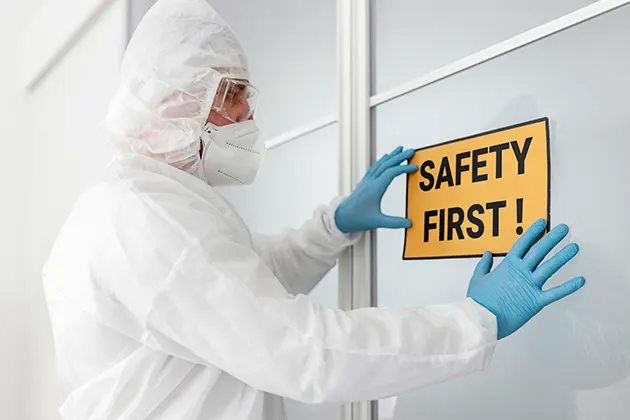
Thermal transfer printing systems ensure crisp, permanent quality, which are essential when alphanumeric strings need to be read in confined spaces or on front panels. In addition to conductor labeling, the use of reinforced adhesive labels on the exterior of control panels provides a clear indication of dangerous voltages or emergency procedures, creating visual consistency between the electrical diagram and the physical reality of the installation.
Damage prevention and enhanced operational safety
The main role of proper identification lies in actively preventing damage to equipment. An operational error involving an improperly labeled disconnect switch or an incorrect connection due to confusion between similar conductors can lead to destructive short circuits or the destruction of extremely expensive PLCs and inverters.
The systematic use of cable labels and component markers minimizes this risk, acting as a passive safety protocol that guides the operator during installation and testing. In terms of workplace safety, labelling circuit-breaking devices and grounding terminals provides greater risk awareness, preventing accidental contact with active lines.
A properly labeled panel reduces the likelihood of incorrect interventions that could compromise the structural integrity of electromechanical components or the safe working conditions of employees.
Maintenance and diagnostic efficiency
The adoption of an integrated labeling system represents an investment in the longevity and resilience of the electrical infrastructure. Speed of intervention during an emergency is directly related to the clarity of the information available on both individual conductors and the panel layout.
Thanks to these solutions, electricians can rely on labels that maintain their adhesion and legibility over time, preventing the text from peeling off. Standardizing labeling not only optimizes diagnostic operations but also elevates the professional standard of the entire system, conveying a sense of technical expertise.
Properly managing the identification of cables and equipment therefore means minimizing operational costs associated with wiring errors and ensuring that every device can perform to its full potential in a controlled setting.