The foreign exchange (forex) market has been characterized by its huge trading volume per day, 24-hour accessibility, and the possibility of traders trading with comparatively low capital. Among the most striking things that are being sold by most brokers is very high leverage – in some cases up to 1:500, 1:1000, or even higher. This can be a fast track to big profits for beginners. But why then are some brokers giving such high leverage in the first place? And what, really, does it mean to traders?
And let us divide it plainly and simply.
Explain Leverage in Forex Trading
In forex, leverage enables traders to manipulate a substantial number of positions using a relatively small sum called margin. As an example, a trader will be able to manage $10,000 on the market using only 1:100 leverage and only 100 dollars of his or her money.
Profits as well as losses are magnified by leverage. In case the market turns your way, profits may be substantial in relation to what you initially invested. However, when the market works against you, losses may increase at a rapid pace too – sometimes clearing your account in minutes.
When brokers promote very high leverage, they are actually selling traders the capability to open very big positions with very small capital.
Large Leverage Acquires More Customers
Among the largest causes the brokers provide high leverage is the plain, simple reason, namely, the marketing strength.
Numerous small deposits and large profit expectations enter the forex market with a lot of new traders in the market. When they observe that a given broker will give 1:500 or 1:1000 leverage, they will be making a lot of money within a short time by using the money they have, which is 100. This is because the promise of increased opportunity is very appealing to high-leverage brokers, particularly to beginners.
Brokers must have a solid selling point in the competitive markets. Being one of the forex brokers, which is considered to have high leverage, to many means a means to be known and attract clients who are seeking quick expansion.
Various Regulations across various Countries
High leverage is not permissible for all brokers. The varying financial regulations between countries are very diverse.
Retail traders do not have much leverage in highly regulated markets such as the United States, the United Kingdom, and the European Union. For example:
- EU and UK regulators normally limit leverage to 1:30 between large currency pairs.
- The maximum leverage in the U.S. is 1:50.
But brokers in offshore or lightly regulated jurisdictions are permitted by law to offer much greater leverage. Such places tend to have more lenient regulations, where the brokers are able to make their own trading terms.
Because of this reason, high leverage is a competitive advantage of brokers located in such areas to attract international clients, preferring fewer restrictions.
Greater Trading Volume Presupposes Greater Profit for Brokers
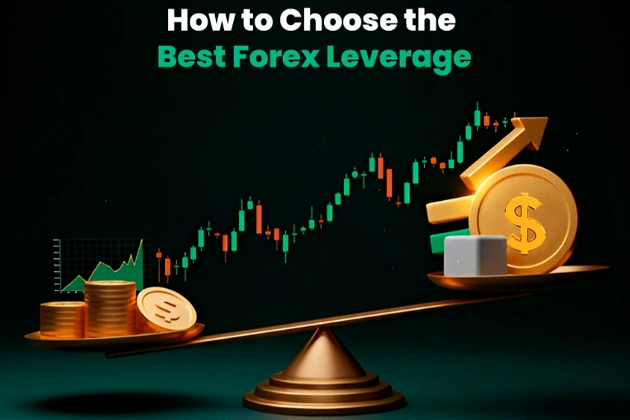
The majority of retail forex brokers with high leverage earn profits in terms of spreads, commissions, or by a combination of both. The higher the number of trades that the clients make and the size of the trades, the more profit the broker makes.
Large leverage motivates traders to trade more positions than they would have been able to trade using their money. The slightest fluctuation large positions in the market will produce apparent profits or losses, and this usually results in increased trading.
Such an activity has several advantages for brokers:
- The greater the number of trades, the higher the spread or commission income.
- Big positions = High trading costs to the client.
- Active traders = more involvement in the platform.
Business-wise, providing leverage on a high percentage can greatly boost the revenue of a broker.
Numerous Retail Traders like short-term trading
Scalpers and day traders (those interested in making a profit on small fluctuations in prices) are particularly interested in high leverage. Low leverage means that a small movement in the market may not yield significant returns. However, at 1000x leverage, any 10-20 pip change may create significant returns.
Brokers are aware that a big percentage of retail traders would be interested in quick, short-term strategies. With the high leverage they provide, they match their services with the trading kind that most of their clients are after.
But as much as this can multiply the reward potential, it can also multiply significantly the rate at which the losses will be incurred.
Broker is safeguarded by Margins, Calls, and Stop-Outs.
You may ask, in that case, clients can lose so much money on high leverage, so why does that not expose the broker to risk?
Brokers safeguard themselves in the majority of cases through margin calls and stop-out systems. The positions of a trader are automatically closed by the broker to avoid a negative balance in the account when the account equity reaches a specific threshold.
This has the effect of having the broker capping its risk of the client enjoying huge market exposure. The financial risk is transferred to the trader, and the broker still profits from the trade.
Psychological Response to Traders
The psychological effect of high leverage is high. It generates an impression that the market has large opportunities, even for individuals with small accounts.
Stories of how to make big profits out of a small deposit within a short time attract many traders. This dream is fueled by high leverage, though the fact of the matter is that most of the highly leveraged accounts are making huge losses at a rate not much slower.
Brokers know the psychology of the trader, and leverage is one of the major aspects that they showcase in the advertisements because they know that this will capture attention and lead to sign-ups.
Long-term Traders are not wanted by all Brokers
Other brokers are concerned with educational and long-term relationships with clients and stable growth. Some are more dependent on the high turnover of clients, whereby many traders deposit, trade violently, and lose their money or give up.
The second model suits the high leverage better. Higher leverage will subject traders to big drawdowns, margin calls, and blown accounts. Although this is dangerous to the trader, there is a possibility that the broker would still gain in the trading process that occurred in the course of the transaction.
It does not imply that all high-leverage brokers are bad, but it is important to know the business model behind the offer.
What Risk Side Traders are Not Paying Much Attention to
Although brokers put forth the advantages, they usually play down the risks. At very high leverage, the maximum leverage is:
- Even a small movement in the market can erase much of your account.
- Emotional trading is heightened with the high rate of swings in profits/losses.
- Overtrading is more prevalent.
- There is increased difficulty in managing the risks.
High leverage is potentially dangerous to novice traders. There are a lot of novices who are concerned with the quantity they can earn, but not with the rate of loss.
Amateur traders typically take on significantly lower leverage than provided by brokers, as they know that it is not the short-term returns that keep them alive in the game.
Conclusion
The retail forex brokers provide very high leverage to a large extent as a business and marketing strategy. It brings new traders, enhances the trading level, and also enables the brokers to shine in a competitive world market. There is also a significant impact of differences in regulations, where the brokers in loosely regulated jurisdictions can lawfully offer greater leverage than in more stringent financial regimes.
Nevertheless, high leverage may raise the possibility of profits, but it also raises risks just as fast. What appears to be a great opportunity may end up resulting in hefty losses without appropriate risk management, discipline, and experience.
To traders, the trick is to be impressed with the best leverage that could be offered, but to select the leverage level that fits their expertise, strategy, and risk management capability. Conscientious trading at managed leverage will be much more sustainable in the long-term than aggressive trading at extreme leverage.