

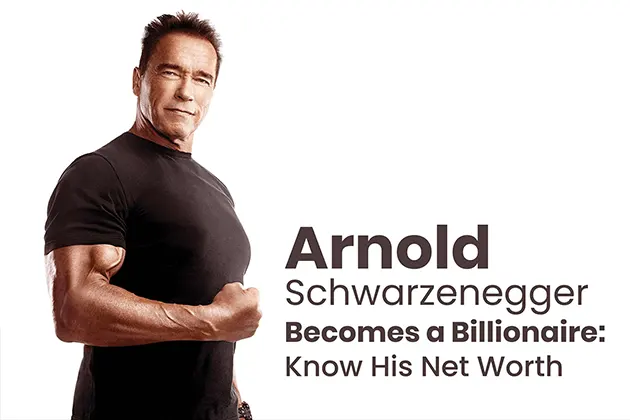
Arnold Schwarzenegger is known around the world as a bodybuilding champion, Hollywood action star, politician, and cultural icon. However, his financial journey is just as interesting as his career in entertainment. The story behind net worth arnold Schwarzenegger is not simply about the money he earned from blockbuster films.
Arnold’s wealth-building strategy involved real estate, business opportunities, investments, endorsements, and the careful development of a global personal brand. His journey offers valuable lessons for entrepreneurs and professionals who want to understand how income can be transformed into long-term wealth.
Starting with Ambition, Not Wealth
Schwarzenegger was born in Austria in 1947 and grew up with ambitions that extended far beyond his hometown. As a teenager, he became interested in bodybuilding and eventually developed an extraordinary physique that helped him gain international recognition.
In 1968, he moved to the United States, arriving with limited financial resources but a clear vision for his future. His early success came through bodybuilding, where he won the Mr. Olympia title seven times. Those victories established him as one of the most recognizable figures in the sport.
However, bodybuilding was only the beginning. One of the most important aspects of Schwarzenegger’s financial journey was his willingness to think beyond his immediate profession. Rather than treating bodybuilding as the final destination, he used the visibility it provided to explore other opportunities.
He became involved in real estate early in his career. Property investments gave him a financial foundation while he continued pursuing acting. This was an important move because Hollywood success was far from guaranteed when he first arrived in America.
His accent and unusual appearance initially made it difficult for him to secure major acting roles. Instead of allowing those limitations to define his future, he continued developing his skills and building his public image.
The strategy is relevant to professionals in almost every industry. A salary or professional income can provide financial stability, but investing part of that income into assets can create another path to wealth.
From Bodybuilder to Hollywood Star
Schwarzenegger’s breakthrough in Hollywood came with films such as Conan the Barbarian. His role as the Terminator then turned him into a global superstar.
The 1984 film The Terminator became a cultural phenomenon, while Terminator 2: Judgment Day became one of the biggest films of the early 1990s. The movie reportedly generated more than $500 million at the global box office, demonstrating the extraordinary commercial power of the franchise.
His success continued through films including Predator, Total Recall, Kindergarten Cop, and True Lies. At the height of his acting career, Schwarzenegger was reportedly earning tens of millions of dollars for major film projects. Yet his financial story demonstrates why high income alone does not necessarily create generational wealth.
The entertainment industry is unpredictable. Actors may experience periods of enormous success followed by years with fewer opportunities. A movie career can also be affected by age, changing audience preferences, health, and shifts in the industry.
Schwarzenegger reduced this risk by building a portfolio of interests outside acting.
The Power of Real Estate
Real estate became an important part of Schwarzenegger’s financial strategy. His early investments reportedly included properties in California, where long-term growth in property values helped increase the value of his holdings.
The broader numbers demonstrate why real estate has historically attracted wealthy investors. According to the Federal Reserve’s Survey of Consumer Finances, residential real estate remains one of the largest components of household wealth in the United States.
For high-net-worth individuals, property can provide several potential benefits. These include rental income, long-term appreciation, diversification, and the ability to invest in tangible assets.
The strategy also applies to business owners. A technology entrepreneur might build a software company while investing profits into commercial real estate. A medical professional might own a healthcare practice and invest in rental properties. A professional athlete may use career earnings to purchase properties that can generate income after retirement.
The principle is the same: do not depend entirely on one source of income. Schwarzenegger’s approach shows how professional success can be used to acquire assets that may continue to create value over decades.
When Fame Becomes a Business Asset
Schwarzenegger’s most valuable asset may not be any individual movie or property. It may be his personal brand.
His name is recognized across generations and continents. That recognition has commercial value.
This is where the question of how celebrities become billionaires becomes particularly interesting. The world’s wealthiest celebrities generally do not reach billionaire status simply by collecting entertainment salaries. Instead, many build or own businesses, develop intellectual property, invest in companies, or hold equity in brands that grow substantially.
- George Lucas is a classic example. The Star Wars creator built enormous wealth through ownership of valuable intellectual property and business interests.
- Rihanna expanded her music career into the beauty and fashion industries with Fenty. Her success demonstrated the commercial power of combining celebrity recognition with a consumer brand.
- Michael Jordan turned his athletic fame into a massive business empire through his relationship with Nike and the Jordan Brand.
- Oprah Winfrey transformed her television career into a media and investment empire.
- Jay-Z expanded from music into beverages, entertainment, technology, and investments.
These examples reveal a common pattern. Celebrity creates attention, but ownership creates wealth.
An actor earning $20 million for a film receives a substantial income. An entrepreneur who owns a significant percentage of a company that becomes worth billions may build considerably more wealth. The difference is equity.
Arnold Schwarzenegger’s Net Worth
Arnold Schwarzenegger’s estimated net worth is widely reported to be around $450 million, although exact figures are difficult to verify because much of his wealth is tied to private investments, real estate, business interests, and other assets. His fortune has been built over more than five decades and goes well beyond the salaries he earned as one of Hollywood’s biggest action stars.
His early investments in real estate, combined with earnings from blockbuster films such as The Terminator franchise, helped create the foundation of his wealth. He also benefited from endorsements, business ventures, and the global value of his personal brand. While some headlines may describe Schwarzenegger as a billionaire, he is not generally considered a billionaire, with credible estimates placing his wealth below the $1 billion mark.
His financial journey is still remarkable. Schwarzenegger moved from bodybuilding to Hollywood and then into investments and public life, showing how a successful career can be used to build wealth across multiple industries. His story also highlights an important distinction between celebrity earnings and billionaire wealth: earning millions from entertainment can create substantial personal wealth, but reaching billionaire status typically requires significant ownership in businesses or assets that appreciate dramatically over time.
Schwarzenegger’s Approach to Diversification
Schwarzenegger’s career provides a useful case study in diversification.
His professional activities have included:
- Bodybuilding and fitness
- Film and television
- Film production
- Real estate
- Brand partnerships
- Public speaking
- Political leadership
- Investments and business ventures
This combination allowed him to develop multiple professional identities. The approach is particularly relevant in today’s economy, where individuals increasingly build what is sometimes called a “portfolio career.” A person may work in one profession while owning a side business, investing in stocks, holding real estate, or developing intellectual property.
For entrepreneurs, diversification can reduce dependence on a single business. For example, a software company might generate revenue through subscriptions, enterprise contracts, consulting, and licensing.
A fashion entrepreneur may combine direct-to-consumer sales with wholesale partnerships and licensing. A healthcare business may earn revenue from clinical services, technology platforms, and specialized programs.
The underlying idea is not to pursue every opportunity available. Instead, it is to create complementary sources of value.
The Numbers Behind Celebrity Wealth
The global entertainment industry has become an enormous economic ecosystem. According to PwC’s Global Entertainment & Media Outlook, global entertainment and media revenues are measured in trillions of dollars, supported by advertising, streaming, gaming, digital content, and other sectors.
The rise of social media has also changed the economics of fame. Today’s celebrities can communicate directly with millions of followers without relying entirely on traditional media companies. This creates opportunities to launch products, promote businesses, invest in startups, and build direct-to-consumer brands.
However, becoming extremely wealthy remains rare. The difference between being a multimillionaire and becoming a billionaire often comes down to the scale and ownership of assets. Someone who earns $10 million annually may become very wealthy, but someone who owns 10% of a company valued at $10 billion has a theoretical equity stake worth $1 billion, before taxes and other considerations.
This explains why entrepreneurship and ownership are such common themes in the stories of celebrity billionaires.
Industry Lessons from Schwarzenegger’s Journey
Schwarzenegger’s experience provides lessons that can be applied across industries:
- Entertainment: Build intellectual property and retain ownership where possible.
- Real Estate: Invest in assets that may appreciate over time and potentially generate recurring income.
- Technology: Equity in a high-growth company can create significantly more value than traditional salary income.
- Consumer Brands: A strong personal identity can help businesses attract customers, but the underlying product must deliver genuine value.
- Sports: Athletes can extend short career windows by investing earnings and developing brands before retirement.
- Healthcare: Doctors and healthcare professionals can move from individual practice to owning scalable clinics, technology platforms, or healthcare businesses.
- Professional Services: Consultants and agency owners can transform their expertise into scalable products, software, or intellectual property.
Across all these sectors, the principle remains consistent: build something that can grow without requiring your time to increase at the same rate.
The Long-Term Lesson of His Career
Schwarzenegger’s story is particularly compelling because his wealth was built over several decades. He did not rely on one career breakthrough.
He first established himself in bodybuilding. He then entered Hollywood and became one of the industry’s biggest stars. Along the way, he invested in real estate and developed a recognizable personal brand. Later, he entered politics and continued to maintain his public influence.
This long-term approach provides an important lesson for younger entrepreneurs. Building wealth is rarely about finding one perfect investment or achieving overnight success. It is more often about making a series of good decisions over a long period.
The same principle applies to companies. A startup may begin with one product, expand into new markets, acquire complementary businesses, and eventually become a global organization. The journey is incremental, but the cumulative effect can be significant.
What Entrepreneurs Can Learn from Arnold Schwarzenegger
Perhaps the most valuable lesson from Schwarzenegger’s journey is that success should create new opportunities rather than become the end goal.
- Bodybuilding created recognition.
- Recognition opened the door to Hollywood.
- Hollywood created income and global influence.
- Income helped support investments.
- The personal brand created additional business opportunities.
This progression illustrates how different forms of success can reinforce each other. For aspiring entrepreneurs, the message is clear: develop your skills, build a strong reputation, manage your income carefully, and look for ways to convert active earnings into assets.
Not everyone will become a Hollywood star, but anyone can apply the underlying principles.
The journey of Arnold Schwarzenegger is therefore best understood not simply as a story about celebrity wealth, but as a lesson in long-term financial thinking. His career demonstrates the value of diversification, asset ownership, branding, and persistence.
While his fortune is not generally classified among the world’s billionaire fortunes, his path still represents a powerful self made billionaire success story in terms of the broader principles behind building substantial wealth. The biggest takeaway is simple: whether you are an entertainer, athlete, executive, or entrepreneur, lasting financial success comes from turning today’s opportunities into assets that can continue creating value tomorrow.
FAQs
- How did Arnold Schwarzenegger build his wealth?
Arnold Schwarzenegger built his wealth through a combination of bodybuilding, Hollywood acting, real estate investments, endorsements, business ventures, and other investments. His strategy of developing multiple income sources helped him build financial security beyond his film career. - What is Arnold Schwarzenegger best known for?
Arnold Schwarzenegger is best known for becoming a seven-time Mr. Olympia bodybuilding champion, starring in major films such as The Terminator, Predator, and Total Recall, and serving as the Governor of California. - Did Arnold Schwarzenegger become wealthy only from acting?
No. While his movie career generated significant income, Schwarzenegger also invested in real estate and pursued business opportunities. His financial success demonstrates the importance of diversifying income rather than relying entirely on one profession. - How do celebrities build wealth beyond entertainment?
Celebrities often expand into businesses, investments, real estate, licensing, endorsements, and consumer brands. Some also invest in startups or acquire ownership stakes in companies, allowing their wealth to grow beyond salaries and entertainment fees. - Why is real estate important in celebrity wealth building?
Real estate can provide diversification and, depending on the investment, potential rental income and long-term appreciation. Many high-income celebrities invest in property to reduce their dependence on entertainment earnings. - What can entrepreneurs learn from Arnold Schwarzenegger’s career?
Entrepreneurs can learn the importance of diversification, personal branding, long-term investing, and reinvesting earnings. Schwarzenegger’s career shows how success in one field can create opportunities to build assets and explore new industries. - Are most celebrity billionaires self-made?
Many celebrity billionaires have built substantial fortunes through businesses and investments rather than entertainment income alone. However, the term “self-made” can be subjective because individuals often benefit from networks, opportunities, education, or financial advantages available to them.
The CEO Views brings you closer to the leaders shaping industries, building innovative companies, and driving meaningful change. Through their stories and insights, discover the ideas, experiences, and leadership lessons behind today’s most influential businesses.