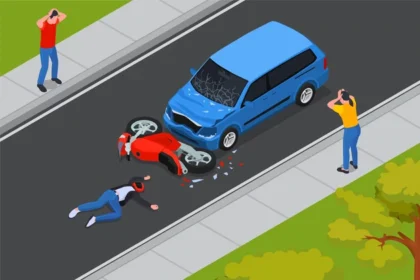
According to the National Highway Traffic Safety Administration’s 2023 data, motorcyclists are 28 times more likely to die in a crash than passenger car occupants — yet understanding the specific scenarios behind these statistics reveals patterns that riders can actively prevent. As motorcycle registrations continue climbing nationwide and urban traffic density increases, the intersection of rider behavior, protective equipment, and emergency response has never been more critical. For the millions of motorcyclists navigating today’s roads, recognizing common accident patterns and implementing targeted safety measures can mean the difference between a close call and a life-altering crash. The key isn’t avoiding motorcycles altogether — it’s understanding what goes wrong most often and building defenses against those specific risks.
What Are the Most Common Causes of Motorcycle Accidents?
Left-turn collisions dominate motorcycle crash statistics, typically occurring when a car driver turns left across a motorcycle’s path at intersections. The physics here work against motorcyclists — cars approaching from the opposite direction often misjudge a motorcycle’s speed and distance because the smaller profile creates visual deception. These crashes frequently happen during daylight hours when visibility seems optimal, suggesting the issue isn’t lighting but rather depth perception and attention.
Single-vehicle accidents represent another major category, often triggered by road surface conditions that barely affect cars but prove devastating for two-wheeled vehicles. Gravel patches, oil slicks, uneven pavement, and wet leaves create traction loss scenarios where motorcycles have far less stability margin than four-wheeled vehicles. Consider a rider approaching a curve at 45 mph who encounters sand scattered from recent construction — the same hazard a car might navigate with minor steering adjustment can send a motorcycle into an uncontrolled slide.
Lane-changing incidents frequently occur when car drivers fail to check blind spots adequately or underestimate motorcycle acceleration. Unlike the predictable movement patterns of cars, motorcycles can change lanes more quickly and appear in spaces drivers don’t expect. Additionally, following-too-closely scenarios often escalate because motorcycles require different braking distances than cars, and rear-ending drivers may not recognize these differences until impact becomes unavoidable.
Weather-related crashes spike during the first rain after dry periods, when accumulated oils create especially slippery conditions. Many riders underestimate how dramatically wet pavement affects motorcycle handling compared to car performance, leading to crashes during what should be routine maneuvers.
How Do Motorcycle Crash Dynamics Affect Injury Severity?
Impact Forces and Body Vulnerability in Crashes
Unlike car occupants protected by crumple zones and airbags, motorcyclists absorb crash energy directly through their bodies. When a motorcycle strikes an object at 30 mph, the rider continues forward at that speed until something stops them — whether that’s the pavement, another vehicle, or a roadside barrier. The human body wasn’t designed to withstand these forces, which explains why motorcyclists experience injury rates significantly higher than car occupants even in comparable crash scenarios.
Speed multiplies injury severity exponentially, not linearly. A 35-mph impact generates roughly four times the energy of a 25-mph crash, turning a potential broken bone into a life-threatening injury. The rider’s position during impact — whether they’re thrown forward, to the side, or separated from the bike entirely — determines which body parts absorb the most energy. Head and chest injuries dominate fatality statistics because these areas protect vital organs that can’t withstand significant trauma.
High-side crashes occur when the rear wheel regains traction suddenly after sliding, catapulting the rider over the handlebars with tremendous force. Low-side crashes involve sliding along the pavement while still connected to the motorcycle, typically resulting in road rash and fractures rather than the severe internal injuries associated with high-side impacts.
Role of Braking Systems and Rider Control
Anti-lock braking systems (ABS) have transformed motorcycle crash dynamics by preventing wheel lockup during emergency stops. Traditional braking required riders to modulate brake pressure precisely to avoid skidding — a skill that demands practice and often fails during high-stress moments. ABS removes this variable, allowing maximum braking force without loss of steering control.
Emergency braking technique becomes crucial because most riders never practice hard stops until they need one desperately. Research shows that riders with ABS-equipped motorcycles stop roughly 20% shorter in emergency situations compared to those relying solely on manual brake control. However, ABS can’t overcome physics — braking distance still depends on tire condition, road surface, and available traction.
The combined braking effect of using front and rear brakes simultaneously provides optimal stopping power, but many riders rely too heavily on either front or rear brakes alone. Front brakes typically provide 70% of stopping power, but applying them too aggressively can cause the front wheel to slide. Rear brake application helps stabilize the motorcycle during stops but won’t provide adequate stopping force by itself.
Rider panic responses often worsen crash outcomes. Target fixation — staring at the obstacle you’re trying to avoid — frequently causes riders to steer directly toward the threat. Similarly, grabbing excessive front brake during turns can cause the motorcycle to straighten up and run wide, potentially into oncoming traffic.
What Motorcycle Safety Gear Best Protects Riders?
Key Protective Clothing and Helmets Explained
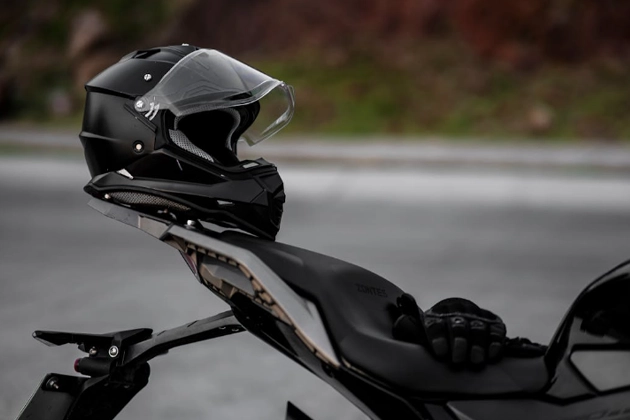
DOT and Snell-certified helmets provide the primary defense against fatal head injuries, with full-face designs offering the most comprehensive protection. The difference between a $150 DOT helmet and a $600 Snell-rated model often comes down to impact absorption materials and quality control standards. However, even basic DOT certification dramatically improves survival odds compared to riding without head protection.
Reinforced motorcycle jackets with CE-rated armor protect the spine, shoulders, and elbows — areas that frequently contact pavement during slides. Leather offers superior abrasion resistance, while textile jackets provide better ventilation and weather protection. The key specification isn’t material type but armor placement and impact absorption ratings. Many riders compromise protection for comfort, not realizing that road rash from a 25-mph slide can require skin grafts and months of recovery.
Protective gloves and boots address extremity injuries that, while rarely fatal, can result in permanent disability. Hands instinctively contact the ground first during falls, making reinforced palm protection essential. Similarly, ankle protection prevents the crushing injuries common when motorcycles fall on riders’ lower legs. Racing-grade boots might seem excessive for street riding, but the ankle support they provide can prevent injuries that keep riders off bikes permanently.
The effectiveness of any protective gear depends entirely on wearing it correctly and consistently. For serious motorcycle accidents that result in significant injuries, consulting with a motorcycle accident lawyer in Orlando early in the recovery process helps protect both physical and financial well-being while navigating insurance complexities.
Proper Fit, Maintenance, and Gear Visibility
Incorrect helmet fit negates most protective benefits — a helmet that’s too loose can slide off during impact, while one that’s too tight creates pressure points that discourage consistent use. The helmet should feel snug but comfortable, with cheek pads making firm contact without pinching. Most riders choose helmets based on appearance rather than proper sizing, which explains why improperly fitted helmets show up frequently in crash investigations.
Gear maintenance directly affects protection levels. Leather that’s dried out and cracked will tear more easily during slides. Armor that’s been compressed from previous impacts may not absorb energy effectively in subsequent crashes. Many riders wear gear long past its protective lifespan simply because it still looks acceptable.
High-visibility colors and reflective materials address the visibility issues that contribute to left-turn and lane-change accidents. Bright colors help car drivers judge motorcycle speed and distance more accurately. Reflective strips on jackets, helmets, and boots create visual signatures that catch attention in drivers’ peripheral vision. While gear color won’t prevent all accidents, it provides a statistical advantage that costs nothing beyond the initial purchase decision.
Ventilation and comfort features determine whether riders actually wear protective gear consistently. The best armor provides no protection if it’s hanging in the garage because it’s too hot or uncomfortable for regular use. Quality gear balances protection with wearability, recognizing that motorcyclists need practical solutions for daily riding, not just track days.
Which Riding Practices Help Prevent Motorcycle Crashes?
Defensive Riding and Risk Awareness Strategies
Lane positioning becomes a critical safety tool when used strategically rather than just staying centered in the lane. The left tire track often provides the best visibility to oncoming traffic while maintaining escape routes, but construction zones, parked cars, and road debris require constant position adjustments. Smart riders treat each lane as having three positions and move between them based on changing road conditions and traffic patterns.
The two-second following rule that works for cars becomes insufficient for motorcycles due to different braking characteristics and the physics of emergency stops. Motorcyclists need additional time to assess road surface conditions and plan escape routes that cars don’t require. Increasing following distance to four seconds provides the reaction time necessary to navigate around obstacles rather than just stopping before them.
Intersection scanning requires looking beyond the immediate turn lanes to identify potential conflicts before they develop. The driver approaching from the left who’s focused on their phone, the pedestrian stepping into the crosswalk without looking, the delivery truck blocking visibility — these threats become visible through systematic scanning that extends well beyond the immediate traffic signal.
Highway riding strategies focus on minimizing time in other drivers’ blind spots and managing speed differentials safely. Motorcycles can accelerate past dangerous situations more quickly than cars, but this advantage only works when riders recognize developing problems early enough to react decisively.
The Impact of Fatigue and Rider Behavior on Safety
Rider fatigue creates reaction time delays that prove especially dangerous for motorcycles, which require more active control inputs than cars. Unlike car drivers who can rely on power steering and cruise control, motorcyclists must maintain constant balance and steering adjustments. When fatigue slows these responses, even minor road irregularities can trigger loss of control.
Risk compensation behavior leads some riders to increase speed or take greater chances when wearing protective gear, essentially negating the safety benefits they’ve invested in. The psychological phenomenon of feeling invulnerable because of good gear can create more dangerous riding habits that increase crash likelihood despite better injury protection.
Group riding dynamics often pressure individual riders into speeds or maneuvers beyond their comfort zones. The desire to keep up with more experienced riders or maintain group cohesion can override personal safety judgment. Effective group rides establish clear protocols for managing different skill levels and maintaining safe spacing.
Weather decision-making requires honest assessment of both conditions and personal skill levels. Many crashes occur not in severe weather but during marginal conditions when riders attempt to maintain normal schedules despite reduced visibility or traction. The decision to delay a trip by an hour can prevent accidents that would otherwise seem inevitable.
What First Aid and Emergency Steps Should Follow an Accident?
Scene safety takes priority over immediate medical care — additional accidents at crash sites create more casualties than most initial injuries. Moving away from traffic lanes, turning on hazard lights, and positioning other vehicles to create barriers protects everyone present. However, avoid moving injured riders unless they’re in immediate danger from fire or traffic, as spinal injuries require professional stabilization.
Emergency communication should provide dispatchers with precise location information and accurate injury descriptions. Highway mile markers, nearest cross streets, and GPS coordinates help emergency responders reach remote accident scenes quickly. Describing specific symptoms rather than general terms like “hurt badly” helps dispatchers send appropriate medical resources and provide pre-arrival instructions.
Basic injury assessment focuses on consciousness, breathing, and severe bleeding — the three factors that determine immediate survival. Unconscious riders need airway protection but shouldn’t have helmets removed by untrained individuals. Severe bleeding requires direct pressure with clean materials, but don’t attempt to reset obvious fractures or remove objects embedded in wounds.
Documentation and witness information becomes crucial for insurance and legal proceedings, but only after medical needs are addressed. Photos of vehicle positions, road conditions, and visible injuries provide evidence that may disappear during cleanup operations. Contact information from witnesses should include their willingness to provide statements later, as initial shock often affects people’s recollection of events.
The most important factor in motorcycle accident survival often isn’t the gear worn or techniques used during the crash itself — it’s having trained responders arrive quickly and begin appropriate treatment for the specific injuries sustained. Every minute counts when dealing with internal bleeding or airway compromise, making immediate and accurate emergency calls the difference between recovery and permanent disability.