

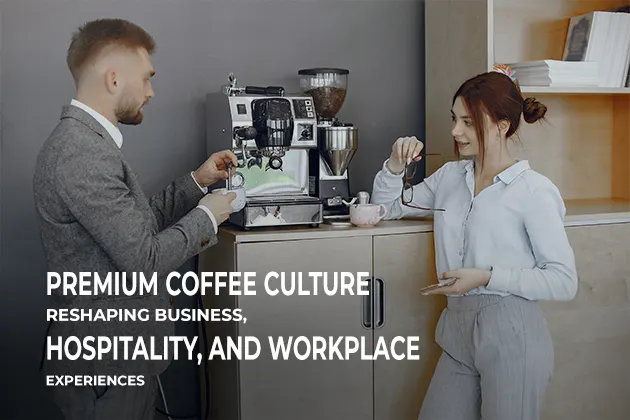
The global coffee industry has become one of the fastest-evolving sectors within hospitality and consumer services, influencing everything from workplace culture to retail design and customer engagement strategies.
Coffee is no longer viewed simply as a beverage consumed for energy or routine. It has become part of modern lifestyle behavior, social interaction, business networking, and premium hospitality experiences.
Consumers searching for good coffee today are significantly more informed than they were a decade ago. Many customers now pay close attention to bean origin, roast quality, brewing precision, freshness, and sustainability practices before making purchasing decisions.
This growing awareness has transformed coffee into a premium consumer category where experience, quality, and brand identity play a major role in customer loyalty.
The rise of specialty coffee has also changed how businesses operate. Independent cafés, hotel chains, restaurants, coworking spaces, and corporate offices are investing heavily in coffee programs because they understand that beverage quality can directly influence customer satisfaction, employee productivity, and overall brand perception.
Industry analysts estimate that global coffee consumption continues rising due to urbanization, hybrid work culture, and increasing demand for premium beverages.
Younger consumers are especially driving this trend by prioritizing personalized experiences and ethically sourced products over mass-produced alternatives.
Why Coffee Quality Has Become a Competitive Business Advantage
Modern consumers are highly selective about coffee quality because they now understand how factors such as altitude, climate, harvesting methods, roasting techniques, and brewing temperature influence flavor.
For example:
- Ethiopian coffees are often associated with floral and citrus notes
- Colombian beans are known for balanced sweetness and acidity
- Brazilian coffee typically offers chocolate and nutty flavors
These distinctions have encouraged businesses to educate customers about sourcing and roasting processes. Many specialty cafés now provide detailed information regarding farm locations, processing methods, roast dates, and brewing recommendations.
Freshness has become another major factor affecting customer expectations. Coffee experts often recommend consuming roasted beans within two to four weeks because exposure to oxygen gradually reduces aroma compounds and flavor quality. As a result, many premium cafés roast beans locally or in small batches to maintain consistency and freshness.
Brewing precision also plays an important role. Variables such as grind size, extraction time, water mineral content, and brewing temperature can significantly change flavor balance. Advanced brewing systems now allow cafés to maintain accurate consistency while improving operational efficiency during peak business hours.
Businesses that invest in quality-focused coffee programs often experience stronger customer retention, increased repeat purchases, and better customer reviews because consumers increasingly associate premium beverages with trust and reliability.
How the Modern Coffee Shop Became an Economic and Social Hub
The modern coffee shop has evolved into a multifunctional commercial environment that supports social interaction, business collaboration, and flexible work culture. In many urban areas, cafés are now used as informal offices, networking spaces, meeting locations, and creative work environments.
The growth of remote and hybrid employment models has significantly increased demand for cafés offering stable internet access, charging stations, quiet seating areas, and comfortable interiors. Many professionals prefer cafés over traditional office settings because they provide a balance between productivity and relaxed atmosphere.
This transformation has had measurable economic impact on surrounding businesses. Studies in urban retail development show that successful cafés often increase nearby foot traffic, helping bookstores, retail outlets, coworking spaces, and restaurants attract additional customers.
Café design has also become more strategic. Hospitality businesses now carefully analyze lighting, seating layouts, customer flow patterns, music, and environmental psychology to improve customer comfort and encourage longer visits.
Social media has further amplified café culture by turning coffee businesses into visually driven brands. Beverage presentation, interior design, branded packaging, and seasonal menu concepts are often developed specifically for online visibility across platforms such as Instagram and TikTok.
How Coffee Services Are Improving Workplace Productivity
Corporate coffee programs have become increasingly important because companies now recognize the relationship between workplace amenities, employee satisfaction, and productivity.
Research in workplace psychology suggests that shared coffee spaces can encourage informal collaboration, improve communication between departments, and create more relaxed interactions among teams. Employees often use coffee stations as casual meeting areas where conversations happen more naturally outside formal conference settings.
Premium coffee services can also influence employee morale. Businesses that provide high-quality refreshments often create more welcoming and employee-focused environments, particularly in competitive industries where workplace experience affects recruitment and retention.
This growing demand has contributed to the expansion of coffee machine rental solutions across commercial sectors. Leasing equipment allows businesses to access professional-grade espresso systems and automated brewing machines without large upfront investments.
Most rental programs typically include:
- Equipment installation and setup
- Technical servicing and maintenance
- Machine upgrades and repairs
- Staff training and operational support
This model helps businesses reduce operational complexity while maintaining consistent beverage quality. Coworking operators, hotels, retail chains, and corporate offices increasingly prefer rental programs because they provide flexibility as business requirements evolve.
Sustainability Is Reshaping the Coffee Industry
Sustainability has become one of the most important challenges affecting the future of coffee production. Climate change is placing pressure on coffee-growing regions through rising temperatures, irregular rainfall, water shortages, and supply chain instability.
Arabica coffee plants, which produce many premium specialty coffees, are especially sensitive to environmental fluctuations. Experts estimate that climate-related changes may significantly reduce suitable coffee-growing land in several producing regions over the coming decades.
As consumer awareness increases, many businesses are prioritizing ethical sourcing, sustainable farming support, recyclable packaging, and energy-efficient equipment. Coffee companies are also reducing waste through biodegradable materials, reusable cup systems, and environmentally responsible operational practices.
The Future of Coffee Business Innovation
The future of the coffee industry will likely combine technology, sustainability, personalization, and hospitality-driven customer experiences. Artificial intelligence, predictive analytics, and automated brewing systems may further improve operational efficiency and beverage customization.
At the same time, consumers continue valuing authenticity and human interaction. Businesses that successfully balance technology with personalized service and premium quality will likely remain competitive as coffee culture continues evolving globally.
Coffee today represents far more than a daily beverage. It influences hospitality design, workplace culture, retail development, consumer psychology, and social interaction. As customer expectations continue changing, coffee businesses that focus on quality, innovation, sustainability, and customer experience will continue shaping the future of the global hospitality industry.